Mail trouble canceled some Alaska primary votes in Western Alaska
Sep 17, 2026 | 6:09 pm ET
Description
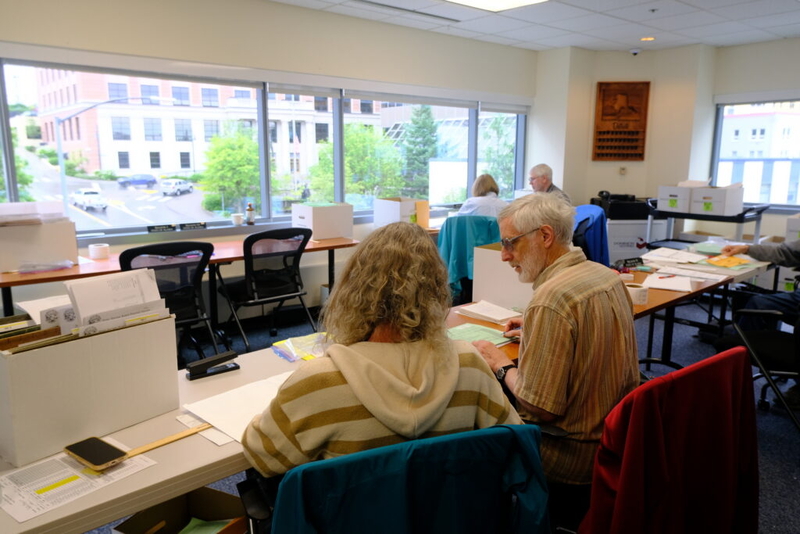
Members of the Alaska State Review Board are seen reviewing precinct ballot counts following the primary election on Aug 26, 2026. (Photo by Corinne Smith/Alaska Beacon)
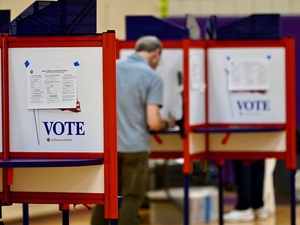
About 1 in 30 absentee ballots cast in Alaska’s August primary election were rejected for procedural errors, according to data published this month by the Alaska Division of Elections.
The 3.4% rejection rate for absentee ballots was almost double what it was in the 2024 general election but it was below the record high 4.5% seen during the 2022 special primary election held after the death of Congressman Don Young.
The top reason for disqualification this year was late postmarking, a change from prior elections when witness signatures were the No. 1 reason for rejection. It isn’t clear why late postmarking was the top issue. A comparison with the 2020, 2018 and 2016 primaries indicates that absentee ballots did not, in general, arrive later this year than they did in previous years.
There were some notable exceptions.
The disqualification rate in parts of rural Alaska was significantly higher than the state as a whole. In House District 40, which covers the North Slope and Northwest Arctic Borough, 32 of 81 absentee ballots — almost 40% — were rejected.
Seventy-five absentee ballots cast in person ahead of election day, including 28 from Kotzebue in the Northwest Arctic Borough, failed to reach the Division of Elections regional office in Nome before Aug. 31, the deadline to be counted.
The ballots arrived so late that they couldn’t even be included in a list of ballots that were disqualified for arriving late.
In addition to Kotzebue, ballots from Naknek, King Cove, Nikolski, Igiugig, Quinhagak, and Pitkas Point failed to arrive on time and weren’t counted.
Michelle Sparck, director of Get Out the Native Vote, called the issue a “slap in the face.” Her organization has been working to promote absentee voting as a way to boost turnout among Alaska Natives who live in rural Alaska.
“For us to have pushed absentee (voting) as a way of good practice … it builds that deep callus of voter apathy when we have to worry about whether or not this exercise even works,” she said.
One of the rejected ballots from Naknek was cast on Aug. 5, almost two weeks before the primary.
That vote was cast by Sallyann Hughes, who contacted the Alaska Beacon after getting a letter from the Division of Elections on Sept. 14. That letter said her ballot was not counted.
By email, Hughes said she remembered the election worker being so excited because her vote was the first she had processed in Naknek.
Hughes said that since receiving her rejection notice, she has sent a series of letters to find out what happened to her vote.
“I am not alleging voter fraud, manipulation of voting equipment, intentional misconduct, or responsibility by any particular person or agency. I do not yet know where in the custody or transportation process the failure occurred. I am seeking a documented accounting of what happened after these ballots were placed into the custody of election personnel,” she said.
Hughes said she’s particularly worried because she plans to be out of state in November and needs to vote absentee again.
Most of the 19,760 absentee ballots cast during the primary came from voters who sent them individually by mail.
To be counted, absentee ballots first go to review boards at regional offices across the state, where workers verify that the ballots were cast legally.
The 75 extra disqualifications, including Hughes’ ballot, were cast at in-person absentee polling stations set up by the Division of Elections in rural Alaska.
In Alaska, rural mail generally travels first to Anchorage for processing, then to its end destination.
In this case, slow delivery meant the ballots didn’t arrive in Nome before the election’s certification deadline at the end of the month.
On Wednesday, the Division of Elections announced that it is changing its policy for the general election and for upcoming rural school board elections to prevent a repeat of the problem.
Absentee ballots from in-person polling stations will now be “rerouted to the Region II Office in Anchorage to prevent unexpected mail delays.”
Sparck said it’s a good idea. “Cutting out a middleman is pretty smart here,” she said.
While the U.S. Postal Service’s handling of absentee ballots received extensive attention ahead of the primary, data published by the Division of Elections and reviewed by the Alaska Beacon indicate that on a statewide basis, absentee ballots didn’t arrive later this year than they did in prior primary elections.
Alaska law allows primary ballots to be counted as long as they arrive no later than 10 days after election day. This year, the busiest day for ballot returns was the day after election day.
That matches what happened in the 2020, 2018 and 2016 primaries — in each of those elections, the busiest days for absentee ballot returns were the days immediately after election day.
Altogether across the state, 627 absentee ballots were disqualified for all reasons; more than 19,000 were accepted in part or whole.
Of the disqualified, 169 ballots were rejected because they were postmarked after election day and another 110 ballots weren’t counted because they were received too late.
That latter figure may be an undercount, since it only includes the 75 late-arriving in-person absentees and 35 absentee ballots that reached officials between Aug. 28 and Aug. 31.
In Alaska, anyone can vote absentee for any reason, but completing an absentee ballot requires a voter to provide ID information, sign the ballot and find a second person, a witness, to sign it as well.
In every primary election since 2020, the lack of a witness signature was the No. 1 reason for rejections. This year, it’s No. 2.
In this year’s primary election, 29.2% of absentee voters were registered Republicans. Registered Democrats made up 21.7% of absentee voters.
Sparck said there were positive signs for rural voting in the primary. Turnout was up 48.8% over the 2024 primary in tribally affiliated precincts, she said.
The annual Alaska Federation of Natives convention, scheduled for late October, will include a big voting push, she said, and because it is taking place a week later than normal, participants will be able to vote early in Anchorage and avoid any problems with absentee voting.
Juneau