Louisiana will offer death row inmate Todd Wessinger lethal injection option
Oct 20, 2026 | 5:04 pm ET
Description
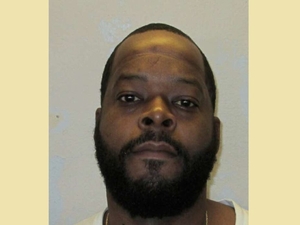
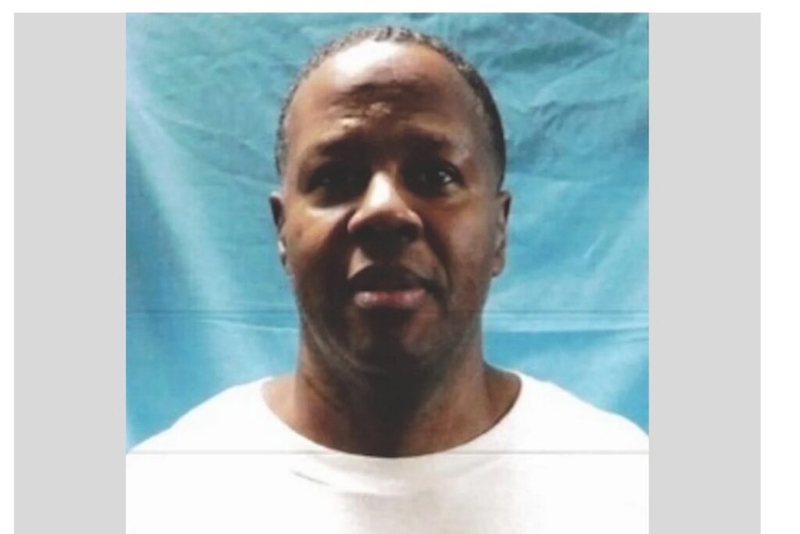
Louisiana officials, including Gov. Jeff Landry, say they will agree to execute Todd Wessinger through lethal injection if he agrees to the use of pentobarbital. Wessinger, convicted of the 1995 murder of two Baton Rouge restaurant employees, is challenging the state's use of nitrogen hypoxia to carry out the death penalty. (Photo courtesy of Louisiana Office of Attorney General)
Louisiana leaders will offer a man who’s been on death row nearly 30 years the option to die by lethal injection in response to his legal challenge of nitrogen gas executions, the method the state has used most recently.
Attorney General Liz Murrill formally extended the offer Monday in a federal court filing to Todd Wessinger, who was convicted in the 1995 murders of his former two co-workers, David Breakwell and Stephanie Guzzardo, at a Baton Rouge restaurant. Wessinger, who had recently been fired from his job, was sentenced to death two years later.
Wessinger’s attorneys filed a lawsuit Sept. 4 to avert Louisiana’s use of nitrogen hypoxia for his execution, during which the gas is administered to deprive the condemned person of oxygen until their vital organs fail. The method violates the Eighth Amendment ban on cruel and unusual punishment, his lawyers argue.
They also objected to the use of a two-drug regimen for lethal injection using midazolam and hydromorphone, which Louisiana lists under its approved execution protocols. That option “presents a substantial risk of serious harm to a condemned prisoner” who could remain conscious and in distress during the procedure, the lawyers wrote.
Wessinger’s legal team also noted in their federal court complaint that Louisiana can also carry out executions with a single drug, pentobarbital, the same one used in the botched execution of convicted murderer Christa Pike in Tennessee on Sept. 30.
“(P)entobarbital is a feasible and readily implemented alternative that would significantly reduce the substantial risk of severe harm presented by execution through nitrogen hypoxia or the two-drug midazolam and hydromorphone series,” Wessinger’s lawsuit reads.
His attorneys, with the MacArthur Justice Center, did not respond to a request for comment. In the lawsuit, they said the state could obtain pentobarbital from a pharmacist without putting at risk its contracts with pharmaceutical companies that supply medications for people at state prisons. Major drugmakers have declined to provide components for lethal injections since 2016 following pressure from death penalty opponents.
A spokesperson for the Louisiana Department of Public Safety and Corrections declined to answer a question about whether it has a supply of pentobarbital, citing the ongoing lawsuit.
Murrill’s filing on Monday asks U.S. District Judge John deGravelles, an appointee of President Barack Obama to Louisiana’s Middle District Court, to dismiss Wessinger’s lawsuit if he declines pentobarbital. She also noted that Wessinger’s attorneys acknowledge no state has carried out executions with midazolam and hydromorphone since 2014, and she rejected suggestions from Wessinger’s attorneys that nitrogen hypoxia is unconstitutional.
State Corrections Secretary Gary Wescott provided a declaration to the federal court, saying that will use pentobarbital if Wessinger chooses that method of lethal injection.
State corrections officials have not set a date to put Wessinger to death, though deGravelles agreed earlier this month with a federal appellate court ruling that essentially clears the way for the state to carry out his execution. Murrill has described Wessinger’s latest lawsuit as another delaying tactic.
Louisiana carried out its first and only nitrogen gas execution March 18, 2025, ending the life of Jessie Hoffman for the 1996 kidnapping of Mary “Molly” Elliott in New Orleans and her murder in St. Tammany Parish. U.S. District Judge Shelly Dick in the Middle District Court, also an Obama appointee, had blocked Hoffman’s execution, but the U.S. Supreme Court overrode her stay in a 5-4 vote.
Hoffman would have likely been the second man in the state put to death with nitrogen gas, but Christopher Sepulvado, 81, died Feb. 22, 2025, at Louisiana State Penitentiary from an infection that followed a leg amputation less than a month before his execution was scheduled. Sepulvado was convicted in DeSoto Parish for the 1992 murder of his 6-year-old stepson Wesley Allen Mercer.
Murrill pledged to carry out as many as four executions last year, but district attorneys in Caddo and Rapides parishes who obtained death warrants had their efforts blocked when judges determined the defendants in question had not pursued all of their appeals options.
Louisiana hasn’t administered a lethal injection since 2010 when Gerald Bordelon was put to death for the 2002 kidnapping and murder of his 12-year-old stepdaughter, Courtney LeBlanc, in Livingston Parish. Officials used a three-drug combination for Bordelon’s execution — sodium thiopental, pancuronium bromide and potassium chloride — which would be the last in Louisiana for 15 years until the legislature approved the use of nitrogen hypoxia in 2024.
Since pharmaceutical companies stopped providing drugs for lethal injections, states with capital punishment have struggled to obtain the medications and turned to other execution methods.
Alabama was the first state to use nitrogen hypoxia to carry out the death penalty in January 2024 and has since put seven people to death using the method.
The very first nitrogen gas execution at Holman Correctional Center in Atmore, Alabama, took place days after Gov. Jeff Landry took office in Louisiana. He called state lawmakers into a special session the following month to focus on criminal justice measures. The laws they approved included adding nitrogen hypoxia to the state’s approved methods of capital punishment.
Louisiana also allows execution by electric chair but hasn’t used the method since 2011. Though its use hasn’t been outlawed, several states moved away from the electric chair once lethal injection became available and because some courts have raised Eighth Amendment concerns. Tennessee conducted the most recent electric chair execution in 2020.
In a social media post Monday, Landry said the state will execute Wessinger if he opts for lethal injection with pentobarbital.
“Three decades without justice is three decades too long,” the governor wrote.
There are currently more than 50 people on death row at Louisiana State Penitentiary.
Baton Rouge, LA