Louisiana lets ankle monitor companies off the hook for accountability
Aug 25, 2026 | 2:53 pm ET
Description
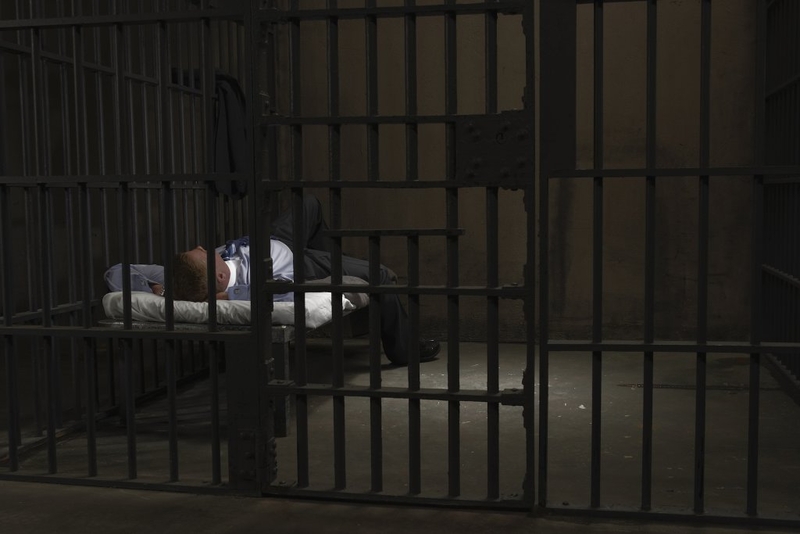
Stock photo by Darren Klimek/Getty Images
Ashtin Ursin was already a convicted felon and already facing a second-degree murder accusation when Baton Rouge Police arrested him Jan. 25, 2025, on charges including possession of a firearm by a convicted felon, handling of machine guns, unlawful use of body armor and possession with intent to distribute.
He posted $45,700 bail and walked out three days later, WBRZ-TV reported.
On July 30, 2025, Ursin was arrested again on new gun and drug charges. The judge revoked his bond from the arrest earlier in the year. But earlier this year, a judge let him out. Ursin posted $180,100, was released from jail Feb. 20 and placed on house arrest with an ankle monitor.
During the bond review on March 31, the court changed Ursin’s 24-hour house arrest to a curfew starting at 8 p.m., allowing exceptions for medical visits, court appearances, church and a recording studio.
Ursin, a rapper, performs as MMY ASH. He is set to stand trial for the 2023 shooting death of Jasper Dorsey Jr. in Ascension Parish.
Between Feb. 20 and April 29 this year, according to a motion from East Baton Rouge District Attorney Hillar Moore, GPS reports from Home Bound Monitoring, the company paid to watch him, show Ursin violated his release conditions between 967 and 1,181 times, according to WBRZ. His unapproved itinerary included a trip to Houston with roughly 92 stops and visits to TopGolf and a casino. At one point, his ankle monitor clocked a vehicle he was in traveling at 119 mph, WAFB-TV reported.
Home Bound Monitoring did not report any of this. It later submitted a report stating Ursin was not in violation because he had communicated with their office. According to WBRZ, text messages Ursin posted publicly appear to show an Home Bound Monitoring employee approving his requests to leave. One referenced a “full day of partying,” while another told him he was on 24-hour house arrest but simply needed to “communicate.”
Prosecutors say the exceptions the Home Bound claimed were never part of the bond conditions set in court, and that the company provided incomplete or disputed responses to several items in a court-ordered subpoena, including its communications with Ursin.
On April 28, an investigator from the DA’s office requested Ursin’s location report, The Advocate reported. A Home Bound employee texted Ursin that same day, telling him to stay put.
Which employee okayed trips that no judge approved? Does that person still work there? No one has had to answer because no one has been made to ask.
Home Bound has not responded to questions from journalists.
Prosecutors moved May 4 to revoke Ursin’s bond. By then, federal authorities had already taken him into custody.
Ask yourself an honest question: What about Ursin’s prior record suggests that he would comply with a stay-at-home order? The prosecutor who witnessed the violations had no power to end them. The judge with that power did not use it. The company holding the data had no reason to hand it over.
Louisiana has seen where this ends.
In West Feliciana Parish, Marshall Rayburn breached the exclusion zone around his estranged wife’s home five times in four days, triggering notifications to American Electronic Monitoring, WAFB reported. The company never alerted law enforcement. On Sept. 20, 2021, Rayburn killed Peggy Beasley Rayburn, shot a neighbor who ran toward the screaming and then killed himself.
American Electronic Monitoring and its employees “have blood on their hands,” District Attorney Sam D’Aquilla said. A grand jury indicted the company owner and an employee with negligent homicide, but the case still has not gone to trial four years later.
In New Orleans, Court Watch NOLA found that Judge Paul Bonin sent defendants to one company, ETOH Monitoring, in 23 cases in a single year. One of ETOH’s principals is a former law partner of Bonin who contributed more than $9,000 to his campaigns, according to the Institute for Justice.
The Louisiana Legislature responded to this incident. Act 746, effective January 2025, bars any judge, sheriff or district attorney from holding a financial interest in a monitoring vendor and requires home confinement violations be reported within one day.
Ursin’s monitor was installed after the law took effect, and no one has alleged a conflict of interest in his case.
Act 746 fixed the corruption it could identify and left the supervision problem exactly where it found it — in the shadows.
“Electronic monitoring can provide significant cost advantages over incarceration when it actually substitutes for a custodial prison place,” said Abiodun Raufu, a Southern University criminal justice professor.
Raufu points to England and Wales, where the National Audit Office reported monitoring costs of roughly £9 per person ($12) per day compared with about £142 ($194) for a prison space, though he notes the £9 figure excludes probation and police supervision. However, he cautions against reading anything into those findings too quickly. Unlike England’s centralized system, American programs run across federal, state and local jurisdictions, and many push the cost onto the monitored themselves.
Moore, the East Baton Rouge DA, said it best.
“These monitors are the next best option to jail as long as someone is watching the monitor,” he told WAFB.
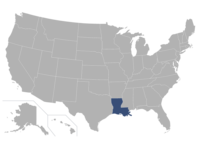
Baton Rouge, LA