Limits on cellphones in classrooms, path for foreign-trained doctors among new laws taking effect
Jun 29, 2026 | 7:30 am ET
Description
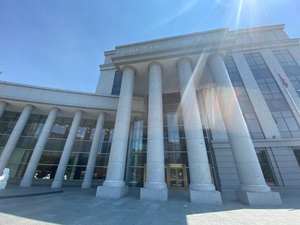
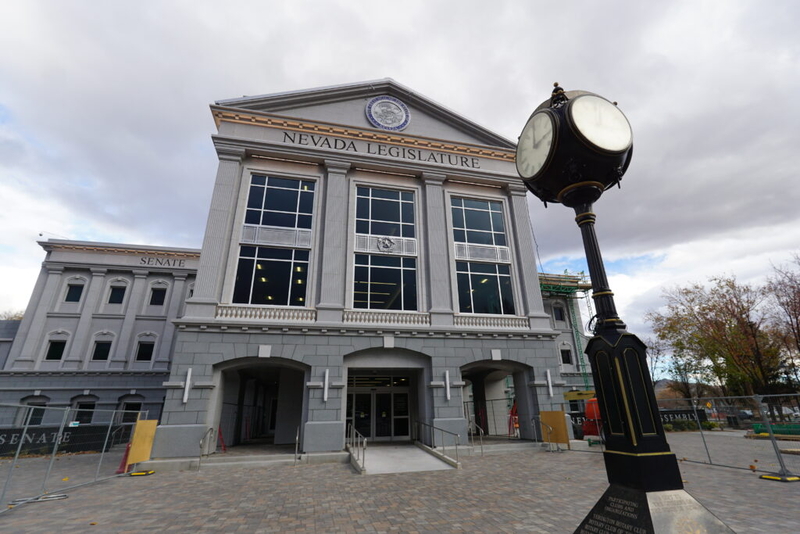
The Nevada Legislature Building in Carson City in 2025. (Photo: Jeniffer Solis/Nevada Current)
Requiring school districts to adopt policies limiting cellphones in the classroom, opening a path for foreign-trained doctors to practice medicine in the state, and limiting the number of children social services can assign to a case worker are among the bills that take effect in Nevada this week.
There are 24 bills that were passed during the 2025 Legislative Session that take effect July 1, including notable legislation that address health care gaps, education issues, and the housing crisis.
Nevada ranked 45th in the nation for the ratio of active physicians to the population in 2021. according to the American Association of Medical Colleges. The state has 218 physicians per 100,000 residents, compared with the national average of 272.
Senate Bill 124 seeks to offer some relief by authorizing the Board of Medical Examiners to issue a limited license to practice medicine for people who graduated from a qualified international medical school.
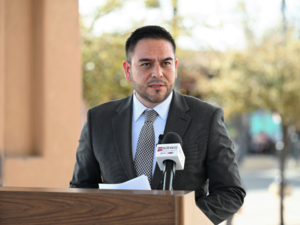
Democratic State Sen. Fabian Doñate, who sponsored the legislation, said at the time the state had an influx of foreign-trained physicians who came to Nevada but “are working in jobs like fast food and retail when they could be surgeons.”
SB 124 would authorize a limited medical license for two years, in which doctors can practice medicine under the supervision of a licensed physician. After two years, they can qualify for an unrestricted license.
Nevada is now one of 23 states that have enacted such medical licensing laws, according to the Federation of State Medical Boards.
The legislation, Doñate said, could help Nevada fill widening gaps in health care.
“Research has demonstrated that international medical graduates are more likely to serve as primary care physicians in rural areas and critical access hospitals compared to their U.S. counterparts,” he said during a May 2025 bill hearing.
Assembly Bill 396 requires the state’s most populous counties and cities to draft an ordinance addressing accessory dwelling units — smaller living units located on the same lots as larger residences.
The legislation could potentially help increase affordable housing stock, Democratic Assemblymember Shea Backus, the bill’s sponsor, said during the bill’s hearing.
“Nevada has been hit the hardest during the great recession and Covid-19 resulting in disruptions in home building,”she said during a May 2025 hearing, adding that the state “like much of the country, is experiencing an affordability crisis driven by a shortage of available housing.”
The state lacks nearly 80,000 affordable rental homes for extremely low-income residents, according to the Nevada Housing Coalition.
States and cities across the country have passed laws regulating or authorizing the building of accessory dwelling units as a way to address the affordable housing shortage.
Jurisdictions, including Reno, have already passed ordinances ahead of the bill taking effect.
Senate Bill 444 requires the board of trustees of each school district to adopt a policy on students using electronic devices, like cellphones, in the classroom.
Districts around the country have considered cracking down on digital devices in the classroom to address rampant cellphone use that was hindering the education process.
Some districts in the state, including Clark County School District, have some policies including requiring students to put phones in signal-blocking pouches. The policy only applies to students in 6th through 12th grades.
In addition to a standardized, district-wide policy, the bill also requires districts to adopt penalties if students violate cellphone policies.
Senate Bill 183 would cap the number of children social service agencies could assign to a case worker to 30. Under current state law there isn’t a limit on how many children in child welfare custody can be assigned to a case worker.
The bill allows exceptions to ensure sibling groups are assigned to the same case worker even if it exceeds the limit. Under emergency circumstances, agencies can assign more than 30 children to a case worker but only for up to 30 days.
Assembly Bill 96 mandates that cities and counties with populations exceeding 100,000 people include a specific “heat mitigation” section within their master plans.
Reno and Las Vegas are the two fastest warming cities in the nation resulting in a spike in heat-related deaths in recent years.
Strategies to address rising heat have to include creating public cooling spaces, public water access, cool building practices, and shaded areas.
Cities in recent months have begun to unveil parts of their strategy, including efforts to expand tree canopies to combat the heat urban island effect.
Las Vegas, NV