Lawyers say Montana Democratic Party could choose to not nominate replacement if Bankhead withdraws
Jul 16, 2026 | 7:39 pm ET

In a new legal analysis, a group of lawyers say the Montana Democratic Party wouldn’t need to nominate a replacement if Alani Bankhead withdraws from the U.S. Senate race.
The position runs contrary to the party’s interpretation of state law.
The lawyers, all from Montana, describe themselves as a group of strong Democrats who want the Montana Democratic Party to “keep in mind the latitude they have under the U.S. Constitution,” state statute and party bylaws.
“Montana has had an open U.S. Senate seat only three times in the last 50 years,” the lawyers wrote in the analysis sent to the party. “In a moment as rare as this one, the greatest risk to Democratic values is failing to do everything possible to flip the Senate seat.”
The lawyers who signed the analysis are Jori Quinlan, of Missoula; Larry Anderson, of Great Falls; Betsy Brandborg, of Helena; Cliff Edwards, of Billings; Kaylee Hafer, of Butte; Doug James, of Billings; Jesse Kodadek, of Missoula; Nate McConnell, of Missoula; and Roger Sullivan, of Kalispell.
(Disclosure: Doug James writes a regular column for the Daily Montanan.)
In an email, a spokesperson for the Montana Democratic Party said the party would address a withdrawal by Bankhead if one takes place.
“This situation is premature and relies on a highly unlikely scenario in which the Democratic nominee drops out of the U.S. Senate race,” said the spokesperson for the party. “About 48,000 voters chose Alani Bankhead as their nominee, and we respect the will of the people. Should this situation arise, we’ll address it at that time.”
Montana is a “red state,” and political analysts predict a Republican win by former U.S. Attorney for Montana Kurt Alme, hand-picked by outgoing U.S. Sen. Steve Daines.
Bankhead, a U.S. Air Force veteran, won the Democratic nomination, but she’s losing ground to former University of Montana President Seth Bodnar, an independent.
Bankhead is trailing in fundraising, and Bodnar is picking up significant endorsements.
Many left-of-center Montanans believe they have a better shot at a win without Bankhead, and the legal analysis — for how to run “pro-choice, pro-labor, pro-public lands independent Seth Bodnar” directly against Alme — ratchets up the pressure on Bankhead to drop out.
“In these trying times nationally and in state, the Montana Democratic Party owes it to its members to explore all opportunities for success on the issues and values that matter most,” the lawyers said. “We hope Montana Democrats choose the path most likely to advance their platform, defeat Kurt Alme, and secure a workable Senate majority.”
Aug. 10 is the deadline for candidates to withdraw from the general election.
A spokesperson for the Bankhead campaign said Bankhead is the Democratic candidate for the U.S. Senate in Montana, she is incredibly qualified, and she is not bought by out-of-state money.
“Alani is here for the people of Montana — not the state party leaders, and not the corporate lawyers,” said the campaign’s Kaight Meyers in an email. “ … Let’s focus on the issues that matter — not finding legal loopholes to push through another mouthpiece for party elites.”
Previously Bankhead has been unequivocal in her commitment to the race.
She said Bodnar was “absolutely the last person on the face of this earth I would ever drop out of this race for.”
Bankhead raised the least amount of money compared to Bodnar and Alme in the most recent campaign finance reports.
A progressive political action committee that funded Bankhead in the primary pulled out of Montana, finding the seat unwinnable by a Democrat.
Recently, a group of Democratic state legislators called on her or Bodnar to drop out of the race to consolidate support against Alme — and they said Bodnar appears to have the advantage.
In a letter Thursday, the lawyers offer the legal argument for why the Democratic Party wouldn’t need to nominate a replacement should Bankhead withdraw; examples of similar situations elsewhere in the country; and relevant examples in Montana.
Political parties have a First Amendment right to associate — or not — as they see fit, the lawyers said. They said state law would support the will of the party.
“Democratic parties in states including Nebraska, Utah, Alaska, Maine and Vermont have chosen to align with independent candidates where it advances the party platform,” the lawyers said. “Montana can do the same.”
In 2024, for example, the Nebraska Democratic Party “intentionally left their ballot line blank” to ensure the most competitive Senate matchup against a Republican incumbent. The independent lost but has consolidated support in a 2026 campaign.
“This time, the Nebraska Democratic Party fielded and funded a Democratic candidate committed to dropping out, who withdrew after the primary, the party endured and won the lawsuits that came from Republicans, and now Nebraska Democrats and independent voters are a united front,” the lawyers said.
Each state has its own bylaws, they said, but political parties are free to choose who represents them.
That means Montana Democrats are free to choose to “advance their platform rather than feel cornered to nominate a Democratic candidate who cannot win a head-to-head match up with the hand-picked Republican nominee,” the lawyers said.
In 2020, when both Libertarian primary candidates withdrew from the U.S. Senate race, the Montana Libertarian Party chose not to name a replacement, and it did not have a nominee on the ballot, the letter said.
“That decision went unchallenged in court and stands as a clear example of a party exercising its freedom to choose whether to associate or nominate or otherwise endorse a candidate at all,” the letter said.
The lawyers said if Bankhead withdraws, the Montana Democratic Party would need to vote by Aug. 19 to either nominate a candidate — or not nominate one.
The Montana Democratic Party earlier this week told the Daily Montanan state laws “require the party to nominate a replacement,” and “someone must fill that spot.”
The lawyers offered a different interpretation.
They said state statute says parties “may” make nominations, and they must follow their bylaws if they do; it doesn’t require them to nominate.
“ … The party is free to interpret its own bylaws to include an option to nominate no one,” the lawyers said. “This is the simplest and most efficient path for the Montana Democratic Party to support the head-to-head race between independent Seth Bodnar and annointed Republican Kurt Alme.”
The lawyers said in case of a legal challenge, no state precedent is “directly on point,” but “state law defers to parties generally to administer their own rules.”
“Personally, we would choose a tough internal conversation and fighting off a possible lawsuit every day of the week if it means we have the opportunity to advance our values and policies in the U.S. Senate, arguably the most powerful single political body in the world,” the lawyers said. “The only alternative is loss — and further advancement of the federal administration’s agenda.”
Reporter Micah Drew contributed to this story.
Editor’s note: This story has been updated with comment from the Bankhead campaign.
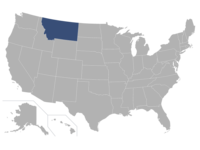
Helena, MT