Historic portraits telling the story of Black South Carolinians now online through USC library
Aug 08, 2026 | 10:02 am ET
Description
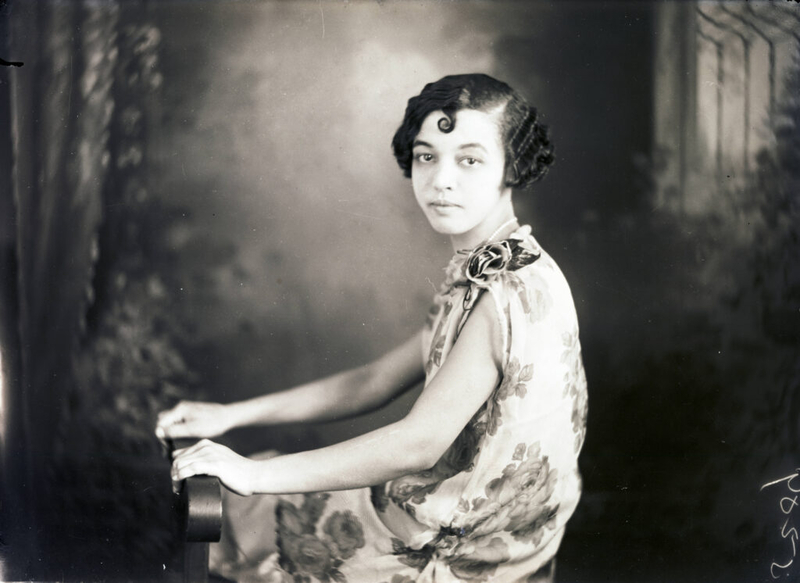
Portrait of young woman with bobbed hairstyle and floral print dress (Photo courtesy of USC libraries/Richard Samuel Roberts collection)
COLUMBIA — A young boy looks directly into the camera with his arms wrapped around his pet rooster.
A boxer crouches in a fighting stance, gloves up in front of his face.
Nurses dressed head to toe in white in front of the home of Dr. Matilda Evans, the first Black woman licensed to practice medicine in South Carolina.
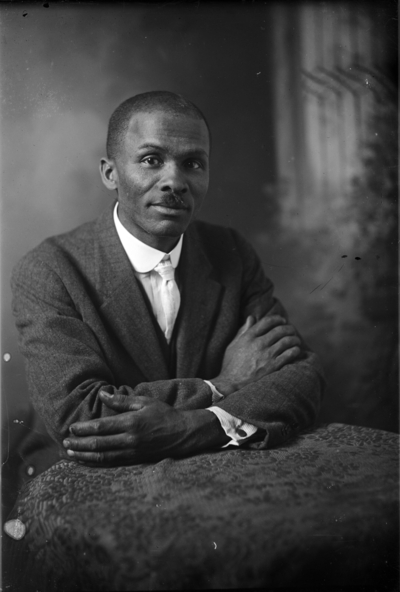
These images, featured in a collection of nearly 6,000 historic pictures by photographer Richard Samuel Roberts of Columbia’s Black families and community, are all available free to the public online for the first time.
“What we are seeing when we look at these pictures is African Americans the way they wanted to be seen and remembered,” said Rachel Young, a historian at the Center for Civil Rights History and Research at the University of South Carolina. “We are also seeing people and places that have been erased, forgotten or ignored by a broader historical record.”
The digitization of the Roberts collection is the culmination of a decades-long effort by the Roberts family, librarians and researchers at the University of South Carolina.
In 1920, Roberts moved his family from Fernandina, Florida, to Columbia, settling at a home on Wayne Street in the heart of Ward One, a working-class Black neighborhood that has since been largely erased as the university has expanded.
From 4 a.m. until noon, Roberts worked as a custodian at the U.S. Post Office, earning a living to take care of his wife and five children. After his shift ended, he would go to the photography studio space he rented on Washington Street, where he captured images of his community through glass plate negative photography.
His studio was a single room, divided into dressing and waiting areas, a dark room, and a workspace. He designed special equipment to diffuse light, produce different-sized pictures and retouch negatives.
“I tell people that Richard Samuel Roberts was not simply a photographer, he was an artist and he was also a historian,” said Bobby Donaldson, executive director of the civil rights center and a history professor at USC.
“He understood that one of his assignments was to tell a complete history of African American life in Columbia and in South Carolina, and he knew that he was telling a story that was against the prevailing narrative and stereotypes surrounding Black people,” he said.
Then, in the 1970s, former South Caroliniana Library field archivist Tom Johnson worked with the Roberts family to remove boxes of the negatives from the crawlspace of the family home, where they had been stored, to the university library, where they could be preserved.
Johnson worked with Philip Dunn, a photography instructor at the college, who took the negatives to his home dark room and developed some of them into contact sheets to see what they looked like.

This portrait of Modjeska Simkins may have been taken during the time she taught at Booker T. Washington High School. (Photo courtesy of USC libraries/Richard Samuel Roberts collection)
What the pair found was compelling: photographs depicting a vast cross-section of Black life in the state capital during the early 20th Century, from farmers to socialites, babies to funerals, students to magicians, and businesses to community leaders, including Civil Rights activist Modjeska Simpson and celebrated school teacher Celia Dial Saxon.
“There’s just something different about these photos,” said Abby Cole, a spokeswoman for the university’s library system “There’s some depth of humanity.”
The collection was officially purchased from the Roberts family estate in 2020, with “tens of thousands of dollars” raised by the University South Caroliniana Society, Cole said, without specifying. Then, in 2024 the civil rights center paid students to digitize the photos, turning them into a living collection viewable by all.
Some of the people pictured are named in the collection. The center and libraries hope people continue to engage with the collection now that it’s online by identifying those they know in the photos.
“We know photographs have a way of piquing interest and stirring up memories in individuals,” Donaldson said. “These photographs push people to dig in the deep recesses of their mind and their memory, and they begin to recall details that probably would not come as easily without images to facilitate them.”
Viewers of the collection can click a box to submit identifications or notes on each image.
Many of the people pictured have descendants who still live in Columbia today.
They include Family Court Judge Michelle Hurley. Hurley grew up in Columbia, a graduate of Heathwood Hall, Howard University, and USC School of Law. When she was younger, she worked at her family’s funeral home, writing obituaries.
The Manigault-Hurley Funeral Home served the Black community in Columbia for almost a century. Hurley’s grandmother, Annie Mae Manigault-Hurley, was the first female embalmer, white or Black, to be licensed in the state.

Annie Mae Manigault Hurley (1907-1976) was a mortician who graduated from the Renouard School of Embalming in New York. Her parents, William Manigault and Annie Rivers Manigault, operated Manigault Funeral Home, and after graduating, she returned to Columbia to work with them. (Photo courtesy of USC libraries/Richard Samuel Roberts collection)
Hurley’s great-grandparents also lived next door to Roberts and saw first-hand the impact he had.
“People wanted their stories told, so they went to Mr. Roberts,” Hurley said.
“These photos tell the stories of people’s families, and help people identify their ancestors,” she added. “They bring that history home so people can say, ‘This is who I am, these are the people I come from.’”
One of Roberts’ surviving grandchildren, Judge Richard Warren Roberts, grew up in New York hearing stories about his grandfather.
“It’s one thing to be able to get a two-dimensional paper with your ancestry on it, but it is another thing completely to be able to see your family members in photographs like these,” he said. “You can see the clothes they wore which could signal where they were employed, or what they did for a living. These kinds of revelations infuse people with a greater sense of self.”
As a student, before coming to work for the university libraries, Cole was among those who helped digitize the collection. They scanned the thousands of the negatives, at first on a flatbed scanner and then with a high-end camera scanner. While some of the glass plates were in near perfect condition others were cracked or deteriorating.
“It was a passion to kind of recapture that history,” Cole said.
“These are communities that have been kind of pushed aside or taken advantage of,” Cole added. “And there’s a lot of distrust historically between minorities and universities or archives, because archives decide what stories get told and in what way. This was an effort to rebuild those bridges and to show these communities we want to preserve your story in addition to those stories that are more predominantly told.”
Columbia