Lawsuits challenging embryo disposal could hinder IVF
May 20, 2026 | 5:00 am ET
Description
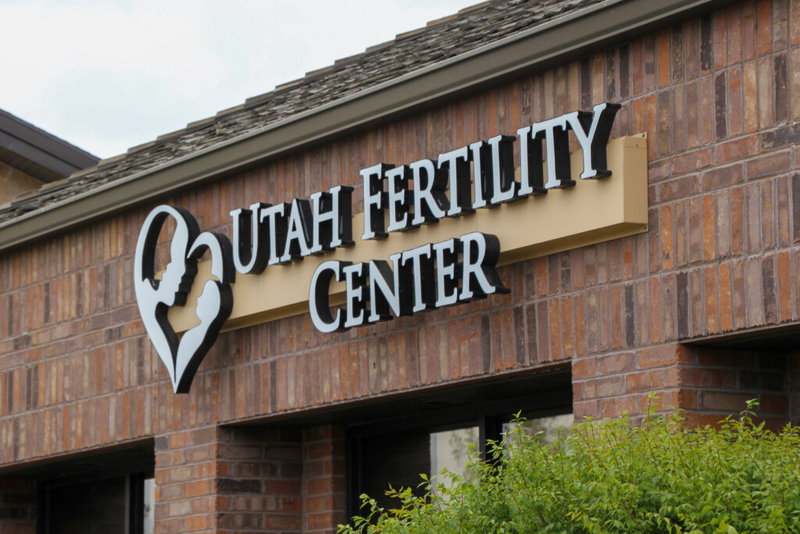
An anti-abortion group last month sued seven Utah fertility clinics, including Utah Fertility Center, claiming their disposal of embryos as part of the in-vitro fertilization process violates the state’s wrongful-death law. (Photo by McKenzie Romero/Utah News Dispatch)
An anti-abortion group last month sued seven Utah fertility clinics, claiming their disposal of embryos as part of the in vitro fertilization process violates the state’s wrongful death law.
The ministry Voice for the Voiceless believes it has a strong case because Utah is one of four states — Alabama, Louisiana and Missouri are the others — that have both a “fetal personhood” law and a civil wrongful death law that, the group contends, might apply to frozen embryos.
Other states offer opportunity for similar lawsuits: At least 10 have either a fetal personhood law — giving a fetus, embryo or fertilized egg the same legal rights as a person who has been born — or a wrongful death statute that might include frozen embryos, according to Pregnancy Justice, a group that tracks the issue and advocates for the rights of pregnant women, including the right to abortion.
“There’s a number of states that have laws like Utah’s that find that a person exists at a certain point, and that is conception,” said Frank Mylar, the attorney representing Voice for the Voiceless. He also represents another plaintiff, an anonymous woman from Ogden, Utah, who alleges in the lawsuit that she underwent an IVF procedure at one of the seven fertility clinics and was not informed that unused embryos would be discarded or about options to put her embryos up for adoption.
“Once that egg is fertilized, it actually at that point becomes a human being that’s entitled to rights,” Mylar said in an interview. “So every state that has that as a law, what we’re doing in this lawsuit would be very much applicable.”
The lawsuit illustrates the divide among many in the anti-abortion movement. Followers of a conservative philosophy known as “pronatalism” believe it’s imperative for Americans to have more babies. They want easier access to IVF, and President Donald Trump campaigned on making IVF more affordable.
So far, he has negotiated steep discounts on three IVF drugs and proposed allowing employers to provide separate health insurance coverage for fertility benefits, including lab tests, medications, genetic testing and IVF.
But the IVF process often involves discarding embryos, creating a conundrum for people who support IVF but believe that life begins at fertilization and oppose abortion. For anti-abortion purists, those embryos are unborn children, so disposing of them is no different from abortion.
The split on the political right drew attention in February 2024, when the Alabama Supreme Court, which consists of nine Republicans, ruled 8-1 that the state’s wrongful death statute applied to embryos. That decision cleared the way for couples to pursue lawsuits if their frozen embryos were destroyed. It temporarily halted IVF at Alabama clinics. It also ignited a national uproar and prompted the Republican-led Alabama legislature to immediately step in to protect IVF providers from legal liability.
But court cases and legislative efforts in multiple states show that the IVF debate is ongoing.
In Indiana and Ohio, courts have weighed whether frozen embryos are people or property in cases involving former partners who disagreed on what to do with their embryos when they separated.
In Kentucky, a judge earlier this month struck down language in the state’s abortion ban defining human life as beginning at conception, handing a victory to a Jewish woman who argued that the ban violated her religious freedom by putting her at risk of prosecution if she pursued IVF. The state has appealed the case.
In Kansas, a proposed bill this year would have made it illegal to destroy a fertilized embryo, though it died in committee. And Tennessee last year became the first state in the South to enact a law explicitly affirming the right to access IVF and birth control.
Anti-abortion lawmakers seek to redefine ‘abortion’ to exclude medical treatment
Kulsoom Ijaz, a senior policy counsel for Pregnancy Justice, predicted that IVF opponents will continue to use fetal personhood language to challenge the fertility procedure. Ijaz said that when fetal personhood language appears in one area of state law, “it inspires legislators to align their laws across the board, with these equal-protection-for-the-unborn bills.”
Then, she said, “courts use these definitions to then make case law in other areas of the law.”
Risa Cromer, an anthropology associate professor at Purdue University who focuses on medicine and reproductive politics, described personhood language as “a threat for broad swaths of reproductive health care needs that remain highly popular, IVF being one of them.”
“Personhood doesn’t explicitly implicate abortion miscarriage management, treatment for ectopic pregnancy, contraception, or IVF. In judicial interpretation, it absolutely is proving to be a threat,” Cromer said.
Utah lawsuit
IVF involves retrieving a woman’s eggs from her body and then fertilizing them with sperm in a laboratory. Any embryos that result can then be either transferred to her uterus or frozen for future use. Unused embryos can also be adopted, but many are discarded. And storing frozen embryos can be costly, from hundreds to thousands of dollars per year.
Louisiana is the only state that bans the destruction of IVF embryos. But fertility clinics have gotten around the 1986 law by shipping unused embryos out of state for storage.
The lawsuit says Voice for the Voiceless is morally opposed to IVF. But it also claims the clinics could perform IVF without discarding embryos by only creating as many embryos as will be implanted into their clients.
As Republicans spar over IVF, some turn to obscure MAHA-backed alternative
Mylar, the attorney, said defendants could change their clinic policies to comply with the state’s wrongful death statute “if they basically said, ‘Our intent is that you have every one of these fertilized eggs, and we’re not going to willingly or negligently or intentionally let them die.’”
Voice for the Voiceless President Kriss Martenson, named as a plaintiff, said in an interview that he does not believe IVF could be practiced without violating the law. He said the lawsuit is a strategic effort to apply fetal personhood language to IVF and to abortion at all stages. The lawsuit says the organization, which it describes as a nonprofit, has legal standing because of its efforts opposing abortion in Utah.
Martenson said he was inspired to file the Utah lawsuit by the 2024 Alabama Supreme Court decision and by the combination of Utah’s fetal personhood and wrongful death laws.
A victory in the lawsuit “could strengthen the legal arguments that the state has a constitutional obligation to protect human life from the moment of fertilization,” Martenson said. “So that’s what I’m showing in Utah, and I think that could affect other states.”
Discarding embryos
Disposal of embryos is common in IVF because for each single fertilization effort, multiple embryos are created to maximize the chance of success. Typically only one or two are transferred to a patient’s uterus, however, to prevent high-risk pregnancies of multiple fetuses. Some embryos are discarded because of chromosomal issues or genetic diseases, discovered during genetic screening in the lab. The Utah lawsuit charges that this is “akin to eugenics.”
Stateline contacted all of the clinics named in the lawsuit, but one declined to comment and the others did not respond in time for publication. The defendants have not yet filed written responses to the lawsuit. The seven clinics are: Conceptions Fertility Center, East Bay Fertility Center, Reproductive Care Center, Utah Center for Reproductive Medicine, Utah Fertility Center, Utah Fertility Specialists and Wellnest Fertility Clinic.
Susan Crockin, an adjunct professor at Georgetown University Law Center who teaches assisted reproductive technology law, said it is standard practice to inform IVF patients about their options around unused embryos. If the lawsuit is successful, Crockin said, it could severely curtail patient choice.
“The one thing that I think gets lost in this debate often is that a number of embryos that are not used for procreation … because they potentially have a genetic anomaly that is incompatible with life,” Crockin said. “So if every IVF embryo is considered a legally recognized person, I don’t understand what these anti-abortion, anti-IVF advocates would have us do with these embryos that will be sitting in cryopreservation tanks, or will not be making a viable human being.”
She added that “conflating every attempt to have a family with ‘every embryo in a freezer deserves to be put into a deserving womb’ feels very dangerous.”
Conservatives push to declare fetuses as people, with far-reaching consequences
Cromer, of Purdue University, noted that “the vast majority of religious Americans are supportive of access to IVF.” Cromer is a fellow at the Public Religion Research Institute, which found in a 2024 survey that majorities of white evangelical Protestants, Hispanic Protestants and Latter-day Saints both oppose laws that would make IVF illegal and strongly support laws declaring that human life begins at fertilization.
“So, these kinds of lawsuits, while there might be political opportunity for particular jurisdictions, such as the state of Utah, (are) completely out of step with what most Americans — religious Americans — want for themselves, their families and their neighbors,” Cromer said.
Stateline reporter Sofia Resnick can be reached at [email protected].