Bill that could limit abortion pill access starts trip through Ohio Senate
May 21, 2026 | 3:55 am ET
Description
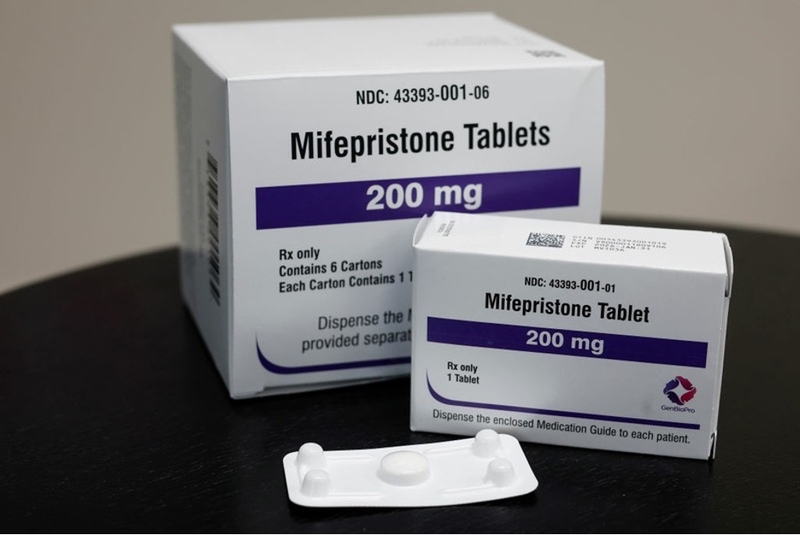
The U.S. Supreme Court ruled on Thursday that telehealth access to abortion medication can continue according to current rules from the U.S. Food and Drug Administration. (Photo by Anna Moneymaker/Getty Images)
An Ohio House bill creating in-person requirements for “high-risk” medications is now in an Ohio Senate committee after passing the House last year. Advocates question the bill’s metrics and say it’s a back-door way to attack abortion pill access.
Ohio House Bill 324 was brought by Republican sponsors to create “greater oversight” over medications that are determined to have “a high risk of severe adverse effects,” according to bill sponsor state Rep. Adam Mathews, R-Lebanon.
The bill passed the Ohio House in November along party lines, 60 to 28.
Using insurance claims data, patient reporting, and “applicable data” from the FDA, the bill would require in-person appointments for medications that have caused complications that required hospitalization like sepsis or hemorrhaging, cases of organ failure, or death, in more than 5% of its users.
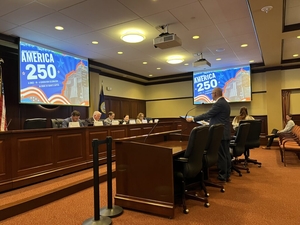
“The rise of mail-order medication and telehealth has transformed how Ohioans access prescription and over-the-counter drugs,” Mathews told the Ohio Senate Health Committee.
“While telehealth often is beneficial, offering increased access to care and convenience, it may fall short when high-risk medications are involved.”
The measure’s co-sponsor, state Rep. Meredith Craig, R-Smithville, said requiring in-person consultations and banning mail-order sales of “dangerous drugs” through the bill “protects Ohio’s citizens from the risks associated with inadequate oversight in mail-order and telehealth systems.”
The bill does not single out one medication specifically, but it was criticized in the House for the consequences it could have on medical access to necessary medications like diabetes prescriptions and blood thinners, and also the data that could be used to declare a medication in-person only.
Even before a national battle over the medication abortion drug mifepristone came to Congress and the U.S. Supreme Court, H.B. 324 heard from reproductive rights advocates who said the bill could create an avenue for debunked or medically unsound studies to be used to argue that medication abortion drugs have too many adverse effects. The drug has been approved by the FDA for decades and has seen decades of peer-reviewed medical studies showing serious complications to be statistically rare.
If mifepristone and its companion drug misprostol were required to be prescribed only during in-person appointments, abortion access could be impacted in low-income areas, and areas of the state where clinics and medical facilities are limited, advocates told House Health Committee members last year.
Anti-abortion advocacy groups spoke in support of the bill while it was in the committee, saying the bill would provide “necessary safeguards” specifically for medication abortion pills.
In the recent Ohio Senate hearing, physician and state Sen. Beth Liston, D-Dublin, pointed to national drug safety data collection and peer-reviewed scientific journals “that do a broad analysis of drug safety.”
“But you’re excluding them from being used (in the bill),” she said to the co-sponsors.
Craig said discussions were had while the bill was considered in the House, and “ultimately, the language in the bill includes strong measures,” including the use of insurance claim data and patient reports.
“Quite honestly, looking at actual insurance claims, I think, is where we’re going to find the most concrete data in this,” Craig said.
She added that 30 other states use insurance data to “establish and try and figure out the value of care.”
“You have to look at what the cost of care is,” she told Liston. “Insurance claims paying for that is a big part of that.”
Liston pushed back on the argument, saying insurance claims don’t point directly to the outcome of drugs and their safety.
“No one uses insurance claims to look at health outcomes when you have other mechanisms specifically to do so, especially when there’s no real transparency publicly on Medicaid data, Medicare …,” Liston said. “Whereas, there is a national drug safety database and surveillance system that captures that.”
The senator noted data on blood thinners and diabetes medications that show they can have the severe adverse effects the co-sponsors noted as part of the bill’s focus, and asked if regulating those types of medications was part of the aim of the bill.
“You have very strong medications treating very difficult situations,” Mathews said. “But you want to have in-person checks rather than just having telemedicine without having any in-person evaluation.”
H.B. 324 will now be open for hearings in the Senate Health Committee to hear from those who support and oppose the bill. The next hearing on the legislation has not been scheduled.
Columbus, OH