Lawmakers wrestle with the proliferation of e-scooters on Pa. roadways
Sep 01, 2026 | 4:55 pm ET

Description
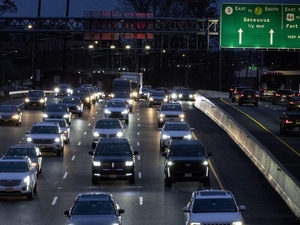
Whether going to school, a job or the doctor’s office, e-scooters, e-bikes or other vehicles can be more affordable and healthy for users. (Capital-Star Photo)
This story was updated on Sept. 2 at 1:55 p.m. to update the spelling of Scott Bohn’s name.
Advances in battery technology and other innovations have made small, lightweight e-scooters designed to travel short distances cheaper — and faster — than ever, but Pennsylvania’s legal code and safety regulations haven’t kept up.
The increasingly popular devices aren’t legal to operate on public streets in the commonwealth, and critics say car and truck drivers may be unprepared to share the road with their smaller counterparts.
“It’s like the wild west out there,” Scott Slingerland, the executive director of the Coalition for Appropriate Transportation, told state legislators in the Lehigh Valley on Tuesday.
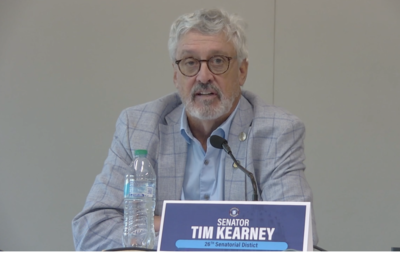
Some lawmakers have proposed limiting who can drive e-scooters and where they can ride, similar to laws passed in over two dozen other states. Sen. Tim Kearney (D-Delaware) said thousands of people used e-scooters or similar vehicles across the commonwealth, but educating riders — especially minors — about safety considerations isn’t typical.
“You can buy them online or in-store with ease … Retailers market e-scooters as a kid’s toy — Walmart even lets you filter for teen, tween, child and even toddler e-escooters,” Kearney said. “The reality is that e-escooters are not going away, and we cannot put the proverbial toothpaste back in the tube.”
Stakeholders agree that the vehicles should meet some minimum standards for braking, lights, reflectors and a “sound signal,” as described by Henry Beaver, who assists with multimodal transportation planning at the Pennsylvania Department of Transportation.
Beaver added that operational requirements are critical for the safety of all road users, such as maximum legal speed limits, minimum ages to drive and where low-speed e-scooters can operate.
“Such as within bike lanes, but not between lanes of traffic or on roads with posted speed limits above a certain threshold,” continued Beaver.
But while Beaver said e-scooters should not be considered motor vehicles, thus making them exempt from state registration, titling and inspection, some law enforcement officials urged lawmakers to reconsider.
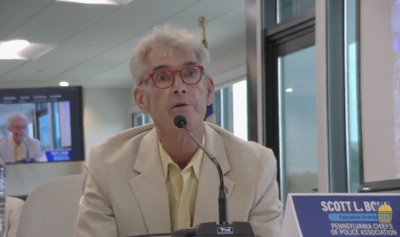
“Our association believes the clearest and most enforceable statewide standard remains a prohibition on electric scooters on public roadways. But if the General Assembly determines that prohibition is not an option, Pennsylvania should not settle for partial regulation,” said Scott Bohn, the executive director of the Pennsylvania Chiefs of Police Association.
Registration should be a statewide requirement if the commonwealth legalizes e-scooters, Bohn said, alongside a requirement for driver education or safety training before use.
“The measure of any micromobility law should be straightforward: does it reduce the risk for riders, motorists, pedestrians and police while giving officers a law they can realistically enforce? If Pennsylvania cannot answer that question with confidence, the commonwealth should choose … prohibition,” he added.
The importance of education
Others who spoke to lawmakers emphasized the utility of micromobility options like e-scooters. Whether going to school, a job or the doctor’s office, e-scooters, e-bikes or other vehicles can be more affordable and healthy for users.
Ngani Ndimbie, the director of programs for Mobilify Southwestern Pennsylvania, shared examples of people she’d met in communities across the state who used e-scooters or e-bikes, including an older man who didn’t have the strength for long walks, a young man in a suit commuting for work and a family utilizing a city trail.
“Some of the benefits of these types of trips are increased mobility for the (older man) and the employer of the (young man) doesn’t need to provide an additional parking space,” said Ndimbie.

Ndimbie noted challenges for police enforcing separate laws for e-bikes or e-motorcycles, which can look very similar but have vastly different capabilities.
These similarities “present difficulty for our officers in identifying what they’re really looking at. We don’t have a fast and accurate way,” said Allentown Police Chief Charles Roca. “It might be a feeling, but we don’t have a weight on it. We can’t predict how fast it’s going.”
Municipal governments are restricted from using radar to measure vehicle speed in Pennsylvania.
Other states have mandated brightly colored tags to distinguish between types, Ndimbie added.
Car dealerships are obligated to sell road-safe vehicles, but when it comes to the vast variety of micromobility options, Ndimbie said, “it is so easy to go online and buy something that is so far from safe and is so far from legal.”
“One solution is education, making sure that residents understand what the product specifications are for what they’re trying to buy. This, I want to note, is I think a huge part of the problem … It’s really easy to buy something overpowered,” Ndimbie said.
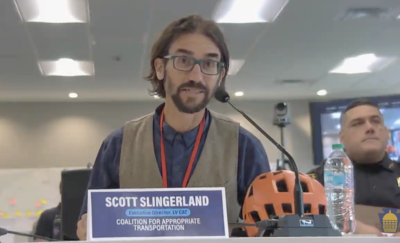
Slingerland, with the Coalition for Appropriate Transportation, noted that PennDOT’s driver’s manual had a section on sharing the road safely with all users, including pedestrians and cyclists.
But “the challenges we see on the street are often not from new drivers,” he continued. “As a bicyclist, personally, a lot of the animosity would come from older (drivers) … and that comes from confusion about understanding a bicyclist’s place on the road or pedestrian yield laws.”
He noted that Pennsylvania requires continuing education for many professions, including engineers like himself, lawyers, doctors and cosmetologists. The same could be done for drivers renewing their licenses, he continued.
“If there was something that were not very onerous, like watching a five-minute video from PennDOT when you renew online or at the driver’s license center, we could introduce high-priority safety topics like work zones, emergency vehicle yield laws, aggressive driving and things on vulnerable road users,” Slingerland said.
Kearney’s proposal
Kearney’s proposal, Senate Bill 1008, wouldn’t allow those under 16 to drive, and minors must wear helmets. Additionally, e-scooters would have a maximum speed of 20 mph, similar to the state limit on electric bikes, and could only carry one person at a time.
The legislation is named “Abby’s Law” after Abby Gillon, a 12-year-old who died when she was struck by a car while riding an e-scooter with a friend in Delaware County. Neither girl was wearing a helmet, and testifiers emphasized that helmet use is “very, very low” for e-scooter users.
When he first publicized the bill, Kearney said some of the earliest responses came “from people in their 30s and 40s who were using them for last-mile transportation.”
“They don’t want to drive the mile to go to the train station and then pay to park it,” said Kearney. “They could pop over on their e-scooters and just fold it up and carry it with them. Or lock it (up). It’s a benefit we want to keep. We want to make sure it works that way.”
In response to Bonn’s suggestion about mass registration, Kearney said others pushed back because it would be a “bureaucratic nightmare” when similar vehicles such as bicycles aren’t registered. Additionally, e-scooters and e-bikes don’t come with individualized identifiers — such as a car’s VIN — which would complicate proposals to register the vehicles.
“I’m not sure what the (line) is, but as the power grows stronger and the speed grows faster … then the need for registration becomes much more important,” said Kearney. “We feel like we need to make a step very soon to try to provide that kind of clarity across the commonwealth.”
He emphasized that he was open to discussions. His bill, which has bipartisan support, hasn’t yet had a committee hearing.
“Clearly the legislature has lots of work to go to put us in a better track here. I’m eager to get our legislation moving instead of languishing in committee,” Kearney continued, urging municipality leaders, families and stakeholders to pressure lawmakers on both sides of the aisle “to stop stalling and take action.”
Harrisburg, PA