Advocates say Trump’s plan to exclude noncitizens from the 2030 census is unconstitutional
Oct 20, 2026 | 2:43 pm ET
Description
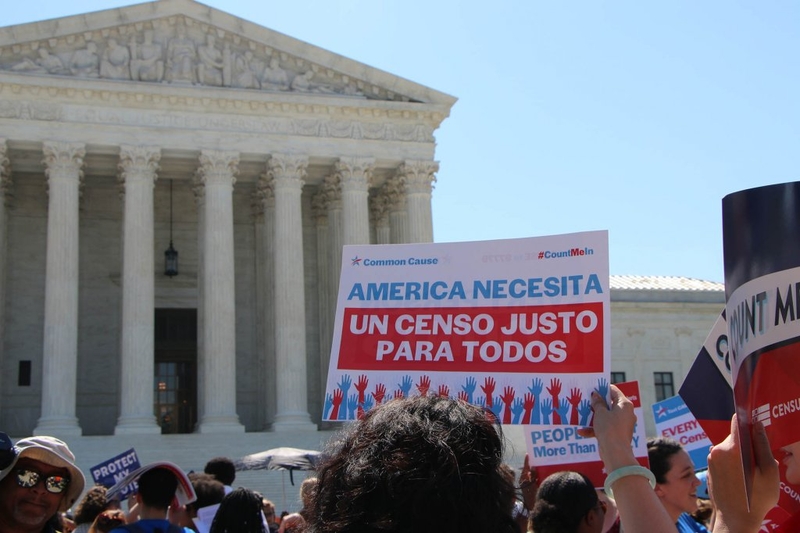
(Photo by Miranda Faulkner/Cronkite News)
Community advocates and city leaders are sounding the alarm over a federal push to make sweeping changes to the census, warning that those changes will make it harder to meet public needs.
Last month, the Census Bureau published a proposal to count only citizens and lawful permanent residents when the census is next collected in 2030. And questions about race, ethnicity and sexual orientation would be eliminated. Collecting information on race and ethnicity has been included in the decennial census since 1790. The plan, which has drawn backlash from elected officials and activists across the country, will likely face a legal challenge if the Trump administration moves forward with it.
Tempe Councilwoman Doreen Garlid said the changes jeopardize the ability of city officials to determine where to allocate resources for at least a decade after the census is taken.
“How many police officers and firefighters we staff, where we run transit and which federal grants we qualify for all trace back to the count,” she said during a virtual roundtable on the proposal.
Garlid pointed out that Tempe’s city council relies on the data from the census to put together its budget every year. She added that the changes to who is counted leave out international students, who make up a significant portion of the college city’s population. Nearly 18,000 foreign-born students attend Arizona State University.
Garlid called on local leaders to speak out against the proposal and submit a comment to the federal government about the impact it would have on their communities before the Nov. 2 public comment deadline. Those comments, she noted, will be reviewed in court if a legal challenge arises.
“Every city, town, village and county relies on an accurate count, and every one of them pays when it falls short,” Garlid said. “So, public officials need to be on the record.”
Stacey Carless, the executive director of North Carolina Counts, a community outreach and civic engagement group, said that removing race and ethnicity questions from the 2030 census would be a step backwards after just recently making progress on the issue.
In 2024, the federal government combined race and ethnicity into one question and added separate Middle Eastern and North African categories. Merging the questions on race and ethnicity and expanding the list of options was lauded as a way to help people feel more confident about self-identifying and result in fewer people leaving the questions unanswered.
“We’ve had a lot of progress in regards to making sure that communities are reflected in the data and that they’re seen,” Carless said. “We don’t want to move backwards with removing race and ethnicity questions from the decennial census altogether. We should be building on the progress that we already made and not undoing it.”
Carless added that the demographic questions are critical because they can be used to challenge gerrymandered congressional maps. The data collected from the census is used to divide the seats in the U.S. House of Representatives.
“How can we address discrimination if we’re taking away the very data that helps us identify and prove it?” Carless asked.
Murad Awawdeh, the president and CEO of the New York Immigration Coalition, slammed the effort to ignore immigrants as unconstitutional. The 14th Amendment requires the census to collect information on everyone who lives in the country and the census has long interpreted that as meaning anyone, regardless of their citizenship status.
“The 14th Amendment says count ‘the whole number of the persons’ in each state,” Awawdeh said. “It says ‘persons,’ not citizens.”
Awawdeh said that excluding noncitizens from the census count would negatively impact the ability of states to allocate public resources.
According to the Migration Policy Institute, an estimated 307,000 immigrants without legal status called Arizona home in 2023.
This isn’t the first time the Trump administration has lashed out at the inclusion of immigrants in the census. In 2019, the U.S. Supreme Court struck down a question asking about citizenship status from the 2020 census.
Lauren Morales, the public policy officer for the Colorado Health Foundation, which advocates for racial justice in healthcare, said that the demographic data gathered in the census is important because it helps determine where money for public health efforts should go. The amount of federal funding a state receives for their Medicaid and Medicare programs is partly decided by that data. And public health organizations figure out where to open new clinics or what services best serve a specific community by referring to that information, too.
Minority populations face health disparities, Morales noted. Some communities deal with a higher risk of diabetes and others suffer greater maternal death rates. The census helps identify where those communities are, Morales said, which makes it easier to come up with solutions and direct funding where it’s most needed.
“If we don’t know where disparities exist, we have fewer tools to determine where resources are needed to address these disparities which perpetuates or deepens inequities,” she said.
Phoenix, AZ