State says Missouri’s marijuana market is competitive. But who owns it?
Oct 20, 2026 | 2:59 pm ET
Description
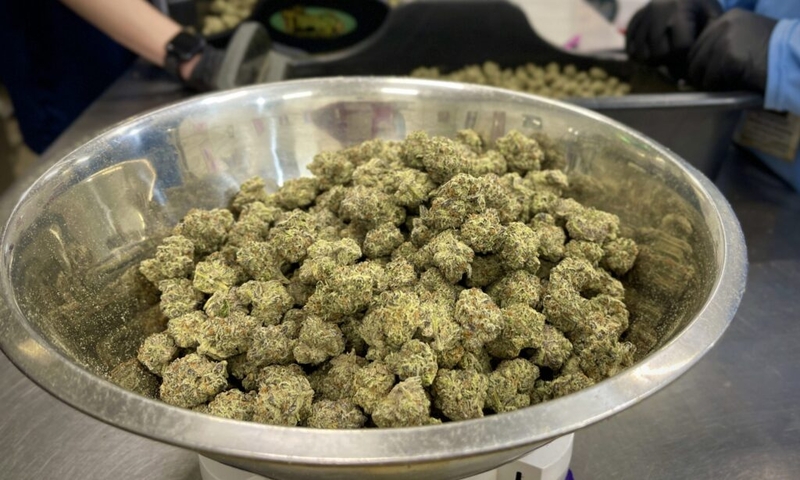
Illicit Gardens employees sort dried marijuana buds at the company's manufacturing and cultivation facility in Kansas City (Rebecca Rivas/Missouri Independent).
Missouri regulators say the state doesn’t need to issue more licenses to grow, manufacture or sell marijuana because the legal cannabis market is meeting consumer demand.
But the statewide study behind that conclusion couldn’t answer a key question: whether a small number of companies controls a substantial share of Missouri’s marijuana businesses.
The study, released last week, examined cannabis purchasing habits, monthly consumer spending and sales in both regulated and unregulated markets. New York-based Cannabis Public Policy Consulting LLC found no evidence that Missouri’s statewide or regional cannabis markets are overconcentrated based on how sales are distributed among licensed facilities.
The researchers could not determine how concentrated ownership was among cannabis businesses because they lacked usable data on who owns the licenses and whether multiple dispensaries operating under different licenses belong to the same company.
“…ownership-based analyses would provide a more comprehensive assessment of market structure by evaluating concentration across common ownership groups,” the report states.
Division Director Amy Moore acknowledged that limitation in a statement following the study’s release, saying the agency plans to incorporate ownership data into future analyses.
“While this study did not include all factors related to market evaluations, such as ownership data,” Moore said, “DCR intends to include this information as recommended by CPPC in future studies to assist with more comprehensive market monitoring.”
The report comes just months after at least two lawsuits were filed, alleging some cannabis companies have violated Missouri’s antitrust laws.
Missouri’s Constitution establishes minimum numbers of cannabis licenses but allows regulators to issue additional licenses to meet demand and maintain competition. The study’s findings will help guide those decisions as the state considers whether to expand its existing market.
The study found that Missouri’s regulated market captures the vast majority of cannabis purchases. About 93% of purchases occur at licensed dispensaries, which account for more than 90% of purchases in every congressional district.
Consumers spend about half their monthly cannabis budgets on flower — the dried marijuana buds commonly sold in containers — followed by vape products and edibles.
Annual dispensary sales rose from about $1.30 billion in 2023 to $1.51 billion in 2025. Over the same period, the number of active dispensary licenses increased from 201 to 220.
Average annual sales per dispensary remained relatively stable at $6.5 million to $6.9 million, the report found, suggesting consumer demand largely kept pace as more dispensaries opened.
The report concluded that Missouri’s regulated cannabis market is “effectively meeting demand and has successfully transitioned into a mature, competitive marketplace.”
It recommended that future policy decisions focus less on expanding consumer participation and more on maintaining competition, improving market efficiency and ensuring supply keeps pace with changing consumer demand.
The report also recommended monitoring ownership concentration by using “de-identified” information. Although ownership concentration alone does not necessarily mean competition is limited, the report said, combining ownership and sales data would give regulators a more complete picture of the market and help inform future licensing decisions.
“While ownership information is collected as part of Missouri’s licensing and regulatory processes, these data are complex and subject to legal and confidentiality considerations that may limit external use,” the report states.
Arkansas marijuana company tied to more than a quarter of Missouri dispensaries
Earlier this month, cannabis regulators filed proposed rules that would require every licensee to submit a report annually that outlines the ownership percentage for each entity or individual. However, those reports “would be subject to the same confidentiality analysis as any other information received from a licensee,” under state law, said Lisa Cox, spokeswoman for the division.
Missouri’s Constitution requires at least 24 dispensary licenses in each of the state’s eight congressional districts. The state is also expected to issue a total of 144 microbusiness licenses, which are limited in size and scope and intended to benefit disadvantaged business owners.
The state has approved 222 dispensary licenses, 63 manufacturing licenses and 85 cultivation licenses to operate, according to July figures in the report.
Another 20 microbusinesses had been approved to operate.
Moore said the division would continue monitoring the market and reassess when another study would be useful, citing changes in the cannabis industry and the planned rollout of additional microbusiness licenses.
Jefferson City, MO