Kratom product sales to be regulated in Virginia
May 27, 2026 | 5:28 am ET
Description
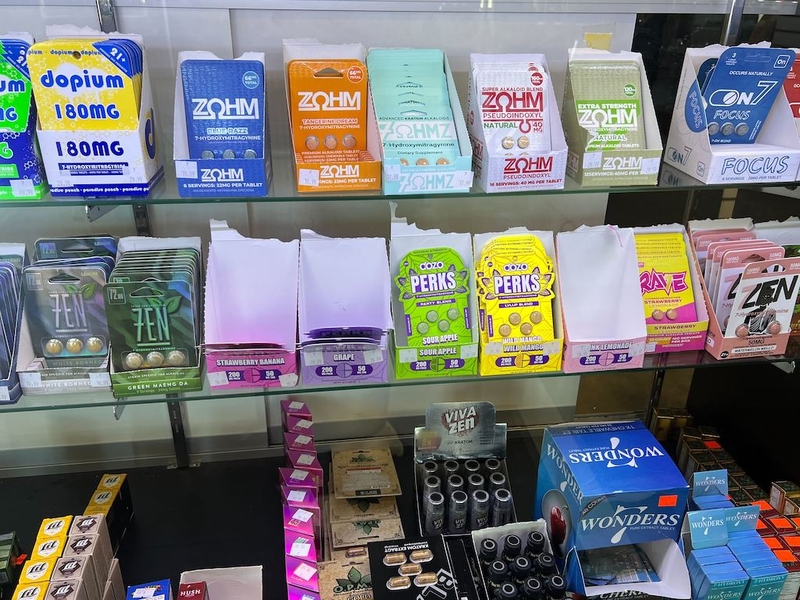
A variety of kratom and 7-OH products — including capsules, cartridges and wellness shots — are on display at a smoke shop in Buffalo, N.Y. States have led the way in regulating kratom, and last year, federal officials moved to ban 7-OH, a powerful compound found in some kratom products. (Photo by Amanda Hernández/Stateline)
Del. Joshua Cole, D-Fredericksburg, never expected social media posts about a recreational drug would inspire a new consumer protection law, which he sponsored and was approved by Gov. Abigail Spanberger last month.
Spanberger ceremonially signed Cole’s House Bill 360 on Tuesday, which creates new safeguards for the sale of kratom, a legal substance often used as a stimulant, sedative or pain management tool that critics say can be as addictive and detrimental to health as illicit drugs.
The measure requires products containing kratom not be sold to people under 21, and mandates they must be stored behind counters or locked up by store clerks. Labels must indicate risks associated with the herb, according to the new law, which also bans products that contain a particular chemical found in kratom called 7-hydroxymitragynine, or 7-OH.
“I think it’s just key for people to understand how important it is to understand what you’re putting in your body,” Cole, who met Virginians negatively affected by kratom while crafting his bill, said.
Kratom is an herb from a tropical tree native to southeast Asia that can produce stimulant effects in low doses — such as focus and energy — and sedative effects in higher doses.
It can also lead to dependence and potentially psychotic effects, according to the U.S. Drug Enforcement Agency. Though kratom is not classified as an illegal substance, the DEA lists it as a “Drug and Chemical of Concern.”
Cole hadn’t known about the herb before seeing “public service announcement”-style videos on TikTok depicting people standing outside of gas stations asking others to buy them a drink called Feel Free.
The small tonic includes kratom leaf and one of many products including the herb that are often found at gas stations, convenience stores and smoke shops.
Curious, he and his staff began researching the compound to learn both its touted benefits and its potential drawbacks. Along the way, Cole met Francis Dean, a Chesterfield County resident whose son accidentally became addicted to the substance despite trying it as an alternative to other addictive products.
A college athlete on the “cusp of a four-minute mile,” Francis said, Cameron avoided alcohol and any substance that might hinder his ability to train.
Eventually he tried kratom as an alcohol alternative when attending parties with friends, where it was touted as a “social tonic” that didn’t come with downsides.
“It improved his focus in school and his energy for the workouts until it didn’t,” Francis said.”It took a while before we finally figured out that kratom was converting in the body to an opioid and binding to the same opioid receptors as heroin.”
Cameron seemed to be on a “downward spiral,” Francis said, until one night he had to go to the emergency room. A physician suspected he was on drugs due to his withdrawal symptoms. At that point, the young man had become addicted to kratom.
“Once you’re addicted, you may as well get on your hands and knees and attempt to climb Mount Everest, because it is that difficult and challenging,” Francis said. “You lose years of your life.”
As of the Tuesday bill signing, Cameron is doing better, his father said. But it hasn’t been easy; he’s undergone treatment and still needs support for a challenge the family never suspected they would face.
The ordeal is why Cole’s House Bill 360 will require a warning label to disclose that kratom has potential to cause “dependence and opioid-like withdrawal.”
The “opioid-like” description did not sit well with associations that represent kratom companies or advocates.
After the bill passed the legislature this past spring, the American Kratom Association spearheaded a draft email for people to contact Spanberger with the request she veto the bill or amend it by striking that language and replacing it with: “Kratom may be habit forming.”
She did neither and signed the bill into law as it had been sent to her.
Varying views on kratom’s detriments, benefits
While kratom turned out to be addictive for Cameron and triggered an opioid-like withdrawal, people recovering from opioid addiction have used kratom to help manage their withdrawal symptoms, according to an National Institutes of Health study.
The practice, known as harm reduction, helps those with substance use disorders make incremental behavioral changes, ranging from reducing drug use over time — with a goal of sobriety — to embracing alternative substances in a safe way.
Still, the herb has faced increasing scrutiny from state and federal government in recent years, with a handful of states seeking regulations or outright bans.
Cole’s bill isn’t the first time Virginia has addressed kratom. The state’s pharmacy board in 2024 rebuffed a Hampton Roads-based pharmacist’s request for the state to treat it as an illicit drug.
“The Board did not feel it possessed sufficient evidence at the meeting to determine that kratom has no medicinal value,” the body’s decision read. “The Board may, however, research and review this matter at a future meeting.”

Richmond, VA