Patagonia, environmental groups revive old legal fights against new cuts to Utah monuments
Sep 02, 2026 | 7:36 pm ET
Description
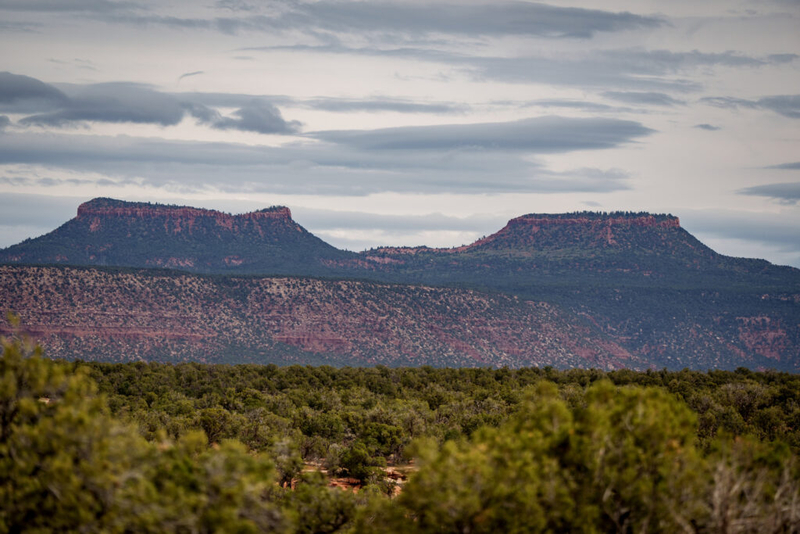
The Bears Ears buttes, namesake of the Bears Ears National Monument, are pictured on Friday, Sept. 19, 2025. (Photo by Spenser Heaps for Utah News Dispatch)
Opponents of President Donald Trump’s decision to sharply downsize two Utah national monuments in July are re-upping their argument that he didn’t have the authority to do so.
Retailer Patagonia, environmental groups and tribal organizations waged legal battles against Trump in 2017 after he ordered prior reductions of Bears Ears and Grand Staircase-Escalante national monuments. The cases went dormant when former President Joe Biden restored the boundaries in 2021.
Now that the president has redrawn the boundaries even smaller than he did almost a decade ago, the environmental groups said Wednesday they requested permission to file two updated lawsuits in federal court in Washington, D.C. Retailer Patagonia also filed a new suit over the Bears Ears reductions.
‘Zero consultation’: Tribal reps say they were left out of monument reduction decisions
The new court filings say Trump’s orders leave the landscapes open to hard rock mining and oil, gas and coal leases. And they note mining claims have been filed in recent weeks on lands cut out of the new boundaries.
Steve Bloch, legal director at the Southern Utah Wilderness Alliance, called the reductions unlawful and said in a prepared statement that “we intend to make sure Trump doesn’t have the final word over the fate of these treasured landscapes.”
White House spokeswoman Taylor Rodgers did not directly respond to the allegations in a statement to Utah News Dispatch, but focused on actions by Trump’s Democratic predecessors.
“The Obama and Biden administrations abused the Antiquities Act to lock up millions of acres of Utah’s public lands,” Rodgers said in a prepared statement. She went on to say that Trump “rightsized the Bears Ears National Monument to allow for common sense land use in these areas.”
In his first term in the White House, Trump slashed Bears Ears from roughly 1.35 million acres to roughly 228,000 acres, and Grand Staircase-Escalante from about 1.87 million acres to roughly 1 million acres. In the more dramatic cuts in July, he cut Bears Ears to about 121,000 acres and Grand Staircase-Escalante to about 182,000 acres.
Other presidents have whittled down boundaries. In the biggest change prior to 2017, President Woodrow Wilson shrunk Mount Olympus National Monument in Washington state by about half in 1915, cutting out more than 313,000 acres.
Conservationists say when Congress approved the Federal Land Policy and Management Act in 1976, it required congressional review for cuts of more than 5,000 acres. The law didn’t change the Antiquities Act of 1906, which allows presidents to proclaim national monuments but doesn’t say anything about canceling or shrinking them.
The U.S. Department of Justice sees it differently. In a legal opinion last year, the department concluded a president who finds sites “never were or no longer are deserving of the Act’s protections” can in fact eliminate the land from a national monument.
State leaders have long condemned the Bears Ears and Grand Staircase-Escalante as unnecessarily big and restrictive. Utah’s Republican governor, House speaker and congressional delegation joined Trump in the Oval Office as signed the orders.
Former President Bill Clinton designated Grand Staircase-Escalante in 1996. Bears Ears, established by then President Barack Obama in 2016, was the first monument in the nation created at the urging of Native American tribes to whom the land is sacred.
It’s been managed jointly by the U.S. government and the Bears Ears Commission made up of five tribal nations: the Hopi Tribe, Navajo Nation, Ute Mountain Ute Tribe, Zuni Tribe and Ute Indian Tribe. But Trump’s order on Bears Ears is ending that partnership, terminating the federal agencies’ agreement with the commission.
The environmental groups want the courts to order the monuments restored to full size and void any mining claims or mineral leases that were based on Trump’s proclamations in 2017 and 2021.
Salt Lake City, UT