Iowa groups ramp up campaigns for and against data centers
Aug 25, 2026 | 4:14 pm ET
Description
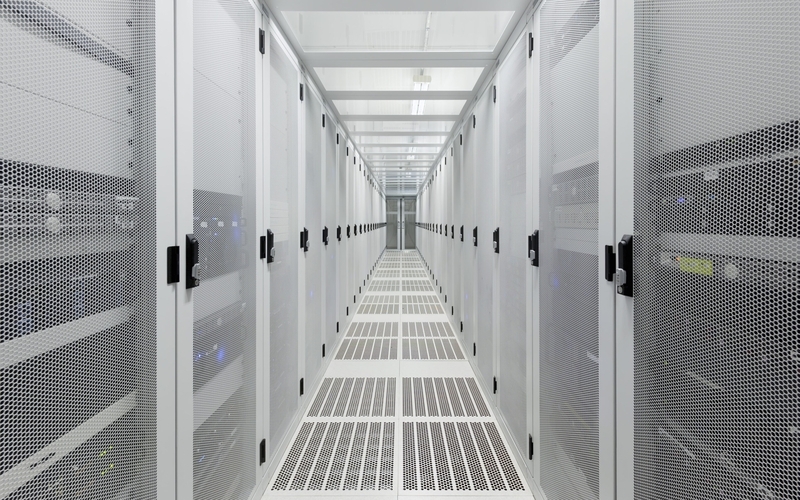
A server room in a data center. (Photo by Getty Images)
For 45 years, Hugh Espey worked with Iowa communities in opposition to large scale livestock operations and pipelines. Now as concern toward data centers mounts, Espey said he sees parallels to the previous fights.
Espey is retired from Iowa Citizens for Community Improvement, or ICCI, but continues to serve as an adviser for the group, which is one of several Iowa organizations that recently launched initiatives raising concerns about data centers.
The messaging around data center projects, Espey said, is about the “wave of the future,” which he said was the same rhetoric he heard in the 1990s about what he calls “hog factories.”
“This is never going to stop,” Espey said. “There’s always going to be some corporate powerhouse coming to us, dressed up real nice and smiling, trying to sell us something. And we have to step back and judge those things based on history and where we want to go.”
Citizen, environmental and economic groups have launched community tool kits, initiatives and outreach to help communities respond to data center proposals, which spark concerns around resource usage, disruption and pollution.
Already, Iowa has more than 100 data centers, either in operation, planned or under construction, with the largest “hub” of data centers in the Des Moines area, according to an economic impact study released by the Technology Association of Iowa.
The study found that data centers already in operation have an economic impact of $1.6 billion in value added annually, and more than 9,000 jobs. If all of the planned centers became operational, the study estimates the annual value added would top $3.2 billion and account for more than 18,000 jobs.
Brian Waller, president of the Technology Association of Iowa, said data centers in Iowa do more than run artificial intelligence chatbots. Many of them, he said, help to house the secure information and digital infrastructure necessary for Iowa business, across industries, to operate.
Waller said community concerns around land use, utility costs and long-term impacts are “legitimate” but he also said data centers are likely going to bring “billions and billions of dollars of investment” in the next decade and communities should have an “honest dialogue of what that looks like.”
“There is a legitimate conversation to be had that in the right community, under the right circumstances, there could be an economic benefit to a data center,” Waller said. “Not to all communities, but there could be, and that is a conversation too that needs to be had that sometimes gets drowned out.”
Parallels and lessons learned
ICCI and the Sierra Club’s Iowa chapter held inaugural data center community meetings in August and both noted the seemingly rapid, and sometimes “sneaky,” development of data centers as a friction point with communities.
Espey said the same was true of large-scale animal housing buildouts. When he started working with communities to oppose the projects in the 1990s, there were just a “few hundred” such operations in the state. A recent analysis from the Environmental Working Group estimates Iowa has more than 15,000 animal feeding operations.
While animal manure is not the sole cause of the high nutrient levels in Iowa’s waterways, it is a contributing factor. Espey said now that Iowa faces what many call a water quality crisis and cancer crisis, it raises the question of if expanding animal feeding operations was the “right path forward.”
“So that’s why we’re saying, ‘Whoa, whoa!’ Let’s just slow things up; let’s just put a pause,” Espey said. “And what we’ve been saying is that counties and towns should pass moratoriums.”
Water use was a big concern voiced by those attending ICCI and Sierra Club meetings, likely because large data centers, in order to cool their systems, can use about the same amount of water daily as a small town.
But many data centers utilize closed-loop cooling systems that recycle water and therefore consume considerably less. Waller said when it comes to water usage, the conversation needs to be more “holistic” and look at other industries, like car washes and food processing, which also use large amounts of water, usually without a system to reuse the water.
“If we’re going to talk about the water quality, let’s look at every industry and the usage of water,” Waller said.
According to ICCI documentation, more than 25 Iowa counties and at least six cities have passed some form of data center moratorium.
To some degree, Espey said, it seems like communities have learned from past infrastructure projects they have fought and are more prepared to oppose a data center and the “constant” narrative from the industry.
“I think folks have been through these battles, there’s the hog factory battle, there’s the crude oil pipeline, the Dakota Access battle, there’s the CO2 pipeline, and then this,” Espey said. “ … We have to be just as good about driving our narrative and then organizing thousands and thousands of people.”
He also said it seems easier for Iowans to be opposed to a data center because “big tech” feels like an outsider to Iowa, especially when compared to the agricultural industry that pushed for large-scale animal ag operations.
“I think there’s more grassroots pushback because it’s coming from quote unquote outsiders with a lot of money,” Espey said.
Supporting economic development
Iowa has data centers from some of the largest names in tech — Google, Microsoft and Meta all have data centers in the Hawkeye state. But Waller said there’s also a lot of small, locally owned, data centers in the state that are critical digital infrastructure for retailers, healthcare providers and schools.
Waller said when he started at the Technology Association of Iowa 13 years ago, he would walk into businesses in Iowa and they would have rooms with “racks and racks and racks” of servers that held “highly secure, sensitive data for their businesses.”
Now when he walks in, there’s considerably fewer racks because most of that data is being stored in a digital environment — or in a “cloud,” which he said “is data centers.” Cybersecurity, blockchain technology, artificial intelligence and data mining are all “emerging technologies” he said are run through data centers.
“Digital infrastructure is what is driving all of our lives right now in the state of Iowa and data centers are just a piece of that,” Waller said.
Several unions, trade councils, economic development alliances and businesses recently joined to form Growing Iowa’s Economy, a coalition to “promote the responsible development of new data centers.”
In a news release the coalition said it would advocate for policies that would help establish Iowa as “a leading state for technology and innovation.” According to the release, the development of new data centers could bring investments of tens of billions of dollars to the state, millions in local property taxes and create tens of thousands of “high-quality jobs.” The release said a hyperscale data center is expected to require up to 7,000 construction jobs.
“This level of job creation is absolutely essential to ensure working Iowans in every region of the state have access to the types of economic opportunities that can effectively address the affordability concerns that are so pressing right now,” Andy Roberts, president of the Iowa State Building and Construction Trades Council, said in the release.
The coalition said its “guiding principles” will require data center operators to pay for energy use and necessary infrastructure upgrades, with continued oversight from the Iowa Utilities Commission. The coalition also said data center operators should “reflect Iowa values” and be a community partner, minimize local impact and respect the quality of life of communities.
Dan Culhane, president and CEO of the Ames Regional Economic Alliance, said “responsible and regulated” development of data centers will strengthen Iowa’s economy and deliver economic opportunities to residents.
“In the coming years, tens of billions of dollars will be spent developing data centers in the United States, and when those dollars are invested here in Iowa, it will help support meaningful, long-term economic growth in communities of all sizes across our state,” Culhane said.
What are Iowans worried about?
Espey said when factory farms were proposed, opposing Iowans’ first concern was “the stench” associated with a large animal confinement operation. When it comes to data centers, community members are worried about it stressing resources.
“The major concerns about the data centers are they gobble up our water, they gobble up our energy, they gobble up our tax dollars, they gobble up our farmland,” Espey said. “They just feel like they can come in and do anything they want.”
Espey said a lot of the data center moratoriums that have cropped up have been “organic” – county boards of supervisors passed them without any sort of outside influence or direction from groups like ICCI.
Espey said ICCI is recommending counties pass moratoriums on data centers, or ordinances that cap the size of the projects. For example, he said counties could cap the square footage, or the water usage of data centers permitted in the jurisdiction. Or, he suggested counties require data centers run on their own renewable energy.
“And then also say no tax dollars, no tax incentives whatsoever,” Espey said. “ … They’re billion dollar and trillion dollar corporations, why are we giving them tax dollars? Why are we subsidizing them either with sales tax exemptions or property tax exemptions.”
Size is also a concern raised by Iowans at data center meetings. Jess Mazour, conservation coordinator with Iowa chapter of Sierra Club encouraged participants at the August meeting to “drive by a data center” to fully understand the scale of the projects.
A video edited and published on behalf of “Save Morgan Valley” a group opposing a proposed gas plant and data centers in Iowa, shows construction of the QTS data center being built in Cedar Rapids.
Both of Iowa’s gubernatorial candidates have also suggested ending, or limiting state tax incentives for data centers.
Waller said economic development incentives in Iowa have gone to “a lot of other major employers” in the state, not just data centers.
“States are competitive through economic development; this is just another industry that’s popping up right now, and it’s really up to the communities,” Waller said.
Espey said he feels the data center issue is “cutting across political viewpoints.”
“Data centers will be, we think, a prominent issue at the 2027 legislative session, and one reason why we’re organizing now to kind of build a statewide people power pushback,” Espey said.
The Iowa chapter of the Sierra Club is compiling data center information and examples of county ordinances on its website. ICCI plans to host monthly meetings for members interested in the data center issue and has scheduled several in-person informational meetings around the state to talk about the issue.
The Hubbell Environmental Law Initiative, or HELI, at the University of Iowa recently launched an “intentionally neutral” data center decision tool to help communities evaluate data center proposals and identify key questions to ask before proposals are approved.
The Technology Association of Iowa is hosting the Iowa Digital Infrastructure Summit Sept. 29 in Des Moines for a “statewide conversation on the infrastructure powering Iowa’s digital economy.”
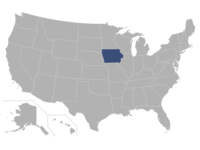
Des Moines, IA