Iowa candidates hit deadline to qualify for 2026 primary ballot
Mar 13, 2026 | 6:01 pm ET
Description
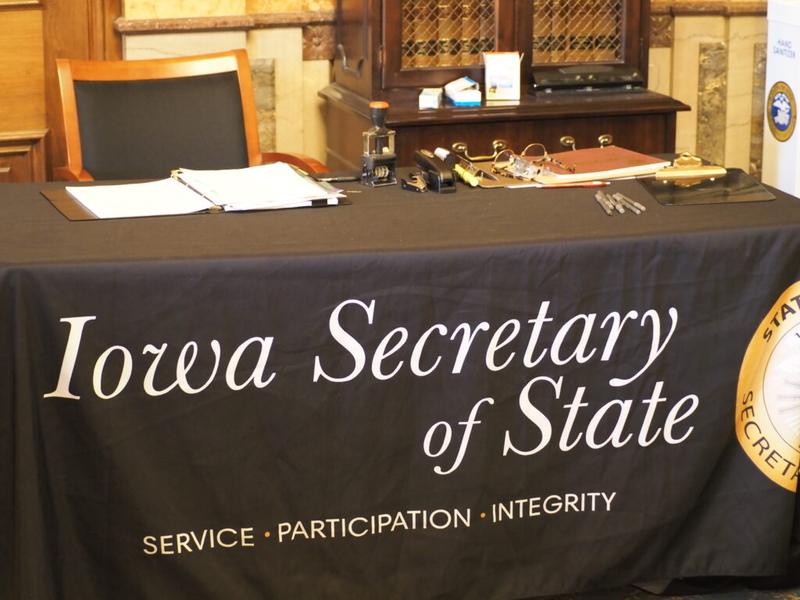
Candidates vying to compete in the June 2 primaries for Iowa's 2026 elections submitted paperwork at the Iowa Secretary of State's office in the Iowa State Capitol in order to qualify for the ballot. (Photo by Robin Opsahl/Iowa Capital Dispatch)
The fields of candidates competing in Iowa’s 2026 primaries solidified Friday as candidates hit a deadline to file paperwork needed to appear on the June 2 ballot.
Candidates running for state and federal elected offices in Iowa had from Feb. 23 until March 13 to submit their nomination papers to the Iowa Secretary of State’s office to qualify for their party’s primary ballot for the 2026 election.
Some candidates submitted their paperwork on the day of the deadline. Republican gubernatorial candidate Zach Lahn came with his children and wife to the Capitol submit his petition signatures Friday morning.
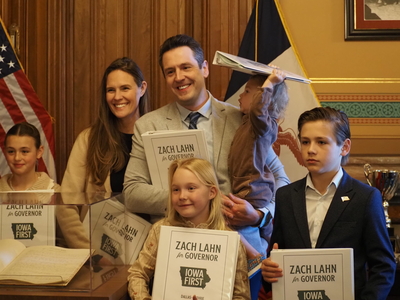
Lahn, is one of five Republicans to announce their campaign for governor in 2026 and the fourth to file paperwork to appear on the June GOP primary. U.S. Rep. Randy Feenstra, former Iowa Department of Administrative Services Director Adam Steen and former state lawmaker Brad Sherman have all submitted their nomination papers for the primary to become the GOP nominee for the seat left open by Gov. Kim Reynolds. Iowa Rep. Eddie Andrews, R-Urbandale, had not filed paperwork as of 4 p.m. Friday.
The process of collecting signatures to qualify for the ballot was “a lot of travel, a lot of asking people to to sign on to something, and then explaining where I stand on issues,” Lahn said.
“We found that we had great responses from Republicans, Democrats and independents, actually,” he said.
Lahn said much of the time, he spoke with people who are “on a different side of the aisle, and then when I talked about the issues that we’re really running on, they’d say we can’t disagree with those, and they’d sign the petition.”
The candidate, a farmer who has previously worked with the conservative group Americans for Prosperity, has not previously held elected office. However, he said his campaign is willing to take on many issues that appeal to both Republicans who will be weighing in during the primary election and with Democratic and no party voters, speaking on issues like Iowa’s high cancer rates and other health-related issues.
“When I’m out on the campaign trail meeting with Republicans — just last night, I was at an event in Des Moines, and when I bring up the cancer crisis, every head in the audience is nodding,” Lahn said. “They all know what’s going on. It’s being talked about at the grassroots level more than I think anybody understands. And you can actually see some of my opponents now starting to talk about it. But we have to be willing to address the root causes of this … we have to be willing to confront the elephant in the room, and that is that we’ve been lied to by for a long time, by large agriculture companies about the safety of the products. So I think this is a bipartisan issue, I truly do.”
Lahn and staff told reporters he gathered 6,121 signatures from all 99 counties, including more than 100 signatures from 30 different counties in the state.
Depending on what position a candidate is running for, the number of signatures they must submit from people supporting their campaign to qualify for the ballot varies — the U.S. Senate and gubernatorial races both require at least 3,500 signatures, including at least 100 signatures from 19 counties. Candidates for statewide elected office, like state auditor, treasurer and attorney general, require 2,500 signatures, including at least 100 from 19 counties, while U.S. representative seats require 1,726 people to sign with 47 from at half of the counties in their district.
Iowa Senate candidates must submit 100 signatures from people within their district, and state House candidates must submit 50.
Though these figures represent the minimum number of signatures needed to qualify, many candidates submitted their nomination paperwork with far more people signing on in support of their campaign. Iowa Auditor Rob Sand, who is running for governor, submitted 24,756 signatures Monday, breaking the state’s gubernatorial campaign and all-time records for petition signatures, according to his campaign.
U.S. Senate candidates like Republican U.S. Rep. Ashley Hinson reported submitted 15,000 signatures this week, while Democrats Iowa Sen. Zach Wahls and Rep. Josh Turek each reported submitting more than 10,000 signatures.
Though submitting an excess of signatures is not a requirement, many candidates make sure to collect a significant number in order to show support for their campaign ahead of the primary, as well as to ensure their campaigns remain qualified for the ballot if any petition signatures are challenged. In 2022, U.S. Senate candidate Abby Finkenauer’s place on the 2022 Democratic primary ballot was in question as two registered Republicans challenged signatures submitted by her campaign.
The State Objections Panel, which hears challenges to nomination papers, ruled 2-1 to deny objections to both her and former Democratic Attorney General Tom Miller’s ability to appear on the 2022 Democratic primary ballot. The Republicans who brought the matter forward took the issue to court — ultimately the Iowa Supreme Court ruled that Finkenauer would appear on the primary ballot.
Under Iowa Code, objections to the eligibility of a candidate to appear on the ballot can be submitted by any person “who would have the right to vote for the candidate for the office in question.” Challenges must be submitted 74 days before the primary election — by March 20, 2026 for this year’s primaries.
The State Objections Panel is made up of the secretary of state, state auditor and attorney general. If Sand’s gubernatorial campaign — or the other two members — faces challenges to their nomination heard by this panel, they would be replaced by other officers outlined in state law. Sand would be replaced by Iowa Secretary of Agriculture Mike Naig.
Who has filed?
The Iowa Secretary of State’s office issued a list of candidates who have qualified for their party’s primaries in state and federal races.
While candidates will no longer be able to submit their paperwork after 5 p.m. Friday, this does not mean candidates not on the list of primary candidates at the time of this article’s publishing will not appear on the ballot. The list will continue to be updated as Secretary of State’s Office staff process the petition signatures and candidate paperwork.
Political parties and third-party organizations also may fill empty slots on their side of the aisle by nominating candidates at convention after the primary.
Here is the candidate list for the June 2 primary election, which was last updated March 13 at 1:22 p.m.:
2026 Primary - Candidate List Database - All Elections_9
Des Moines, IA