Indigenous population grows in the census
Nov 02, 2021 | 8:43 am ET
Description
(U.S. Census Bureau)
More Native Americans live in the United States than 10 years ago, the census reveals. But the numbers are likely even higher than the once-a-decade count shows.
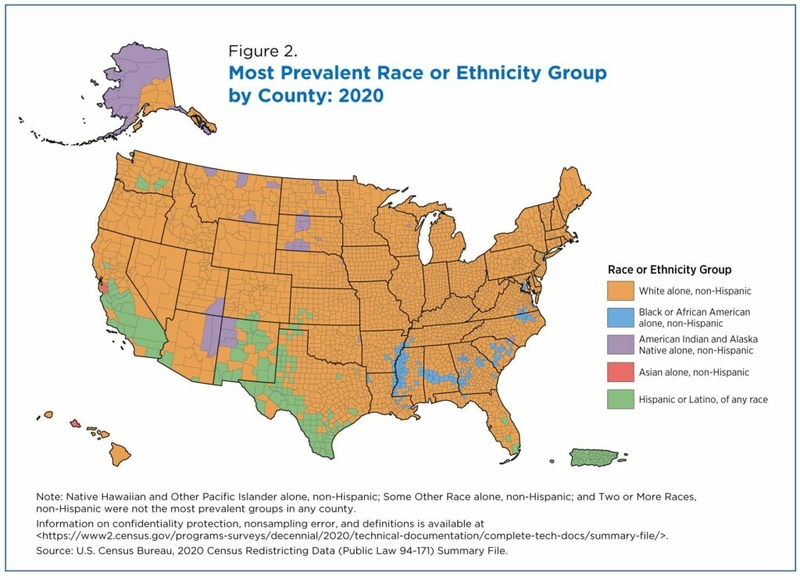
U.S. Census officials presented figures from the 2020 count, saying more than 3.7 million people identified as American Indian and Alaska Native, up from the 2.9 million in the 2010 census.
An additional 5.2 million people identified as Native American along with another race.
Combined, more than 9.6 million people identify as Native American alone or Native and mixed.
This accounts for 2.9% of the U.S. population and nearly doubles the number from 2010, which counted 5.9 million Native Americans and people who consider themselves Native along with another race.
The 2020 Census counted 9.6 million people who identify as American Indian / Alaska Native (AIAN) alone, or in combination with another race, an increase over the 5.2 million counted in 2010.
Alone
2010 2.9 million
2020 3.7 million
In combination
2010 2.2 million
2020 5.9 million
Alone and in combination
2010 5.2 million
2020 9.6 million
MULTIRACIAL AIAN POPULATION
AIAN & white
2010 1.4 million
2020 3.9 million
AIAN & Hispanic
2010 685,000
2020 1.4 million
AIAN & white & another race
2010 30,000
2020 402,000
AIAN & Black or African American
2010 269,000
2020 384,000
Even with the boost, the numbers are likely even higher than what the data show, because people were not counted due to COVID-19 restrictions, lack of internet access and short windows for rural, tribal communities to respond to the census in-person.
Ahtza Dawn Chavez (Diné/Kewa), executive director of the NAVA Education Project, was part of the coordinated effort to reach as many people in Native American communities in this region as possible. She said she’s certain that even with the organization’s efforts, the final tally here falls short.
“In the state of New Mexico, I can accurately state that we have an undercount,” she said.
NAVA recently met with tribal leaders in the state, she said, and the consistent criticism was that many tribal residents weren’t contacted.
“There were smaller communities that have maybe 800 to about 3000 members where they recognized hundreds of members not being on the count,” Chavez said. “And then for large tribes like the Navajo Nation, even on the New Mexico side, there were tens of thousands of folks that we’re not counted, much less the almost hundreds of thousands of folks, when you consider all of the Navajo Nation in Arizona and Utah as well.”
An undercount of just 1% can equal to $43 million tribes cannot access annually from the federal government, the Legislature’s Indian Affairs Committee reports.
New Mexico tracked tribal community response rates to the census and posted numbers for the public to view on a dashboard that is still up on the Indian Affairs Department website. Some communities went above their response goals —Jemez Pueblo (64.4%) Santa Ana (61.8%) and Santo Domingo (56.8%), for instance. But the staggering undercount is present in places like the Navajo Nation (22.4%) and Jicarilla Apache (19.8%).
Chavez said Jicarilla Apache was one of several tribal communities in New Mexico that had a lone census worker assigned to go door-to-door, assisting people with their census form. COVID-19 restrictions closed all tribal communities in New Mexico, essentially making the in-person counting impossible. Jicarilla Apache did open up briefly to allow for the census to go door-to-door, but the gap was more evident when the enumerator was only in the community for one day.
“When (the Census) decided to do the count via online, they really disenfranchised thousands and thousands in the state of New Mexico, both in rural and Native communities that lack broadband access,” Chavez said.
Chavez said tribal regions with internet infrastructure also showed higher response rates, expanding the harm caused by the digital divide for communities that did not have reliable access to the census online. Jicarilla Apache, for instance, saw under 20% of its total responses done online, meaning the majority of people who filled out the census did so in-person.
“I think that the fact that these communities had broadband — at least in their libraries or in their tribal buildings — really helped to make sure that they had good response rates,” Chavez said. “Because if you look at the internet self-response rates of all of those communities, they’re all high.”
To compare, Santa Ana Pueblo has internet access for residents and saw a 51% internet response rate. Laguna Pueblo (15% internet response rate) and Ohkay Owingeh (17%) have unreliable internet connections. They saw smaller responses online — and overall.
Even with the undercount, New Mexico has one of the largest Native American populations in the country. In the state, 12.4% of people reported being Native and or Native along with another race, trailing only Alaska and Oklahoma.
Considering the undercount, Chavez estimates that statistic could in reality be as high as 17% of the New Mexico population.
“Our coalition reached over 160,000 Native households,” she said. “And even though we’re a slow-growing state, we did see an increase in that population.”
Santa Fe, NM