Immigrant advocates give next steps for Ohio Haitians after TPS termination
Jul 01, 2026 | 3:55 am ET
Description
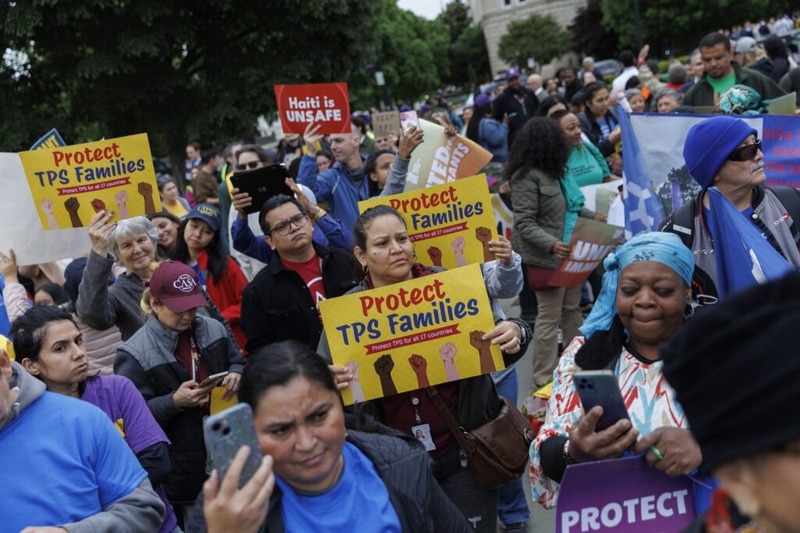
Demonstrators chant and hold signs outside the U.S. Supreme Court on April 29, 2026 in Washington, DC. The court heard arguments challenging the Department of Homeland Secuirty's termination of Temporary Protected Status for immigrants from Haiti and Syria. (Photo by Tom Brenner/Getty Images)
Pou li nouvèl sa a an kreyòl Ayisyen klike la a.
Advocates for Ohio’s Haitian communities are offering advice and preparing for the future of tens of thousands of migrants in the state who lack legal status after a ruling by the U.S. Supreme Court on Thursday.
Until Thursday, Temporary Protected Status gave about 330,000 Haitians and 6,000 Syrians nationwide a shield from deportation and access to work permits.
About 30,000 Haitians with temporary status live in central Ohio and an estimated 12,000 to 15,000 Haitians call Springfield home, with a mixture of temporary protected status, citizenship and other legal statuses.
Springfield became a flashpoint in the 2024 Election when Donald Trump and JD Vance spread racist lies about Haitian immigrants there.
The TPS program was created in 1990 to help people fleeing armed conflict, natural disasters, or other conditions that make it too dangerous to return to their home countries, with regular reviews meant to ensure those conditions still exist.
Haitians had been covered by the program since 2011 after the earthquake there, and Syrians had been since 2012.
But in a 6-3 ruling last week, the U.S. Supreme Court decided that federal courts can not judge whether the Department of Homeland Security followed the correct legal process to end a country’s TPS designation, unless it violated the Constitution. It also allowed TPS terminations to take effect for Haiti and Syria.
Ohioans rally to support Haitians living with temporary protected status after Supreme Court ruling
Gov. Mike DeWine said in a statement following the ruling that changing Haitians’ immigration status “is not in the best interest of the United States nor Ohio.”
Haitian TPS holders in Ohio contribute $160 million to the economy and $39 million in taxes every year.
Community leaders and immigration lawyers also warn that rampant violence makes returning to Haiti extremely dangerous.
Armed gangs control an estimated 90% of Haiti’s capital city and drive violence, displacement, and hunger across the country, according to the International Rescue Committee, a humanitarian aid organization.
“All they’re trying to do is build a better life for their family and their children,” said Marc Fequière, founder of the Columbus-based Haitian Community Network.
“If you take these people, that many thousands, and you send them back, it’s a suicide mission.”
Work authorization and Ohio driver’s licenses for TPS holders were set to expire Wednesday, July 1. That afternoon, U.S. Citizenship and Immigration Services extended the expiration date for work permits to July 10.
The U.S. District Court for the District of Columbia, which originally prevented the Trump administration from ending TPS for Haitians, still needs to remove its block following the Supreme Court ruling.
Sejal Zota, a lawyer representing one of the Haitian TPS holders in the case, said she expects terminations will not officially take effect until July 27, unless the district court orders otherwise.
Immigration lawyers who work with companies advise employers to address the ruling, including finding potential employment-based pathways to legal status, before workers lose their permits.
Here is what immigrant advocates in central Ohio advise for TPS holders and concerned community members after the ruling:
For TPS holders: Find reliable legal aid, prepare an exit plan, and know your rights
Attorneys who are licensed to practice law and regularly practice immigration law can help TPS holders explore other paths to legal status, said Stephanie Corcoran, the managing attorney for Legal Aid of Southeast and Central Ohio’s immigration team, in a statement.
She emphasized that TPS holders should avoid people who simply fill out immigration paperwork.
TPS holders in Ohio can consult low-cost legal aid organizations like LASCO, nonprofit law firms like northwest Ohio-based Advocates for Basic Legal Equality, or community organizations like Columbus-based Community Refugee and Immigration Services for legal aid.
Community Refugee and Immigration Services does not provide legal assistance for court cases, but it can refer people to trusted immigration attorneys, staff attorney Jesse Vogel said.
TPS holders can also find licensed immigration lawyers in their area through the American Immigration Lawyers Association’s website.
Even when consulting a licensed immigration attorney, Vogel added that TPS holders should ask questions to clearly understand their options.
“I just encourage folks to understand the terms of the service so that they don’t get into something that is not what they’re after,” he said.
Fequière said TPS holders should create an exit plan in case they need to leave the country.
TPS holders should identify trusted community members who can manage any property they hold in the U.S., he said.
People who are deported in violation of immigration law do not automatically lose their property in the U.S., Fequière added.
Haitian Community Network is connecting TPS holders to financial advisers to help them manage their property, he said.
TPS holders should also plan for their children’s future if they cannot leave with them, he said.
Fifty thousand U.S. citizen children have at least one parent who is a Haitian TPS holder; many of them have never been to Haiti and do not speak Haitian Creole, Fequière said.
Advocates nationwide also urge people to know their rights during encounters with immigration enforcement officers, regardless of immigration status.
The American Civil Liberties Union provides printable “Know Your Rights” cards in English, French, Creole, Arabic, and several other languages.
For community members: Support local aid organizations and other political avenues for restoring TPS
Fequière advised TPS holders to take every precaution necessary to avoid breaking any laws.
When their driver’s licenses and work permits expire, that effort will become significantly more difficult, he said.
That’s why Fequière and other central Ohio organizations are preparing to help migrants with their daily errands, whether that’s driving to childcare or the grocery store.
He is also coordinating with community organizations to deliver basic necessities such as food and baby products.
Central Ohio organizations that serve the local Haitian community include religious groups like the African & Haitian Ministry of the Diocese of Columbus and Jewish Family Services, as well as housing advocacy groups like Rentful 614. Springfield-area organizations include Haitian Support Center, Haitian Community Alliance, and G92.
A bill that would extend Haiti’s TPS designation through 2029 passed the U.S. House and now sits in the U.S. Senate. The White House said President Donald Trump would veto the bill, though, meaning that it would likely need support from two-thirds of the House and Senate to pass.
Fequière encourages people to call their representatives and senators in support of the bill. The help from people around Ohio and across the country gives him hope, he added.
“Even in the harshest situations, we always find a way to come out of it … and we know that the community is not alone,” he said.
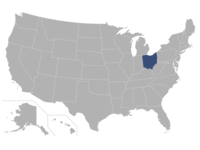
Columbus, OH