I’m a prison math teacher. Here’s how to rehabilitate, not just incarcerate
Sep 24, 2026 | 9:45 am ET
Description
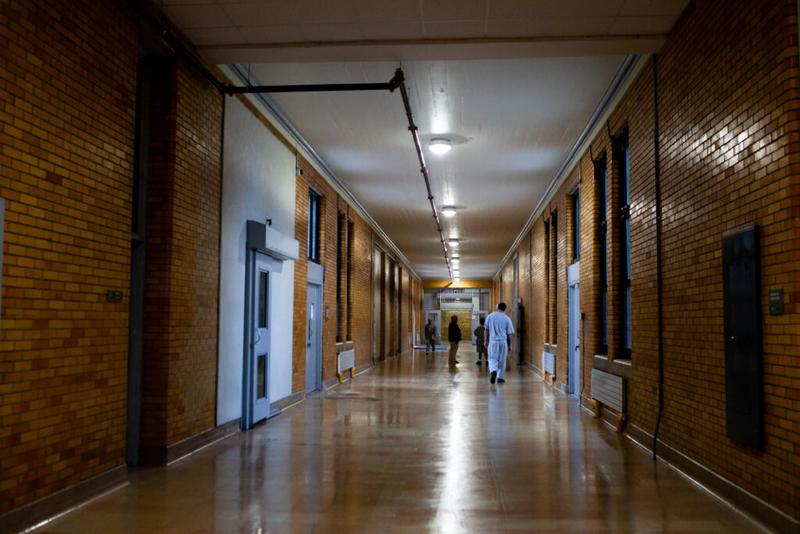
Stillwater Correctional Facility, Thursday, Nov. 20, 2025. (Photo by Nicole Neri/Minnesota Reformer)
When people imagine a correctional facility, they often picture bars, fences and separation from society. Those things certainly exist at Stillwater Correctional Facility. Yet after spending a year teaching with the Transformation and Re-entry through Education and Community program in Minnesota’s prison education system, I’m convinced that another reality exists inside the prison’s walls: community.
As Minnesotans debate the future of the aging Stillwater facility, we should be discussing just that. Prison is not comfortable, and incarceration should not be romanticized. The reality of incarceration is serious and carries lasting consequences.
But acknowledging those realities should not prevent us from recognizing something equally important: A meaningful correctional system requires opportunities for people to grow. Nearly all of them will return to society, so they need opportunities to learn, practice and strengthen the skills required to live and work alongside others. That is where I believe Minnesota’s Department of Corrections can lead. After all, it is not called the Department of Punishment.
I recently watched a documentary about Norway’s approach to corrections. What struck me was not luxury or leniency, as critics sometimes assume. Instead, it was a simple idea: If the goal is successful reentry, then correctional institutions should help people practice the skills required to achieve it. Responsibility, cooperation, conflict resolution and contribution to something larger than oneself are not simply personal virtues. They are community skills, and if we expect people to rejoin society successfully, they need opportunities to practice. Without it, we see nearly 20% of incarcerated Minnesotans returning to prison.
Researchers who study human development and education have consistently found that people need more than basic necessities to thrive. They benefit from opportunities to solve problems, learn new skills, contribute meaningful work and develop relationships with others. In correctional settings, those opportunities often emerge in surprisingly practical ways.
At Stillwater, students write for the Prison Mirror, the longest-running, continuously published prison newspaper in the country. Some enroll in vocational programs such as carpentry, and others take my mathematics classes while pursuing college degrees. These programs provide an opportunity to contribute, collaborate and take responsibility for something larger than oneself. Increasingly, I view these programs as opportunities to practice citizenship.
One of my students has developed a hydroponic garden inside the facility. Through donations and community support, the project has expanded and now includes outdoor growing opportunities. At first glance, it’s a simple gardening project. But gardens do not thrive on good intentions alone. Plants require daily attention. Equipment must be maintained. Problems must be solved. Decisions made today may not produce visible results for weeks. The project asks participants to think beyond the moment and invest in something that will continue growing tomorrow. The same is true of college classes, vocational programs, student journalism and many other opportunities within the facility.
I entered Stillwater as a mathematics instructor in the fall of 2025 intending to create approachable lessons for students who had often been away from formal education for decades. What I encountered instead was a learning environment marked by intellectual curiosity, courage to be vulnerable, and mutual respect for classmates.
The underlying principle is not that prison should be comfortable. It is that prison should be constructive. The punishment is the loss of freedom. What happens afterward should encourage people to develop the habits necessary to live responsibly in a community. What I have observed at Stillwater is that many incarcerated people, staff members and volunteers are actively trying to build that kind of community.
Reasonable people can disagree about the future of Stillwater’s buildings. But regardless of what happens to its limestone walls and iron bars, Minnesotans should pay attention to the lessons emerging from inside them. Strong communities are built when people are given opportunities to participate, contribute and accept responsibility for one another. My students practice those skills every day inside Stillwater, and they deserve a place in the conversation about what correction should mean in Minnesota.
When a Prison Mirror journalist asked me to summarize my first year in a single sentence, I finally wrote:
“After a lifetime of teaching in challenging environments, the most rewarding has been teaching in the Stillwater community that welcomed me and treats me as a member.”

Saint Paul, MN