Local taxpayers kept their promise. Missouri must keep its, too.
Sep 24, 2026 | 6:45 am ET
Description
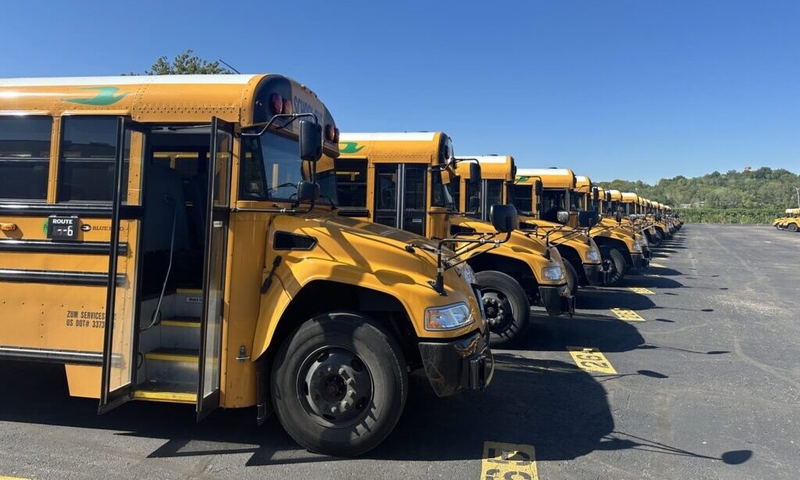
Good schools are not only a local asset. They prepare the workforce, create jobs, support the economy, and give families confidence that their children can build successful fulfilling futures in our great state (Kevin Hardy/Stateline).
For years, I watched young families chase a familiar version of the American dream: land the right job, save enough money for a down payment, and find a home in a community where they could raise their children safely. One with a reasonable commute, maybe a park nearby and enough room in the backyard to throw a ball. But almost always, near the top of the list, was a simple question: What are the schools like?
In Missouri, the connection between home values, local taxes, and strong public schools is not an accident. It is built into the state’s foundation formula: communities with higher property values and stronger local tax bases are expected to shoulder a larger share of the cost of educating their children.
For decades, most communities have done exactly what the system asked of them. Families planted roots, housing markets grew, local businesses opened, voters passed levies and bonds to support their schools, and, over time, communities in our state have built much of their identity around the quality of their public schools.
Missouri’s foundation formula has always assumed that districts with stronger property tax bases will carry more of the cost themselves. But that bargain only works if the state remains a reliable partner.
Today, debates over property tax reform, income tax cut proposals, expanded voucher-like programs, and reliance on less stable funding streams, like gaming, lottery, and tobacco revenue, all raise the same concern: the state is stepping back while local taxpayers are being asked to carry an increased share of the day-to-day cost of public education.
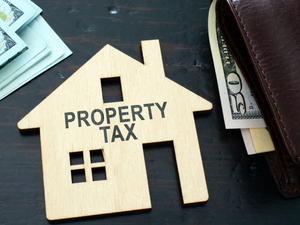
Today, Missouri asks local taxpayers to shoulder one of the heaviest local burdens in the country. In Missouri, local sources provide 57.5% of public-school funding, while the state provides just 28.6%. Nationally, the balance is nearly reversed: states provide about 45.1%, while local sources provide 42%. Property taxes alone account for 45% of Missouri’s public-school funding.
For some communities, this is not just limited to supporting their own schools through local levies or property taxes. In economically advantaged, fast-growing communities, families and businesses also help generate income and sales tax revenue that flows to Missouri’s general revenue fund that supports statewide priorities, like public education in other communities. The same families and businesses that have invested in their own public schools and help generate resources for the entire state are now being asked to watch Jefferson City step back from its responsibility.
The result is not a stronger public education system. It is a less stable one, with more pressure pushed down to the local level and fewer resources flowing back to the schools most Missouri children still attend. Every part of a child’s education depends on stability: stability at home, stability in the classroom, stability among teachers and staff, and yes, stability in funding.
Local control only matters if local communities have real choices.
When the state shifts costs downward and pulls resources away, local control becomes something much smaller. While school boards will still hold meetings, communities can still vote, and superintendents may still present budgets, their range of choices narrows significantly. And those choices are not theoretical.
As a superintendent, I have sat through those budget meetings. I have watched school leaders weigh class sizes against staff salaries, student programs against reserves, facility needs against safety improvements, and long-term planning against immediate classroom needs. Behind every line item is a child, a teacher, or a family. It is additional offerings for college credit, test prep workshops, cost-share career and vocational programs, or offering additional extracurricular or sports programs.
The challenges this creates look different from district to district, but they are all part of the same broken equation.
Missouri cannot keep asking local taxpayers to carry more while pretending the state has done enough. For too long, we have ignored the local sacrifice required to sustain the system we have. Now it is at a breaking point at the same time the state is stepping back from its responsibility to the public schools most Missouri children attend while calling the result “choice.”
If public schools begin to weaken, parents will not have more choices. They will have fewer.
Public schools are where children learn with their neighbors. It’s where teachers know the siblings coming next. It brings communities together to raise their children together and, eventually, watch and celebrate as their future walks across the graduation stage.
What is concerning now is not just a difficult budget year, but a political climate in Jefferson City that is slowly unraveling the public commitment families have built their lives around.
Families did what Missouri’s system asked them to do. The question now is whether Missouri will keep its end of the bargain.
Good schools are not only a local asset. They prepare the workforce, create jobs, support the economy, and give families confidence that their children can build successful fulfilling futures in our great state.
Local taxpayers have kept their promise.
Now Missouri must keep its too.
Jefferson City, MO