The illusion and truth of the Box Elder Stratos data center
May 27, 2026 | 5:16 pm ET
Description
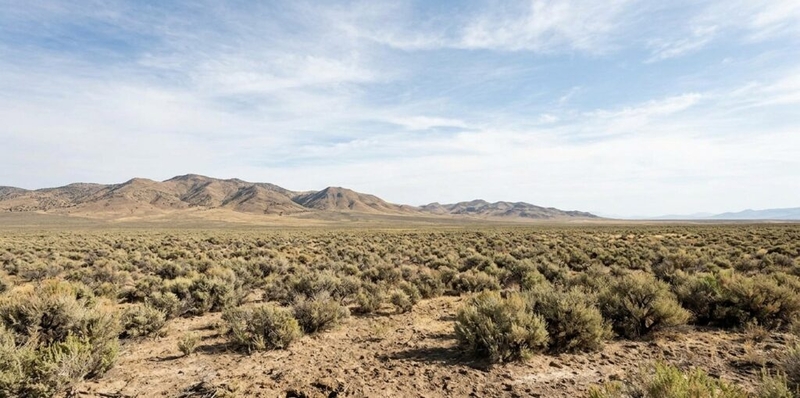
Hansel Valley in Box Elder County, Utah, the proposed site of the Stratos Project data center. (Photo courtesy of Elisa Nelson)
Western Box Elder County, Utah, is the forefront for one of the most aggressive corporate campaigns through The Stratos Project, a 40,000-acre data center campus. From a corporate governance lens, the project is less about computing and more about a predatory economic model: a ruthless land and utility grab.
The face of this is Kevin O’Leary whose corporate history is defined by wealth illusion. O’Leary led The Learning Company and under his leadership, TLC was sold to Mattel in 1999 for $4.2 billion (a dumpster fire), which became one of the largest failed acquisitions in American history due to aggressively misrepresented finances.
SEC filings and financial watchdogs reveal that O’Leary’s net worth is overinflated; most of his income is from television appearances and speaking gigs, not venture capital. He backs out of the deals he makes on television, mutual funds have notoriously been poor. Beyond TLC, he is stained by legal issues, like the catastrophic FTX crypto collapse, crowdfunding fraud, and burned retail investors. He faced campaign finance violation charges in Canada and stated extreme global poverty is “fantastic news.” Now, O’Leary and Utah’s Military Installation Development Authority (MIDA) are introducing Stratos. As a descendant of ancestors tied to this land, I look at the blueprint for this data center and see smoke and mirrors.
Burial sites and pioneer trails
This region is the ancestral homeland of the Northwestern Band of the Shoshone Nation, Kalpakoff graves, and Kelton Cemetery. Early pioneers left behind historical footprints and burial sites. The area was home to the WWII-era Bushnell General Hospital and the Intermountain Indian School. The presence of these institutions implicates the landscape as a repository of historical burial. This area has unmarked burial sites, while others are merely enclosed by decaying picket fences, or are poorly marked. Wagon trails remain deeply imprinted in the earth despite generations of brutal desert elements, these ruts are still visible.

Building a 9 gigawatt industrial complex directly over these sacred spaces and historic trails introduces legal liabilities. Under Utah State law, intentional disturbance of human remains is a third-degree felony. Legally, preventing the commission of felonies on this construction site necessitates the deployment of independent archaeological teams to inspect before heavy machinery touches the earth.
The five-year shelf life and the real motive
Within the next five years AI will fundamentally shift to edge-computing. The massive, energy-hogging warehouses being built today will become obsolete and irrelevant. The real motive is asset inflation and what I call The BHT Theory. By appealing to national defense as a “fusion center” with MIDA, developers are building a localized apparatus that challenges the Fourth Amendment. The constitutional right to be secure against unreasonable searches and seizures is nullified when private data is stored hidden behind opaque shell LLCs and non-disclosure agreements designed to shield the truth from public scrutiny.
The Bottleneck Hostage Toll Theory
I propose The Bottleneck Hostage Toll (BHT) Theory. This framework models how corporations exploit state entities to seize monopoly control over regional, life-sustaining utilities (water, natural gas, fiber, and power) under the guise of technological development.
The BHT Theory is in three distinct phases:
- Bottleneck Accumulation: Private capital leverages regulatory vacuums (like MIDA) to acquire massive resource rights. Traditional consumer protection laws restrict utility companies from price-gouging, but exempt unregulated private data hubs. The corporation then positions itself as a private checkpoint between the utility and the public grid.
- Hostage Capture: Once infrastructure is acquired, local populations are held hostage. We have seen the devastating implications of this in the Lake Tahoe area, where a power supplier informed a utility distributor that it would be redirecting its electricity from nearly 50,000 residential customers to feed data centers.
- Toll Extraction: When the technology shifts to edge computing, the centers will sit empty. However, under my BHT Theory, the facility was never meant to sustain long-term computing. The corporate payout is the toll: if the public wants their water, gas, fiber, or power back, they must pay exorbitant corporate tolls. If the data project fails, the corporation writes off the facilities as tax losses while holding the public’s vital resources for ransom.
Intersecting loops of power
It is a matter of record that Gov. Spencer Cox’s family has been tied for over a century to the telecommunications sector, via a firm managed by his father. When fiber firms build expansive, taxpayer-subsidized networks across rural territories, they increase the value and viability of land for future data center developers. Political figures champion data centers, while telecommunication companies tied to networks reap windfalls of connecting them. Even if specific companies are not named in Stratos documents, the correlation is undeniable: data centers do not appear by accident, they emerge where political power and private infrastructure ownership intersect.
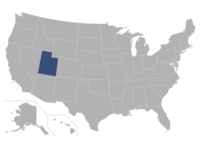
Salt Lake City, UT