Idaho Gov. Little’s budget director asks JFAC to restore funding for some services that were cut
Feb 10, 2026 | 7:14 pm ET
Description
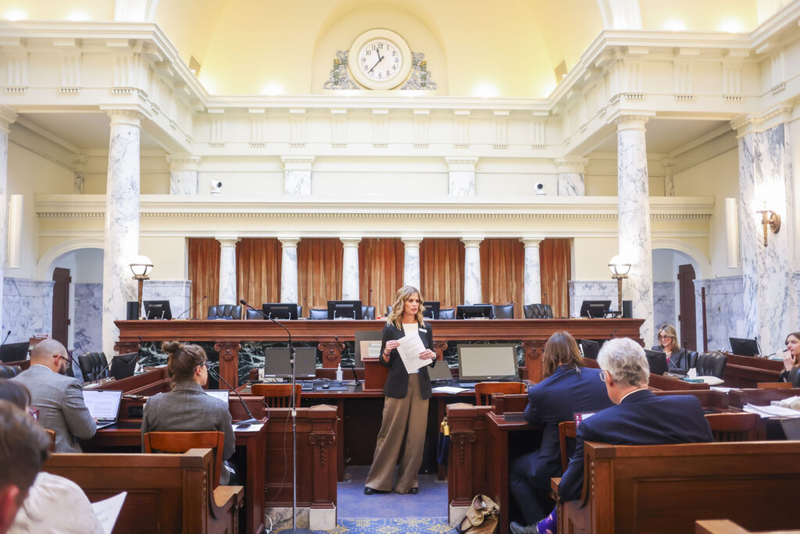
Idaho Division of Financial Management Administrator Lori Wolff gives a press briefing prior to Gov. Brad Little's State of the State address on Jan. 12, 2026, in the Joint Finance-Appropriations Committee room at the Capitol in Boise. (Photo by Pat Sutphin for the Idaho Capital Sun)
Idaho Gov. Brad Little’s budget chief is warning the Idaho Legislature’s budget committee that the additional, new across-the-board state budget cuts approved Friday could lead to “long-term structural harm” in Idaho.
On Tuesday afternoon, Idaho Division of Financial Management Administrator Lori Wolff wrote a letter to members of the Legislature’s Joint Finance-Appropriations Committee, or JFAC, and members of legislative leadership asking them to restore funding for $13 million worth of funding for programs targeted for cuts.
Wolff sent the letter in response to JFAC’s action on Friday to approve additional new across-the-board state budget cuts of 2% for most state agencies for fiscal year 2027. The new cuts are in addition to the 3% cuts Little ordered last summer, bringing the total impact of state budget cuts for most state agencies to 5%.
Idaho Legislature’s budget committee approves additional budget cuts for most state agencies
Documents provided to JFAC on Friday showed the total impact of the 5% cuts would reduce the general fund portion of Idaho’s state budget by $143 million in fiscal year 2027. Wolff is fighting to have $13 million for critical programs restored.
“However, additional cuts jeopardize Idaho’s ability to keep up with population growth, service delivery, infrastructure and economic development,” Wolff wrote to legislators. “These effects are not temporary; rebuilding after cuts can take years, even when revenues recover.”
Idaho governor’s budget chief lays out impacts to state services, programs if Legislature cuts budget
In the letter, Wolff asked legislators to restore funding for several programs affecting public safety, natural resources, education, health and human services and general government.
Idaho mental health court program that turns lives around faces uncertain future due to budget cuts
Wolff told legislators that cuts to Idaho courts and the treatment court programs will increase crime.
“The number of individuals sentenced to term will increase, exacerbating prison population problems and leading to increased costs in the correctional system,” Wolff wrote.
Wolff also said cuts to the Idaho Commission on Aging’s Meals on Wheels program would limit the commission’s ability to deliver meals to eligible seniors, denying meals to an estimated 31,000 vulnerable Idahoans.
Although Idaho’s K-12 public school system itself was exempted from the cuts, Wolff said additional cuts to the separate Career Technical Education program would eliminate funding for an estimated 164 secondary programs in K-12 schools, disproportionately hitting rural schools the hardest.
Cuts to the Idaho Department of Lands means an increased fire risk for rural communities and the ability to hire fewer seasonal firefighters next year, Wolff wrote.
Cutting the Idaho State Tax Commission’s budget means a reduction in the tax season workforce, which could delay Idahoans receiving tax refunds by up to 24 weeks, or nearly half a year, Wolff wrote to legislators.
Budget cut fallout: After Idaho cut a critical Medicaid mental health service, two patients died
Meanwhile, additional cuts to the Idaho Department of Health and Welfare would lead to children remaining in foster care longer.
Wolff’s message to legislators was that it doesn’t have to be this way. She said Little delivered a plan to balance the state budget using one-time funding transfers, interest payments and targeted cuts without the kind of across-the-board cuts JFAC approved Feb. 6.
Wolff told legislators if they implemented Little’s plan and restored funding for $13 million worth of cuts last week that Idaho would still end fiscal year 2027 with an estimated surplus of $184 million.
“With Idaho’s strong economy, we strongly encourage consideration of protecting programs that support Idaho’s long-term growth and prosperity,” Wolff wrote.
FY 2027 Additional Reduction Impacts
Boise, ID