How should we grade Maryland school facilities?
May 26, 2026 | 5:35 am ET
Description
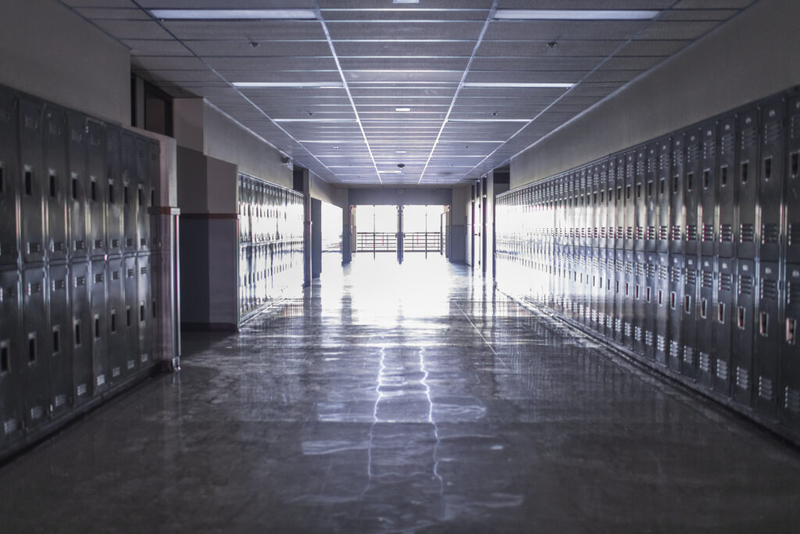
Despite spending billions on school construction in the past five years, there is still a great need for more, which calls for state help, writes Kalman Hettleman. (Photo by Tony Anderson/Getty Stock image)
It is well-known that most students in public schools in Maryland do poorly in reading and math. But less well-known is the poor condition of schools, even though over the past five years, state funding has exceeded $3 billion.
Last year the Comptroller of Maryland, in a remarkably forthright report, stated, “81% of schools are functionally unreliable or need repairs.”
The Interagency Commission on School Construction, known as IAC, the state agency which allocates school construction funds to school districts, concluded a few months ago, “Overall facilities conditions are below desired levels and declining.”
State law sets an annual goal of $450 million for construction but that will not come close to eliminating the backlog.
What should Maryland do? (Keep in mind, as the Brookings Institution found, “Targeted infrastructure spending can boost student outcomes.”)
Adequate funding. The most basic reason for the big gap between capital spending and poor school conditions is that even more money is needed. The costs of school construction have skyrocketed, tripling over the past two decades.
A key variable is the heavy “local share” of the total construction costs. Locals pay about 74% of total costs while the state pays only 23%.
Moreover, though local shares take into account local wealth, the comptroller reports, “Poorer counties … are already maximizing tax effort but have low capacity.”
Several states — for example, Massachusetts and Iowa — have dedicated funding streams. Also, Frederick County has dedicated property tax revenue to school construction.
Your opinion matters
Maryland Matters welcomes guest commentary submissions at [email protected].
We suggest a 750-word limit and reserve the right to edit or reject submissions. We do not accept columns that are endorsements of candidates, and no longer accept submissions from public officials or political candidates.
Opinion pieces must be signed by at least one individual using their real name. We do not accept columns signed by an organization. Commentary writers must include a short bio and a photo for their bylines.
Views of writers are their own.
Prioritization. Better prioritization in the allocation of funds is another major issue.
The IAC has a stellar reputation for being nonpolitical in exercising the power of the purse. Nonetheless, the criteria for grants restrict its ability to fully target funds to the districts with greatest needs. And some political lobbying creeps in.
A step in the right direction is the Nancy K. Kopp Public School Facilities Priority Fund, designed to address the highest priority needs as identified by statewide facilities assessments. Unfortunately, the state is lagging in developing a priority ranking system using available assessments.
The General Assembly in 2024 called for a Workgroup on the Assessment and Funding of School Facilities, tasked with considering prioritization. The workgroup was to report by Jan. 6, 2026, but because of some local political opposition, the Workgroup was never convened.
Deferred maintenance. Local districts pay through operating (not capital) budgets many of the costs of routine and corrective maintenance. But districts are strapped financially and the temptation to defer maintenance is politically irresistible.
The consequences are costly. Emergency or corrective maintenance can be five times the cost of preventative maintenance. To combat this, Maryland could follow the lead of several states that “contribute substantial state funds towards school maintenance.” In contrast, the IAC can only provide small incentives for local maintenance.
Unfortunately, copycat legislation would undoubtedly be a political long shot in Maryland, given the state’s looming revenue shortfalls and local resistance to a mandate for more spending on school maintenance.
Other concerns. One is excess capacity. Local districts sweat over closing schools although they have many vacant seats. Parents resist and schools are often anchors in low-income communities. Some progress has occurred in recent years in reducing excess capacity but the issue will recur.
Another is limited local expertise, especially in small districts, in managing school construction. An innovative public/private program in Prince George’s County, known as “P3” not only increases available funding, but private partners carry out much of the management.
Finally, though some consolidation of separate funding programs has happened, several separate programs remain, sometimes with their own purposes, allowable project costs and methods of allocation. More consolidation should occur with the foremost goal of assuring all school facilities are adequate.
Where should we go from here? School construction has been described as a rabbit hole that is so deep and complex that it is hard to dig out of. Fortunately, key state agencies are candid about the hole they’re in.
Looking forward, the Kirwan Commission, which drafted the Blueprint for Maryland’s Future, was supposed to determine how to achieve fiscal adequacy for schools in general; but it did not address school construction. The omission was understandable, given the gigantic mission without facilities.
But now, a reckoning is due. Maryland’s current fiscal shortfall is a barrier. Nonetheless, we can make progress if political leadership in Annapolis steps up to the challenge. More details about school construction issues can be found here.
Annapolis, MD