Holiday heat wave sent hundreds to Maryland emergency rooms
Jul 10, 2026 | 5:00 am ET
Description
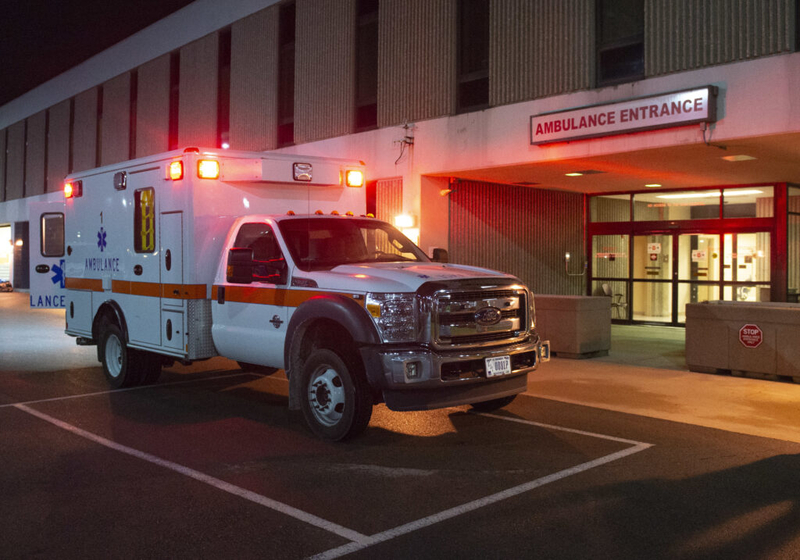
Hundreds of Marylanders went to the emergency room for heat-related illnesses, and hundreds more called for emergency medical services in last week's brutally hot and humid weather. (Photo by Wesley Farnsworth/U.S. Air Force)
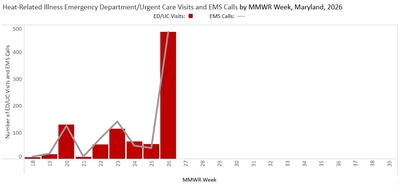
More than 470 heat-related emergency room visits were reported during last week’s Independence Day heat wave, more ER visits in one week than had been recorded for the entire heat season that began in May, according to new data.
State officials had warned last week of potential health problems from the record high temperatures, which hit triple digits on several days. And Wednesday’s update of the Weather-Related Illness Data Dashboard from the Maryland Department of Health confirmed it.
From the start of the annual heat season in May through last week, there had been 916 heat-related emergency room or urgent care visits. But more than half of those cases, 473, occurred last week, from June 28 to July 4.
The dashboard also reports 935 calls for heat-related emergency medical services so far this summer, with half of those calls occurring last week as well.
“What made this heat wave so bad for people is that it was both very high temperatures and very high humidity,” said Dr. Cheyenne Falat, assistant medical director of the Adult Emergency Department at the University of Maryland Medical Center in Baltimore. “That resulted in a lot of people coming in with heat illnesses all along the spectrum.”
Despite those high temperatures, the health department did not report any new heat-related fatalities in last week’s report. Deaths from heat-related illnesses were unchanged, at five for the season, although that could change as data comes in.
“Please keep in mind that any reported heat-related deaths in that dashboard are ones that the Office of the Chief Medical Examiner (OCME) has determined to date,” according to a written statement from the department. “There may be cases that are still pending. Once a heat-related cause of death is determined, those case numbers will be added to the dashboard in future reports.”
Falat said she noted an uptick in people who wound up in emergency rooms last week for heat-related illnesses. They ranged from a few mild cases, where folks just needed a cool space to rehydrate, to more urgent cases of heat exhaustion or heat stroke that required intravenous (IV) fluids or even “cold water immersion.”
“They go for an ice dunk,” Falat said of those cases. “We call them cooling bags, and we’re able to place patients into essentially a modified bag that holds ice and water.”
Falat said that patients suffering from heat stroke have a core body temperature of 40 degrees Celsius — more than 104 degrees Fahrenheit — or higher, and are showing signs neurological abnormalities like confusion or unresponsiveness. Those severe heat illness cases need to be placed in cooling bags to cool their bodies down within 30 minutes.
“That is truly the most effective and quickest way to cool a patient’s core body temperature,” she said. “Heat emergencies are very simple. It’s simple as to why it starts and the treatment is simple as well.

“It’s kind of similar to ice baths that athletes take after workouts, but for a little bit of a different purpose,” she said. “Not for comfort but for saving lives.”
Those suffering from a heat stroke who are not cooled down in time face the risk of organ failure and death.
Last year, Maryland faced the deadliest heat season in over a decade with a total of 36 fatalities by the end of the heat season, according to the most recent data. Maryland heat seasons typically run from May through September, and although this year is off to a relatively slow start, Falat said there’s still plenty of time for that to change.
“We are still in early July. We are not out of the woods yet,” she said.
Falat said the less-urgent heat illness cases she saw were opportunities to educate people on how to stay cool on hot days, by hydrating before heading out in the sun and avoiding sweet drinks, alcohol or caffeine in high temperatures, among other things.
With several months of the 2026 heat season remaining, she urges Marylanders recognize the early symptoms of heat illness, to avoid more severe problems.
“Once your body is feeling dehydrated, you feel thirst, you’re noticing that your legs might be a little swollen, a little crampy,” she said. “Or that you’re feeling nauseous, a little lightheaded – that’s the opportunity that you really need to remove yourself from the heat, go indoors, go to the air-conditioning, try to hydrate with water or an occasional electrolyte solution.
“If you don’t feel better within about one to two hours, then come on in or call your doctor,” Falat said. “If you don’t have one, we are the safety net.”

Annapolis, MD