Here are the legal actions Colorado has taken against Trump administration
Feb 27, 2025 | 6:00 am ET
Description
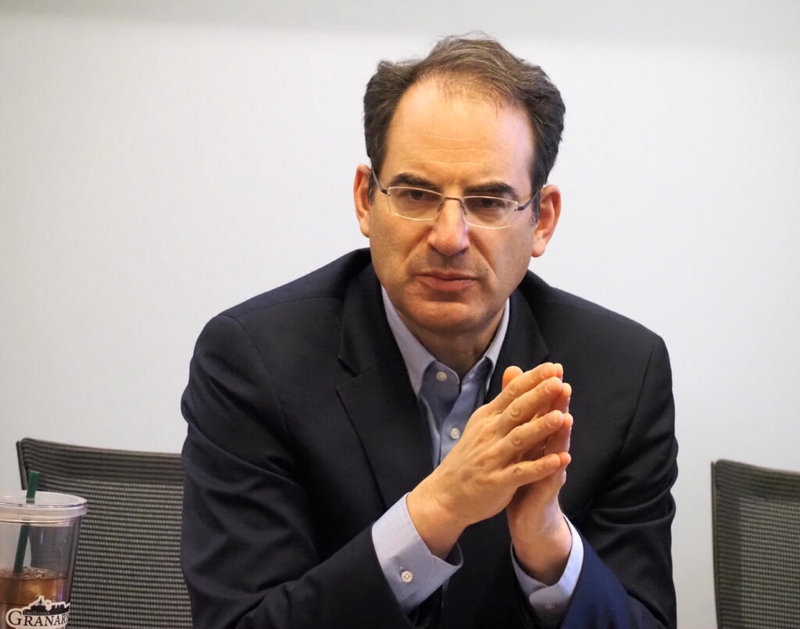
Colorado Attorney General Phil Weiser listens at a roundtable to discuss potential solutions to prevent future hate crimes Wednesday, Dec. 6, 2023, at the Ralph L. Carr Colorado Judicial Center in Denver. (Lindsey Toomer/Colorado Newsline)
Most recent update: Oct. 22, 2025.
Since President Donald Trump took office, Colorado has joined numerous legal actions challenging executive orders and other policies implemented by the new administration.
Colorado Attorney General Phil Weiser, a Democrat who is running for Colorado governor in 2026, has joined 38 lawsuits against the Trump administration so far and filed several amicus briefs in other legal challenges.
Here is a look at the legal measures Colorado has taken against Trump administration policies since the Jan. 20 inauguration.
Birthright citizenship
On Inauguration Day, Trump issued an executive order to end birthright citizenship in the U.S.
Weiser and a coalition of other attorneys general filed a lawsuit in the U.S. District Court of Massachusetts on Jan. 21 claiming that action violates 14th Amendment and a section of the Immigration and Nationality Act. The suit seeks to invalidate the executive order and stop any attempts to implement it.
Section 1 of the 14th Amendment, ratified in 1868, reads, “All persons born or naturalized in the United States, and subject to the jurisdiction thereof, are citizens of the United States and of the State wherein they reside.”
“The idea that a president could override the Constitution with the stroke of a pen is a flagrant assault on the rule of law and our constitutional republic,” Weiser said in a statement.
Another group of states filed a similar lawsuit, and several immigration and civil rights advocacy groups filed a suit challenging the order as well.
Multiple judges have blocked the Trump administration from enforcing the executive order until the cases challenging it are resolved.
Freeze on federal funds
The Office of Management and Budget issued a sweeping freeze on all federal funding on Jan. 27.
Colorado and over 20 other states filed a lawsuit in the U.S. District Court of Rhode Island on Jan. 28 arguing the freeze is unlawful.
Weiser said in a statement that the action violates the separation of powers and is “causing massive harm” in Colorado, affecting health care, education and public safety.
A Rhode Island judge issued a preliminary injunction in states included in the lawsuit on March 6, and wrote in a 45-page decision that the proposed freeze undermined “the distinct constitutional roles of each branch of our government.”.
A separate preliminary injunction a Washington, D.C., judge entered in late February applies nationwide.
DOGE data privacy
Weiser joined a coalition of attorneys general in filing a lawsuit in the U.S. District Court for the Southern District of New York on Feb. 7 aiming to stop Elon Musk and the Department of Government Efficiency, or DOGE, from accessing private taxpayer data.
The suit followed news that a team of DOGE employees accessed sensitive Department of Treasury data through its payment infrastructure.
The attorneys general said Trump and Treasury Secretary Scott Bessent illegally provided DOGE access to the Department of Treasury’s central payment system and “Americans’ most sensitive personal information, including bank account details and Social Security numbers.”
“The sharing of this sensitive information, reportedly without safeguards on who is receiving access or how they are using this information, risks Coloradans’ privacy, threatens to undermine critical governmental programs, and is taking place without any legal justification,” Weiser said in a statement.
The lawsuit seeks an injunction prohibiting expanded access to Treasury Department systems as well as a declaration that the administration’s actions were unlawful and unconstitutional.
A New York judge extended a temporary order on Feb. 14 blocking DOGE from accessing Department of Treasury systems.
In a separate case filed by another group of Democratic attorneys general, a judge in Washington, D.C., ordered that a restraining order prohibiting DOGE from accessing federal agency data is not warranted.
Defunding medical research
The National Institutes of Health announced on Feb. 7 it would no longer pay research universities and medical schools a previously negotiated percentage for indirect costs. Weiser and 21 other attorneys general filed suit on Feb. 10 alleging those cuts were unlawful.
Filed in the U.S. District Court of Massachusetts, the suit says the Trump administration’s proposed unilateral 15% reimbursement rate would lead to an inability to facilitate biomedical research. The NIH is the primary source of federal funding for medical research. The attorneys general said the cap violates the Administrative Procedures Act.
According to a news release from Weiser’s office, the move would cut nearly $90 million in research funding across three university campuses in Colorado.
A Massachusetts judge granted a preliminary injunction on the funding caps in a 76-page decision on March 5 after she extended a temporary block on Feb. 21.
The Association of American Medical Colleges and the Association of American Universities also filed lawsuits against NIH over the change.
Gender-affirming care
On Feb. 19, Colorado joined Washington, Minnesota and Oregon in a lawsuit challenging a Jan. 28 Trump executive order that threatened the funding of any medical institution that provided gender-affirming care to minors.
The lawsuit filed in the U.S. District Court for the Western District of Washington intends to block federal agencies from enforcing the executive order, which also threatens criminal charges against medical providers who provide gender-affirming care. It argues the executive order violates the equal protection guaranteed by the 5th Amendment by singling out transgender individuals for mistreatment and discrimination.
Colorado hospitals that provided gender-affirming care to minors abruptly canceled scheduled appointments for transgender children, citing the order and the potential consequences for their funding.
A federal judge temporarily blocked the order and said it “blatantly discriminated against trans youth,” according to a news release from Weiser’s office.
K-12 teacher training funding
Also on March 6, Weiser joined a lawsuit challenging the U.S. Department of Education’s move to freeze $600 million in grant funding for K-12 teacher training programs. The freeze threatens $2.8 million for a program that prepares teachers to work in rural Colorado communities that have a hard time hiring and retaining teachers.
Federal funding for the Teacher Quality Partnership and Supporting Effective Educator Development grant programs goes to state universities and other teacher training programs around the country. On Feb. 7, the DOE immediately terminated the distribution of these grants, which were approved by Congress.
The lawsuit argues the order terminating grants violates the Administrative Procedures Act, and Weiser and the attorneys general from California, Massachusetts, New Jersey, Illinois, Maryland, New York, and Wisconsin sought an order preventing the funds from being frozen. A Massachusetts judge granted a temporary restraining order March 10 reinstating the grant program, arguing he saw “no reasoned explanation articulated” for the program terminations, though the U.S. Supreme Court later issued an administrative stay, which allowed the freeze to continue.
Federal worker layoffs
Weiser and a group of 20 attorneys general sued the Trump administration on March 6, claiming mass layoffs of probationary federal employees are illegal and cause irreparable harm to their states.
The lawsuit, filed in the U.S. District Court of Maryland, seeks a ruling that the mass firings are illegal, order that the employees be reinstated, put a stop to similar terminations in the future and identify all of the impacted employees. It says the firing of approximately 24,000 probationary government employees who worked for various federal departments violated laws and regulations regarding “reductions in force.”
A Maryland judge ordered the Trump administration to reinstate federal employees in April.
U.S. Department of Education
The U.S. Department of Education announced on March 11 that it would cut about 50% of its workforce. On March 13, Weiser and 20 other attorneys general filed a lawsuit looking to stop the “effective dismantling” of the government agency that supports students and schools across the country.
The lawsuit, filed in U.S. District Court of Massachusetts, says the cuts to the department’s workforce are illegal and unconstitutional, as the department is an executive agency authorized by Congress. It seeks a court order saying the Trump administration must stop efforts to shut the department down.
A news release from Weiser’s office says Colorado received over $1.2 billion from the federal government in 2024 for school programs.
Public health grants
Weiser led a lawsuit against the U.S. Department of Health and Human Services and Secretary Robert F. Kennedy Jr. after it abruptly terminated $11 billion in grant funding, citing the end of the COVID-19 pandemic as reason to stop the funding.
Colorado could lose up to $229 million in grant funding as a result of the cuts. That could affect state public health programs such as immunization distribution, training for local public health agencies on infectious disease, lab services and replacing aging lab equipment.
The lawsuit asks the U.S. District Court of Rhode Island to stop the grant terminations in the 23 states that filed the suit and Washington, D.C..
Elections executive order
Trump issued an executive order in March that requires proof of citizenship to register to vote and vote, requires all ballots be counted on Election Day, and threatens federal funding for states that don’t comply, among other changes.
Weiser and 19 other attorneys general asked the U.S. District Court of Massachusetts to declare certain provisions of the order unconstitutional and void.
The Constitution grants states the right to oversee their own elections, with Congress permitted to regulate certain aspects.
Voting rights advocates and the Democratic National Committee have filed separate lawsuits challenging the legality of Trump’s order too.
Stalled medical research grants
A lawsuit including Colorado and 15 other states claim the National Institutes of Health under the Trump administration has purposely delayed the review process for medical research grants that should have already been issued.
The agency has refused to pay for multi-year grants that were approved under previous administrations, citing disagreements over race and gender issues, the suit filed in the U.S. District Court of Massachusetts says. Research institutions received letters alerting them that their grants were canceled in relation to “DEI,” “transgender issues,” or “vaccine hesitancy.”
Weiser and other Democratic attorneys general on the suit asked the court to issue an injunction requiring the NIH to continue distributing the grants, and declaring the efforts to stall funding distribution unconstitutional.
Dismantling federal agencies
Weiser and 20 other Democratic attorneys general filed a suit in the U.S. District Court of Rhode Island challenging Trump’s executive order attempting to dismantle federal agencies created by Congress.
While Trump has taken several actions attempting to cut down other federal agencies, the lawsuit is focused on the Institute of Museum and Library Services, the Minority Business Development Agency and the Federal Mediation and Conciliation Service. The order Trump issued on March 14 orders the agencies “to eliminate every one of their programs and components not mandated by statute.”
“This executive order unconstitutionally overrides Congress’s power to decide how federal funds are spent,” Weiser said in a statement. “By joining this lawsuit, we are standing up for museums like History Colorado, as well as libraries, workers, and minority businesses.”
Tariffs
Weiser announced alongside Colorado Gov. Jared Polis on April 23 that Colorado joined a lawsuit to block Trump’s move to implement tariffs through four executive orders without approval from Congress.
The lawsuit asks the U.S. Court of International Trade to declare that Trump acted beyond his legal authority and contrary to law when he issued orders implementing tariffs based on the International Emergency Economic Powers Act, which does not grant the president the power to impose tariffs. It also asks the court to enjoin federal agencies from maintaining the tariffs.
The Federal Reserve projected tariffs Trump has initiated will lead to inflation.
“Tariffs are awful for Americans and our economy, and it’s important to use every legal tool possible to reduce trade barriers and increase prosperity,” Polis said in a statement.”
DEI in education
On April 27, Weiser joined a coalition challenging the U.S. Department of Education’s threat to withhold funding from agencies that do not comply with the Trump administration’s directive to cease diversity, equity and inclusion initiatives.
The DOE said state and local education agencies must provide written statements confirming they will comply with the Trump administration’s “new, vague, confusing, and incorrect” interpretation of Title VI of the Civil Rights Act of 1964 in order to receive federal funding.
Colorado receives about $870 million in congressionally delegated funding annually to support children and their education.
The lawsuit asks the U.S. District Court of Massachusetts to declare the mandate from the DOE illegal and null and void and prohibit the agency from enforcing it.
AmeriCorps
A lawsuit 24 states including Colorado filed on April 29 challenged the Trump administration’s orders to reduce the AmeriCorps workforce by 90%.
AmeriCorps is an independent federal agency that supports community service programs throughout the U.S. The lawsuit filed in the U.S. District Court of Maryland says the orders to reduce its workforce have effectively ended AmeriCorps’ ability to function, with 85% of its staff on administrative leave. It asks the court to declare the “decision to dismantle AmeriCorps” unconstitutional for violating the Administrative Procedures Act and stop it from being enforced.
“In an attempt to dismantle the agency, the Trump administration and its DOGE demolition team made abrupt and drastic cuts to staff and volunteers and terminated grants,” Weiser said in a statement. “We are suing to stop this illegal dismantling of AmeriCorps and preserve the spirit of community service in our state and nation.”
A news release from Polis’ office says in 2024, about 1,400 AmeriCorps members volunteered more than 1 million hours at more than 700 sites across Colorado, supporting wildfire mitigation, mental health and education efforts around the state.
RFK and Health and Human Services
Weiser joined a lawsuit on May 5 “to stop the reckless dismantling” of the U.S. Department of Health and Human Services alongside 19 other attorneys general, he said in a statement.
A news release from Weiser’s office says Kennedy and Trump have fired thousands of federal health workers, shut down vital programs and “abandoned states to face mounting health crises without federal support.” The lawsuit says these actions leave the department unable to serve Americans and seeks a court order to reinstate programs and halt further disruptions.
Kennedy has said he will reduce HHS from 28 agencies to 15 and he already reduced the department’s staff from 85,000 to 65,000.
The lawsuit, filed in U.S. District Court of Rhode Island, says the Trump administration cannot implement such sweeping changes without congressional approval.
Wind energy
Another May 5 lawsuit Colorado joined argues the Trump administration’s attempt to freeze wind energy development harms the states’ efforts to diversify affordable, renewable energy sources.
A Trump executive order halted the federal approval process for wind energy projects, so federal agencies have stopped all permitting and approval. The attorneys general said the order violates the Administrative Procedures Act among other federal statutes.
A news release from Weiser’s office says Colorado relies heavily on wind energy, as wind makes up about 70% of the state’s renewable energy portfolio.
The lawsuit asks the U.S. District Court of Massachusetts to declare the directive illegal and prevent Trump from further delaying wind energy development.
Electric vehicle infrastructure
Weiser led a lawsuit on May 7 that intends to stop the Trump administration from terminating billions of dollars Congress approved for electric vehicle infrastructure.
The lawsuit challenges a Trump executive order that mandates federal agencies pause funding from the congressionally approved Infrastructure Investment and Jobs Act, also known as the Bipartisan Infrastructure Law. That policy allocated $5 billion for a national program dedicated to facilitating electric vehicle charging infrastructure in states.
Colorado could lose tens of millions of dollars in funding for electric vehicle infrastructure, a news release from Weiser said.
“A bipartisan majority of Congress authorized funding for electric vehicle infrastructure, and President Trump and the Department of Transportation are breaking the law by revoking it,” Weiser said in a statement. “Colorado has already made significant progress in developing the foundation for infrastructure needed for widespread electric vehicle adoption, and the state’s federally approved plans were designed to fill gaps in rural Colorado and other underserved communities.”
The challenge filed in the U.S. District Court for the Western District of Washington in Seattle seeks an order to declare Trump’s actions unlawful and reinstate the funding.
Homeland Security immigration enforcement
Weiser filed a lawsuit on May 13 against the Federal Emergency Management Agency, the U.S. Department of Homeland Security and Secretary Kristi Noem for threatening to withhold funding from states that do not help the federal government enforce immigration law.
Noem initially ordered federal agencies under DHS, including FEMA, to cease all funding for jurisdictions that do not assist in federal immigration enforcement. She changed that directive to add certification that a jurisdiction will assist in federal immigration enforcement as a condition placed on federal funds.
Colorado has received over $143 million in disaster relief funding from FEMA since 2017.
The lawsuit filed in U.S. District Court of Rhode Island says attaching immigration enforcement as a condition to receive federal funding is beyond the federal government’s authority and is unconstitutional.
Transportation immigration enforcement
Shortly after DHS implemented immigration enforcement as a condition to receive funding, the U.S. Department of Transportation followed suit.
Weiser filed another lawsuit on May 13 against DOT and Secretary Sean Duffy after he told grant recipients he intended to require state and local governments to assist in federal immigration enforcement as a condition of receiving funding from the department. That includes funding for highway construction and public transportation maintenance, among other transportation infrastructure needs.
Colorado receives more than $1 billion annually from DOT for highway, transit, and airport improvements.
The lawsuit filed in U.S. District Court of Rhode Island says attaching immigration enforcement as a condition to receive federal funding is beyond the federal government’s authority and is unconstitutional.
National Science Foundation funding
Weiser and 15 other attorneys general sued the Trump administration on May 28 claiming the administration illegally cut funding for the National Science Foundation.
NSF terminated projects focused on increasing women, minorities, and people with disabilities’ participation in STEM fields in mid-April and capped the costs of certain research projects.
The lawsuit filed in U.S. District Court for the Southern District of New York seeks a court order blocking the NFS’s elimination of programs related to diversity in STEM and funding cuts. It claims the directives violate the Administrative Procedure Act as well as the U.S. Constitution by ignoring Congress’s intent for NFS functions.
Many Colorado universities rely on NFS funding that’s at risk for research programs.
ATF semiautomatic weapon devices
On June 9, Weiser and 16 other attorneys general sued the Bureau of Alcohol, Tobacco, Firearms, and Explosives after the Trump administration announced plans to redistribute previously seized devices that can allow a semiautomatic weapon to function like a machine gun.
The Trump administration’s ATF signed an agreement in mid-May promising to stop enforcing federal laws against forced reset triggers, which dramatically increase the firing rate of semiautomatic weapons. Weiser’s office said the device increases firearm capacity to exceed the rate of many military weapons, firing up to 20 bullets in one second.
The lawsuit filed in the U.S. District Court of Maryland seeks an order to prevent the redistribution of the FRTs because they are illegal under federal law.
“It’s hard enough for our local law enforcement officials to protect Colorado communities from gun violence without the federal government willfully ignoring the law,” Weiser said in a statement. “The law is clear: machine guns, and devices that turn a semiautomatic weapon into a machine gun, are illegal.”
Colorado’s Clean Car Program
Colorado joined California’s case against the Trump administration and the Environmental Protection Agency challenging the move to reject federal waivers that allowed California to adopt more stringent vehicle emission standards. Colorado adopted the same standards as California.
The lawsuit says the Trump administration improperly used the Congressional Review Act, as the EPA, the Government Accountability Office and the Senate Parliamentarian all previously agreed that California’s Clean Air Act waivers are not subject to it.
“Rolling back the federal Clean Air Act waivers through the illegal use of the Congressional Review Act is an assault on the authority of states, like Colorado, to adopt stronger tailpipe pollution limits than those set by the federal government,” Weiser said in a statement.
The states asked the U.S. District Court for the Northern District of California to declare the resolutions unlawful for violating constitutional principles of federalism and separation of powers, the Take Care Clause, and other federal statutes including the Administrative Procedure Act.
‘Agency priorities’ regulation
Weiser joined a coalition of 21 states and the District of Columbia to sue the Trump administration over its attempts to strip billions of dollars in federal funding for states. The Trump administration, through DOGE, wants to eliminate the funding by invoking a regulation that allows the federal government to terminate funding if it “no longer effectuates … agency priorities.” Weiser says such use of the regulation “is unlawful and a dramatic departure from past practice.”
“We are challenging this action because Colorado and other states accept hundreds of billions of dollars a year to combat violent crime, educate students, protect clean drinking water, conduct lifesaving medical and scientific research, and safeguard public health,” Weiser said.
The lawsuit was filed June 24 in federal court in Massachusetts. The defendants include the Office of Management and Budget and numerous federal agencies.
Medicaid data to ICE
Weiser and 19 other attorneys general from Democratic-led states filed a lawsuit on July 1 challenging the U.S. Department of Health and Human Services’ decision to allow U.S. Immigration and Customs Enforcement unfettered access to data on state Medicaid enrollees.
According to Weiser’s office, reports have indicated the federal government intends to use the data to create a database for mass deportations and other immigration enforcements. The attorneys general argue the sharing of data is unlawful for violating federal statutes including the Administrative Procedure Act, the Health Insurance Portability and Accountability Act and the Federal Information Security Modernization Act, among others.
The lawsuit filed in the U.S. District Court for the Northern District of California seeks an injunction prohibiting HHS from sharing personally identifiable Medicaid data with the Department of Homeland Security for immigration enforcement purposes.
“The personal healthcare data collected about Medicaid beneficiaries is confidential, to be shared only in narrow circumstances that benefit public health and the integrity of the Medicaid program,” Weiser said in a statement. “There’s no reason to share this sensitive data with immigration or law enforcement agencies. We’re suing to protect Colorado’s Medicaid program and the health and welfare of the people it serves.”
Youth mental health funding
The U.S. Department of Education discontinued $1 billion in congressionally approved funding for educational institutions and local governments to support youth mental health, a move Weiser and 15 other attorneys general challenged in the U.S. District Court for the Western District of Washington on July 1.
The decision could affect nearly $10 million designated for the University of Colorado, University of Northern Colorado, University of Denver, Metropolitan State University, Poudre Valley School District R-1, and the Colorado Department of Education, according to Weiser’s office. Those funds were meant to fund recruitment and retraining efforts to address a shortage of school-based mental health providers in the state.
Recipients of grant funding at risk received a boilerplate notice in April that said they would not receive funding because it conflicted with the Trump administration’s priorities.
The attorneys general argue in their lawsuit that the discontinuation of funding violates the Administrative Procedure Act and the U.S. Constitution’s spending clause and separation of powers. The lawsuit seeks orders prohibiting the funding freeze and declaring that the department can only consider grantees’ performance when determining if funding should be awarded.
More education funding frozen
A lawsuit Weiser helped lead challenges the U.S. Department of Education’s move to freeze $6.8 billion in funding, which includes $80 million slated for Colorado schools.
Filed on July 14 in the U.S. District Court of Rhode Island, the lawsuit says the freeze is unlawful and arbitrary and has led to school districts scrambling to determine what programs it will need to cut ahead of the school year. The Department of Education historically distributes funding to states around July 1 so educational agencies can plan their budgets for the year.
“I have heard directly from Colorado school superintendents how disruptive and reckless this arbitrary freeze of federal funding is to them,” Weiser said in a statement. “Schools deserve to be treated fairly and this administration’s lack of regard for the impact of this lawless decision is appalling.”
The lawsuit argues the freeze violates statutes governing the federal budgeting process as well as the Administrative Procedure Act and the separation of powers provision of the U.S. Constitution. It seeks a ruling that the funding freeze is unlawful and a court order blocking attempts to withhold funding.
Shuttered natural disaster program
Weiser and 19 other states sued the U.S. Department of Homeland Security and FEMA on July 16 for shutting down a program meant to protect communities from natural disasters.
The Building Resilient Infrastructure and Communities program provides states with funding to proactively make their community infrastructure more defensible against natural disasters. Weiser’s office cited a study that found every dollar FEMA spends on pre-disaster mitigation efforts saves an average of six dollars in post-disaster costs.
“Coloradans know all too well the destructive power of wildfires, floods, and other disasters. Cutting off this critical funding puts our communities at greater risk and undermines years of planning and investment,” Weiser said in a statement. “This unlawful decision not only defies congressional authority — it puts up unnecessary barriers to protecting lives, homes, and essential infrastructure.”
The lawsuit filed in the U.S. District Court of Massachusetts seeks an injunction preventing the Trump administration from spending funding for the resilient infrastructure program on other purposes and a restoration of funds to communities they were promised to.
Health insurance exchange rule
A lawsuit Weiser and 21 other states filed on July 17 challenges a new rule from the U.S. Department of Health and Human Services that would make it harder for people to obtain health insurance coverage under the Affordable Care Act.
Weiser’s office said the Trump administration’s own estimates say the rule change could lead to up to 1.8 million people losing health insurance. It could also lead to increased insurance premiums and out-of-pocket costs for health care, and excludes coverage for gender-affirming care as an essential health benefit under the ACA.
The attorneys general argue the rule is arbitrary and capricious and violates the Administrative Procedure Act, and asked the U.S. District Court of Massachusetts to prevent parts of the final rule from taking effect in the suing states before the Aug. 25 effective date.
“At a time when Coloradans are already dealing with high costs of living, if this illegal move by the Trump administration stands, it means many people will now also be facing the prospect of paying more for doctor visits and medicine, or even losing their coverage entirely,” Weiser said in a statement.
Restrictions on public benefits
Weiser joined a lawsuit filed on July 21 challenging the Trump administration’s move to restrict who is able to access public health, education and social service programs based on immigration status.
Several federal agencies issued a new set of rules changing the interpretation of the Personal Responsibility and Work Opportunity Reconciliation Act to restrict states from using federal funds to offer services to people who cannot verify their immigration status. That change could affect immigrants who lack proper documentation, lawful visa holders, and even citizens who don’t have access to formal documentation.
“A number of Colorado programs serve all comers and don’t have the capacity to evaluate immigration status. This change of longstanding policy, with no time to adjust, is going to burden and undermine these important programs — from family planning to adult education to head start,” Weiser said in a statement. “Sadly, it’s another example of the federal government operating in an erratic and irrational fashion, failing to consider the consequences of its hasty actions.”
The attorneys general seek an order from the U.S. District Court of Rhode Island declaring the new rules unlawful and halting their implementation.
SNAP data
Weiser filed suit on July 28 challenging the U.S. Department of Agriculture’s demand for personal data on millions of Supplemental Nutrition Assistance Program enrollees.
The department threatened to withhold funding for SNAP from states that do not agree to share the personal data on program recipients. Colorado should receive about $96 million from the federal government to administer SNAP in the state.
Colorado law prohibits the state from disclosing personal identifying information on SNAP recipients “unless strictly necessary for the administration of the program, or other limited circumstances that do not exist here,” Weiser said.
“SNAP is an essential program for millions of low-income Americans to purchase groceries and put food on the table,” Weiser said in a statement. “The program exists to fight hunger. It’s unthinkable that USDA would threaten the food security and privacy of millions of families.”
The lawsuit, filed in the U.S. District Court for the Northern District of California, argues the demands violate federal privacy laws, exceed the department’s statutory authority, fail to meet public comment requirements and violate the spending clause of the U.S. Constitution. It seeks a court order prohibiting the Trump administration from conditioning SNAP funding on compliance with the data requests.
Planned Parenthood ‘defunding’
Weiser joined a lawsuit on July 29 challenging a “defunding” provision congressional Republicans passed in their massive tax and spending law that the lawsuit says directly targets Planned Parenthood.
The challenged provision blocks Medicaid reimbursements for services offered by Planned Parenthood including cancer screenings, birth control, and testing for sexually transmitted infections. Planned Parenthood clinics rely heavily on Medicaid funding to offer those standard reproductive health care services at little to no cost, and Weiser’s office said the provision would threaten at least 200 clinics across the country.
The lawsuit, filed alongside 22 other Democratic-led states in the U.S. District Court of Massachusetts, argues the “defund” provision is ambiguous and violates Congress’ spending clause power. The states seek a court order prohibiting enforcement of the provision in their states, as they argue it will harm their states’ public health and economy.
State-run energy programs
Weiser on Aug. 15 led a lawsuit in the U.S. District Court of Oregon that looks to block the U.S. Department of Energy from imposing funding caps on state-run energy programs that increase access to affordable clean energy in rural and urban parts of Colorado.
Under a new policy announced by the department in May, state programs would no longer be reimbursed for administrative and staffing costs long covered by the federal government, which the suing states say would jeopardize their ability to run their energy programs.
The Colorado Energy Office was supposed to receive just under half a million dollars for indirect program costs from the federal government, but under the new policy, that amount was reduced to just over $100,000.
The 19 states in the lawsuit, as well as Washington D.C., say courts have struck down similar blanket caps on reimbursements.
Federal funds for crime victims
An Aug. 18 lawsuit Weiser and 21 other attorneys general filed says the Trump administration has illegally imposed conditions related to immigration enforcement on congressionally approved Victims of Crime Act grants.
The lawsuit, filed in the U.S. District Court of Rhode Island, says requiring states to enforce immigration if they want to receive VOCA funding is illegal. Courts struck down a similar requirement for federal law enforcement funding.
VOCA funding helps states offer resources to victims of crimes, including emergency shelter, medical and funeral expenses and victim and witness advocacy services. In 2024, Colorado received over $21 million from the federal program.
Sexual health education requirements
Colorado joined a lawsuit on Sept. 26 that challenges Trump administration requirements that teen reproductive and sexual health education programs remove language related to gender identity.
The Department of Health and Human Services said states need to remove language around “radical gender ideology” if they want to receive funding from the federal Personal Responsibility Education Program, which provides funding to educate teenagers on pregnancy and sexually transmitted infections. The same policy applies to the Title V Sexual Risk Avoidance Education program.
The lawsuit, filed in the U.S. District Court of Oregon, says the requirements violate the Administrative Procedures Act and the U.S. Constitution and asks the court to prevent HHS from further terminating state funding under the programs.
Citizenship requirement for crime survivor services
An Oct. 1 lawsuit Weiser led in the U.S. District Court of Rhode Island challenges U.S. Department of Justice requirements that state services for survivors of domestic violence and other violent crimes only go to citizens.
The new requirement, which is set to take effect Oct. 31 barring court action, says states cannot use Victims of Crime Act, Byrne Justice Assistance Grants, and Violence Against Women Act funding to support legal services for people who cannot prove their lawful immigration status, which Weiser and 21 other attorneys general say is illegal.
“The DOJ’s new restrictions will upend victim services programs, cut off critical resources, and discourage survivors from seeking help,” Weiser said in a statement. “And restricting these grants will make our communities less safe. We must do all we can to support and honor crime victims.”
Two lawsuits over Solar for All funds
Colorado joined two lawsuits, one in the U.S. District Court for the Western District of Washington and one in the U.S. Court of Federal Appeals, challenging the Environmental Protection Agency’s decision to end a program that provides billions of dollars to reduce energy costs and pollution by incentivizing solar energy.
The EPA terminated the Solar for All program, which was established in 2022 as part of the Inflation Reduction Act to provide grants for states and other entities completing solar projects in low-income and disadvantaged areas. The EPA awarded funding to recipients who planned projects around that funding, and the abrupt termination of those funds is illegal, the attorneys generals involved say.
Colorado received over $156 million through the program, with which the state committed to create 1,000 jobs and establish solar energy for more than 20,000 low-income households. In August, the EPA notified the state it was terminating the grant and liquidated the state’s account.
Support for other legal actions
Weiser and other state attorneys general filed an amicus brief in support of a lawsuit several unions representing federal workers filed challenging Trump’s “Fork in the Road” buyout offer. The unions argue the offer caused widespread confusion among federal employees and sought a temporary restraining order to stop the program.
Weiser also joined an amicus brief in support of a lawsuit looking to protect the Consumer Financial Protection Bureau. The Trump administration directed the bureau, an independent agency that oversees banks, lenders and credit card companies, to stop all work and not to take on any new cases on Feb. 9.
Ahead of Trump’s inauguration, a coalition of states including Colorado filed actions defending a decision by the Bureau of Alcohol, Tobacco, Firearms, and Explosives to prohibit a device that allows gun owners the convert a firearm into a military-grade automatic weapon “because federal defendants can no longer be counted on to defend” the prohibition. Weiser also included Colorado in a similar action regarding a bureau rule that expands which gun dealers must conduct a criminal background check for a purchaser and record the transactions.
On March 12, Weiser and 20 other attorneys general filed an amicus brief in support of a law firm Trump targeted with an executive order for “representing clients that he personally does not like,” the brief says. The Seattle-based law firm, Perkins Coie, employs 71 Coloradans at its Denver office.
Weiser and 20 other attorneys general penned an amicus brief on April 16 in support of of a lawsuit that aims to protect Social Security Administration workers from “erratic management” and “unlawful layoffs” at the hand of DOGE. The brief says workers are concerned about how staffing changes will affect the administration’s ability to function.
Another amicus brief Weiser joined on April 18 shows support for two commissioners of the Federal Trade Commission who a lawsuit says Trump fired illegally. The FTC is an independent, bipartisan commission that oversees consumer protection efforts, and commissioners cannot be removed without cause under the Federal Trade Commission Act.
On July 15, Weiser and 21 other state attorneys general wrote to leaders in Congress asking them to pursue legislation that would prohibit federal immigration agents from wearing masks that conceal their identities and require they show identification and agency-identifying insignia. The letter cited concerns about ICE officers operating in unmarked vehicles in plain clothes without identification, and said legislative action is necessary to promote transparency, accountability and public safety.
Editor’s note: This story and headline were updated at 5:55 p.m., Oct. 22, 2025, to include new legal actions against Trump administration policies by the Colorado attorney general’s office. The story was previously updated several times for the same purpose.
Denver, CO