In Her Honor brings stories of Black mothers lost to maternal mortality to Detroit
Aug 26, 2026 | 11:56 am ET
Description
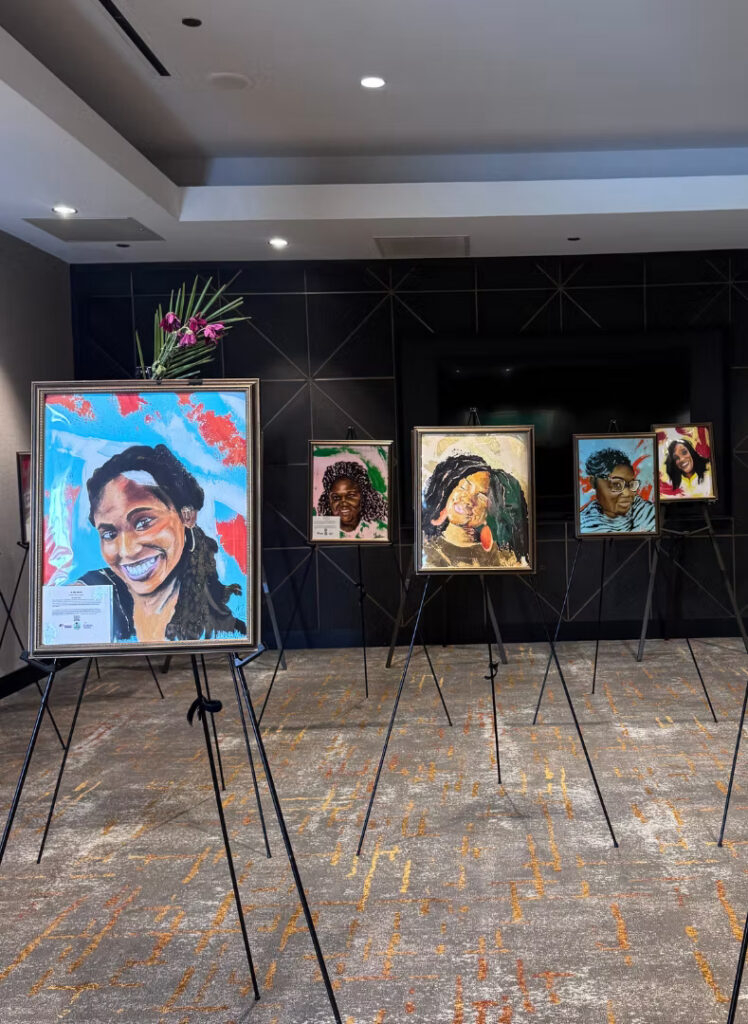
Portraits included as part of the "In Her Honor" exhibition and gala sponsored by Mothering Justice and the national ARIAH Foundation. (Photo courtesy of Mothering Justice)
A national art movement is in Detroit this week, calling attention to the maternal health crisis Black women face by honoring those who have lost their lives to pregnancy-related complications.
On Aug. 26-28, Detroit’s Mothering Justice and the national ARIAH Foundation will host In Her Honor, a series of events including a film screening, gala and art exhibition. In Her Honor aims to shine a light on the fact that Black women are three times more likely to die from a pregnancy-related cause than white women, according to the Centers for Disease Control and Prevention.
The series of events is intended to go beyond that statistic, Mothering Justice founder and Executive Director Danielle Atkinson said, to humanize those stories by elevating them through art.
“We know the numbers, but it’s different when we are talking about a particular individual and that’s what the portraits and the honorees do for the issue,” Atkinson said. “They really put a face with the statistic. They put a story to a face, and when we do that, it humanizes the problem and it gives us all something to relate to.”
Through film, art, and community dialogue, In Her Honor’s seventh stop on its nationwide tour will elevate the stories of families impacted by maternal mortality and highlight the advocates, birth workers and organizers working to improve outcomes for Black mothers. In the United States, 80% of pregnancy-related deaths are preventable, according to the CDC.
The national art movement also aims to bring attention to how the maternal health crisis impacts Michigan, where 15 counties have little to no hospitals or birth centers providing pregnancy and childbirth care, Atkinson said. Additionally, policy rollbacks, the recent closure of three Michigan Planned Parenthood clinics and federal Medicaid funding cuts, highlight the urgency of the Black maternal health crisis.
Racism is a “huge factor” in contributing to this lack of access to care, Atkinson said, with Black women reporting that they are being treated differently or ignored when they say they’re in pain or lacking postpartum support.
“The abortion bans have a real effect on the safety of women,” she said. “When we are closing a huge provider like Planned Parenthood, we are only putting more people at risk for a variety of diseases. So, when we’re not thinking about women’s health in totality, we’re not thinking about outcomes for birth. We have to be making policy accordingly.”
Atkinson said the state’s efforts to provide resources to new mothers through initiatives like the Rx Kids cash assistance program and passage of the “Momnibus” legislative package, which works to improve accountability in Michigan’s maternal health care system, are steps in the right direction toward providing mothers with equitable opportunities to experience a healthy pregnancy and birth.
The “Momnibus” bills helped Michigan set up and license freestanding birth centers. Still, Atkinson said more needs to be done to offset a presidential administration that does not invest in prenatal care and postnatal support, Atkinson said.
“We’ve seen some things pass that we know are scientifically based to create better outcomes, but we obviously still have work to do,” she said. “We pass paid sick days, but we need paid family medical leave. We need access to affordable childcare, because caregivers, birthing people and mothers live a whole life, which means they are caring for a lot of people, which means they have stressors on their life that prevent them from being able to get to the services that they need, and those services need to be extremely accessible.”
During In Her Honor, Mothering Justice’s partner in the event, the ARIAH Foundation, will host a screening Wednesday night at the Detroit Institute of Arts of the award-winning documentary “Aftershock,” along with a community discussion, with speakers and attendees sharing personal stories of pregnancy, motherhood, and tragedy. The evening will explore the ongoing Black maternal health crisis, the systemic barriers contributing to maternal mortality and the community-led solutions advancing maternal health equity.
“Aftershock” tells the story of 30-year-old Shamony Gibson, who died 13 days after the birth of her son. Following Gibson’s death, her mother, ARIAH Foundation co-founder Shawnee Benton Gibson, turned her grief into a movement supporting families facing similar losses.
Benton Gibson, who had already been working in reproductive health justice prior to her daughter’s birth-related pulmonary embolism, said the “silent fourth trimester” that led to her daughter’s death brings to light how this issue can be overlooked.
“When she transitioned, it was a shock that she died from something that we had been working on together for years,” she said.
“You need to be listening to them when they have something to say about what’s happening with their body or not happening with their body after they give birth, and you need to take action because of the statistical data that proves that we’re three times more likely to experience maternal mortality than our white counterparts.”
In addition to the film screening, In Her Honor will host its signature gala on Thursday, Aug. 27 and a “public exhibition day” on Friday, Aug. 28 that features portraits, personal stories and educational installations honoring Black mothers whose lives were lost to pregnancy-related complications.
The exhibition, which takes place from 9 a.m. to 9 p.m. at the Mothering Justice National Movement Home at 1948 Division St, Suite 101 in Detroit, highlights the experiences of impacted families while examining the racial disparities that continue to shape maternal health outcomes in the United States.
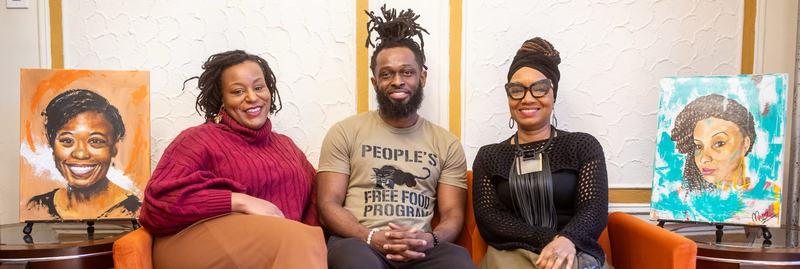
Artist and ARIAH co-founder Omari Maynard said he began painting portraits following the death of Shamony Gibson, his partner who he had two children with, as a way to communicate with her through art.
More than five years later, he has painted around 60 portraits of other Black women who have lost their lives to tell their stories around reproductive health, gifting them to their families. Many of those portraits will be on display during the exhibition.
“Art is a universal language — one that all people understand and speak — and what makes us human,” he said. “I think that it creates a different entry point of having more of a listening ear and more of a spiritual and and physical experience of not just understanding what the statistics are, but understanding the human side of what maternal health looks like and how it affects families in a traumatic way, but also in a healing way.”
For more information on In Her Honor, including how to RSVP for events, visit its website.

Lansing, MI