Hawaiʻi Teachers Win Raises, But Some Schools Are Still Crumbling
May 22, 2026 | 6:01 am ET

Description
Photo courtesy of Honolulu Civil Beat
Despite significant budget constraints and uncertainty around federal funding, Hawaiʻi schools emerged with a handful of victories involving employee pay, safety and student transportation this year.
But some lawmakers' key questions around leadership in the education department and school facilities management remain unaddressed.
The session was particularly fruitful for teachers, who emerged with legislation providing stronger protections against harassment and automatic annual salary raises. Another successful bill increases the amount of time unlicensed teachers can work in schools, although some lawmakers have questioned whether this is a sustainable approach to solving educator shortages.
"We fought really hard this session," said Sarah Milianta-Laffin, who served as the teacher lobbyist for the teachers' union this year. "Hopefully it sets a good stage for our next contract."
Other bills involving reading support for dyslexic students and improving access to school transportation services also passed through the Legislature.

But state leaders punted other decisions involving campus facilities and school leadership to later sessions. While some senators repeatedly claimed the education department was failing to serve students, bills to create sweeping reforms of the education department were watered down and eventually died.
The longtime debate over which state agency should repair and construct new schools also remains unresolved. On some campuses across the state, students are learning in crumbling buildings with leaking pipes and electrical outages, raising the frustration of lawmakers and parents. Some classrooms at Kalāheo High School, for instance, went without power for months, and the campus has been infested with millipedes.
A handful of bills sought to place major construction projects and a facilities database under the School Facilities Authority, which is currently responsible for building new campuses and preschool classrooms. But most of the bills that would increase the authority's responsibility died in the final days of session as the education department pushed to maintain the status quo.
While some lawmakers remain frustrated with the education department's backlog of unfinished projects, school leaders have insisted that they're doing a better job of managing and spending their construction funds.
Gov. Josh Green has until June 30 to announce the bills he intends to veto and until July 15 to sign or reject bills.
Wins For Educators
The legislative session started just over a month after a disgruntled parent assaulted Moanalua High School's assistant athletic director after a basketball game. Videos of the assault circulated widely on social media, sparking calls for stronger protections against the harassment of school employees and referees.
Proposals requiring the education department to improve employee safety aren't new, with related bills dating back to 2022. But the viral nature of Natalie Iwamoto's assault seemed to rally lawmakers and create new momentum this year, said Lindsay Chambers, a former education department employee who has pushed for safety legislation for years.

"We're just seeing since Covid an increase in harassment, assaults, bad behavior from community members towards educational workers," Chambers said. "The important part is the DOE's response and requiring some type of consistent response system-wide."
House Bill 1888, which has been sent to the governor, would require the education department to conduct formal investigations of reported harassment and share incidents with law enforcement. Employees seeking a temporary restraining order would also receive paid leave and assistance from the Attorney General's Office for the first time under the bill.
The bill also makes the harassment of educational workers, including sports officials, a misdemeanor, up from the current charge of a petty misdemeanor. Consequences for a misdemeanor include up to a year in prison and $2,000 in fines.
While the proposal received strong support from educators and their unions, some parents said it could penalize outspoken families who disagree with teachers. Increasing harassment charges to a misdemeanor could be particularly damaging for families of special needs students, who frequently need to advocate for their children and may be afraid to speak up under the new law, some parents said.
"Unfortunately I am concerned that accusations of harassment, or the threat of making those accusations, with the increased penalties attached, could be used as a tool to silence parents," said parent Julianne King in written testimony against the bill.
The teachers' union saw additional success with the passage of House Bill 1890, which aims to guarantee annual salary raises for teachers, though it would need to be negotiated into their contracts.
The raise would likely be 3% starting next year for most teachers.

Currently, educators aren't guaranteed annual raises and have gone without automatic pay increases tied to their years of experience during times of economic uncertainty.
This year, the starting salary for a licensed teacher was $53,390. While teacher vacancies have dropped in recent years, the state has significantly increased its reliance on unlicensed educators to fill classrooms.
Rep. Justin Woodson, who introduced House Bill 1890, said he hopes the bill strengthens teacher recruitment and retention.
All educators receiving satisfactory evaluations would be eligible for the raises, except for veteran teachers who are already at the top of the salary schedule.
The Legislature still needs to set aside funding to cover the salary increases, said Andrea Eshelman, executive director of the Hawaiʻi State Teachers Association. She expects the automatic raises to take effect in 2027, she said, when the union will go through contract negotiations with the state.
Reading Supports And Bus Services
Just over half of Hawaiʻi students scored proficient in reading on state tests last year.
House Bill 1891 requires schools to implement screeners that could flag kids who are potentially dyslexic, which can make reading challenging. The bill also requires schools to provide teachers with training to support students struggling with reading. Its passage makes Hawaiʻi the final state with a dyslexia law on the books, said David Sun-Miyashiro, executive director of HawaiʻiKidsCAN, an educational advocacy group.
"It's having that scientific basis of understanding and then hopefully having the resources and support to really make sure that kids can then get caught up to where they're supposed to be," Sun-Miyashiro said.

Lawmakers also made progress on the issue of student transportation, which has remained a long-time challenge for schools amid an ongoing shortage of qualified bus drivers. One successful bill, introduced by Rep. Trish La Chica, allows the education department to move routes between contractors if companies repeatedly fail to provide services.
School leaders previously needed to re-assign bus routes from Ground Transport Inc. to Roberts Hawaiʻi in summer 2024, when Ground Transport said it would be unable to cover nearly 150 routes shortly before the school year began. The bill aims to avoid major disruptions in routes moving forward, La Chica said, adding that contractors are still struggling to serve all students who need transportation.
Last year, bus companies were able to serve just under 60% of their contracted routes, according to the education department. This year, the companies have been able to cover 90% of their routes, although 35 remain inactive.
But the education department remained skeptical of the proposal, arguing that the problem stems from a widespread shortage of drivers, which affects all bus companies. Increasing penalties for bus companies that aren't able to service their routes could discourage providers from bidding on contracts in the future, Superintendent Keith Hayashi said in written testimony.
Unanswered Questions
In recent years, lawmakers have raised concerns that the education department is too slow to spend its facilities funding and lacks a process for tracking and communicating the status of major construction projects.
The education department currently has nearly $1.5 billion in unspent funds for campus repairs and construction, although roughly $610 million has been set aside in contracts.

A series of bills proposed moving projects from the education department to the School Facilities Authority. Another bill would have set aside funding for the authority to contract with private developers to build campuses for charter schools. None of these efforts to transfer construction oversight passed.
Leaders in the education department insisted they should remain responsible for maintaining and repairing schools and pointed to their progress in spending state funds for campus facilities. In 2025 and 2026, the department requested to lapse roughly $41 million in construction funds, a significant drop from its plan to forfeit $465 million two years ago.
Woodson gave the education department credit for their recent progress and said the Legislature should hold off making significant changes to school facilities.
"Those are big changes," Woodson said. "It's too early for those types of discussions, I think, to materialize into policy."
Civil Beat's education reporting is supported by a grant from Chamberlin Family Philanthropy.
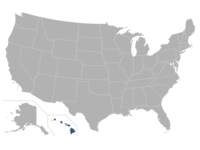
Honolulu, HI