Hawaiʻi Is Sending These Animals To The Mainland In Record Numbers
May 26, 2026 | 6:01 am ET
Description
Photo courtesy of Honolulu Civil Beat
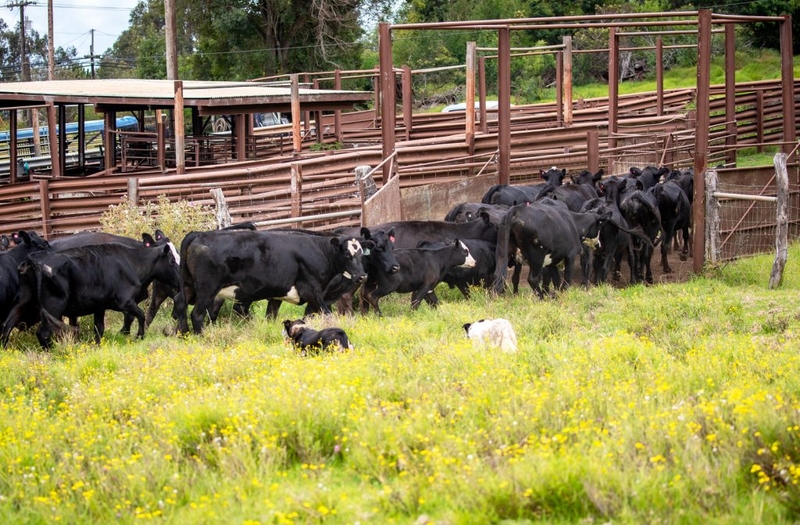
By sea or by plane, cattle are by far the most traveled of Hawai‘i’s livestock.
Nearly 55,000 shipments of cattle have been made from the islands in the past three years and almost 80% of those were headed out of Hawai‘i, according to state agricultural statistics. That’s more than 75% of the total number of loads of farm animals transported from and within the state.
The numbers, according to the Department of Agriculture and Biosecurity, reflect national economic trends. That includes spikes in the price of beef and surging demand from the mainland U.S. and a general lack of infrastructure in the islands to be able to get meat into the local market. The numbers also show cattle’s continued domination of the state’s livestock sector.
Hawaiʻi ranchers have for decades raised cattle to ship to the mainland. Most have followed what's called a cow-calf model since the early 1990s, driven by rising feed costs, in which cows are born and raised before being shipped away to cattle operations in the mainland U.S.
Animals are shipped between the islands for myriad reasons, slaughter chief among them.
Goats and goat products are the second-most shipped, accounting for just under 20% of the state’s traveling farm animals. Those ungulates, mostly originating on Hawaiʻi island, were almost entirely destined for Oʻahu for slaughter and sale.
The Big Island continues as the state’s largest livestock producer by far, including cattle, and shipments from the island have accounted for three-quarters of the total shipments in the past year.
Oʻahu falls second in terms of cattle's final destination, given its slaughterhouses' ability to process mature bulls and cows. But the island is also a stopover for many destined for the mainland.
Demand has surged for Hawaiʻi cattle recently, especially as retail beef prices rise to record highs and the national statistics show cattle numbers are at their lowest in 75 years.
That has driven up demand for Hawaiʻi's young cattle, which are mostly raised in Hawaiʻi but are finished and slaughtered on the mainland.
In Hawaiʻi, where there is a drive to increase the supply of local beef and other meats, a lack of slaughterhouses have been the main chokepoint. The addition of changes in ownership and ranchers shipping more cattle off the islands has helped feed inconsistencies in supply.
Hawaiʻi produced 9.1 million pounds of red meat in 2024, up 1.1 million pounds on 2018, but down more than 1 million pounds on production during the Covid-19 pandemic.
Demand for local meat is on the rise in Hawaiʻi, according to state analysis, reflecting the U.S. Department of Agriculture's prediction that beef consumption will rise by 1.67 billion pounds in 2027.
Lawmakers have earmarked several million dollars to increasing slaughterhouse capacity in the state, including for small livestock such as sheep and pigs. That includes $4 million for a facility in Kunia on Oʻahu.
"Hawai‘i Grown" is funded in part by grants from the Stupski Foundation, Ulupono Fund at the Hawai‘i Community Foundation and the Frost Family Foundation.
Honolulu, HI