Hawaiʻi Ranchers Welcome Rain But Endure Weather Whiplash
Aug 26, 2026 | 6:01 am ET
Description
Photo courtesy of Honolulu Civil Beat
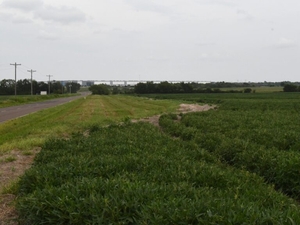
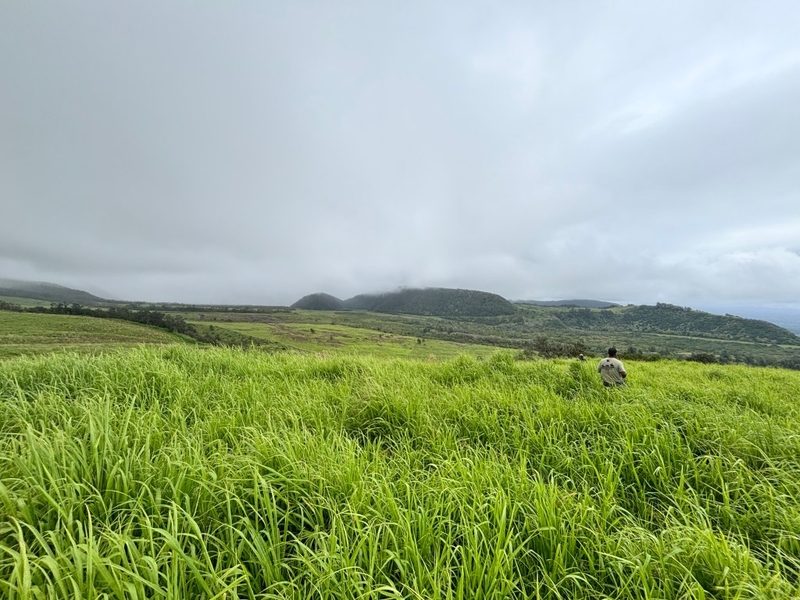
Kealia Galimba disappears amid thousands of acres of thriving guinea grass while seeking the optimum vantage point over the long drought-stricken Ka‘ū district. She wanted to catch a glimpse of the distant, fog-shrouded flanks of Mauna Loa and their telltale sign of the past week’s devastating storms.
“There’s three waterfalls that cascade,” the third-generation rancher said, “one that goes all the time, second one, when it’s rainy, then a third when it’s rained really hard.”
If they were visible, she knew all three would be roaring, given the 24 inches of rain measured uphill at a nearby weather station on Aug. 15, when Hurricane Lala grazed the southern portion of Hawaiʻi island. Further up on the slopes of Maunaloa, one station measured 37 inches. The wet weather spells relief for the grass-fed cattle ranch, which has struggled through years of drought. More rain, more grass; more grass, more food for Kuahiwi Ranch’s cattle.
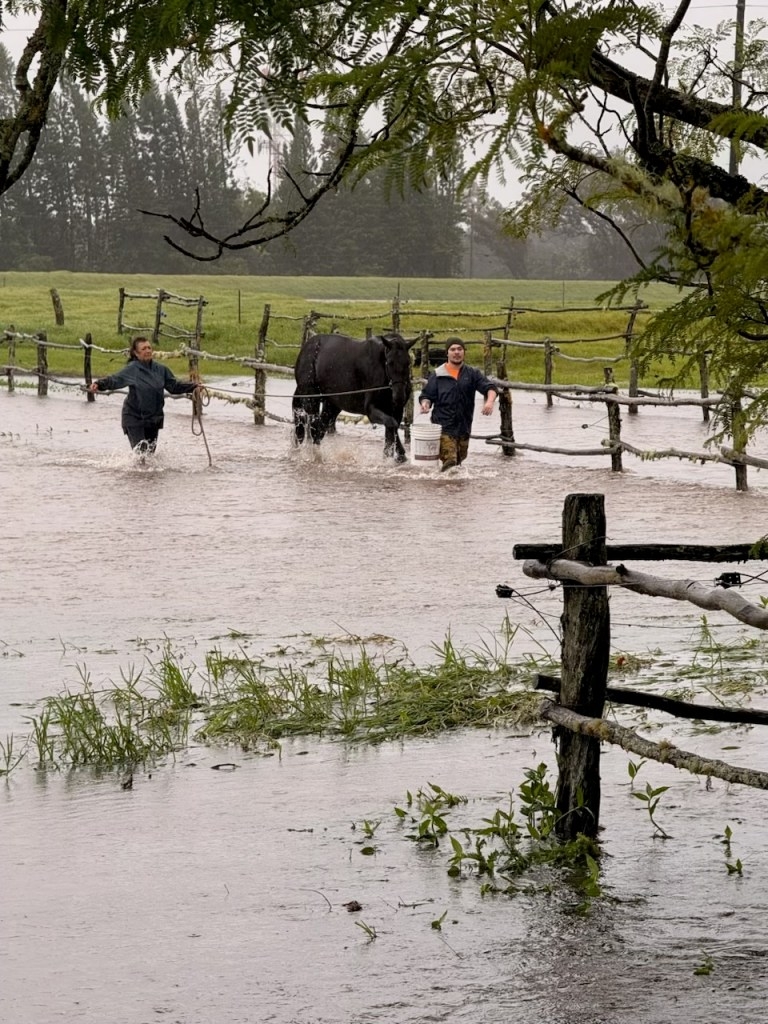
But the ranchers know that relief could be short-lived, as these storms dump water on their drought-afflicted lands but don’t necessarily provide long-term sustainability. The weather events are also complicated by their violence, tearing deep gouges into pasture, destroying key access ways and miles of fences, sweeping away livestock and killing them across the district.
There's an additional irony to Lala’s destruction: it cut the Galimbas ranch off from Hawai’i County’s water supply, leaving them overwhelmed with floodwater, yet trucking in drinking water for their coastal herd of 1,000.
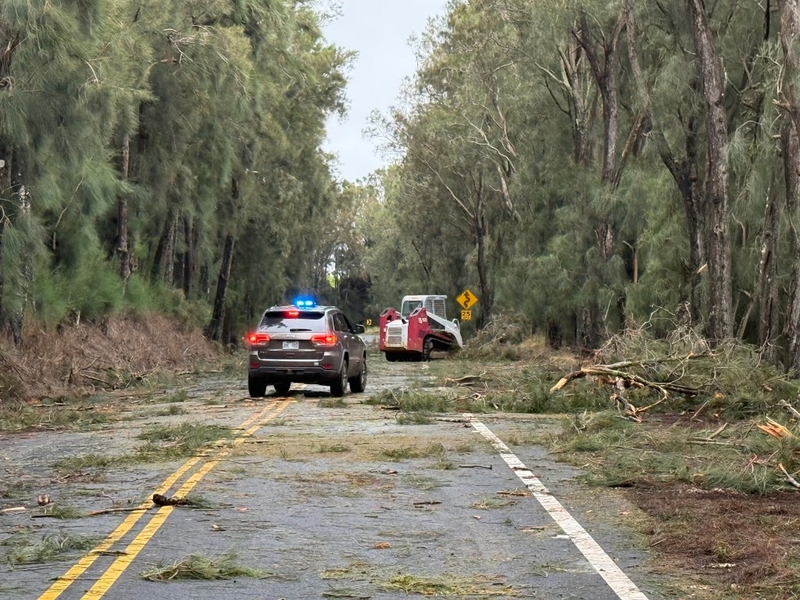
The staunch Kuahiwi ranchers are taking what Mother Nature has dealt. They are already clearing roads, rebuilding fences, accounting for lost livestock and, most importantly, restoring access for cattle stuck on tracts of land cut off from the county water supply. Their families and surrounding community are meanwhile cleaning their homes, picking up the pieces of what was destroyed in the townships they surround, including Nāʻālehu, Pāhala, Punaluʻu and Waiʻōhinu.
Lala, like the Kona lows and persistent drought, is another sign of a growing trend of feast, famine and thirst for ranchers and their animals as climate change-fueled swings in extreme weather become the norm. The ranchers have no time to despair, aware any rain could be the last they see for months, but they’re also not fretting.
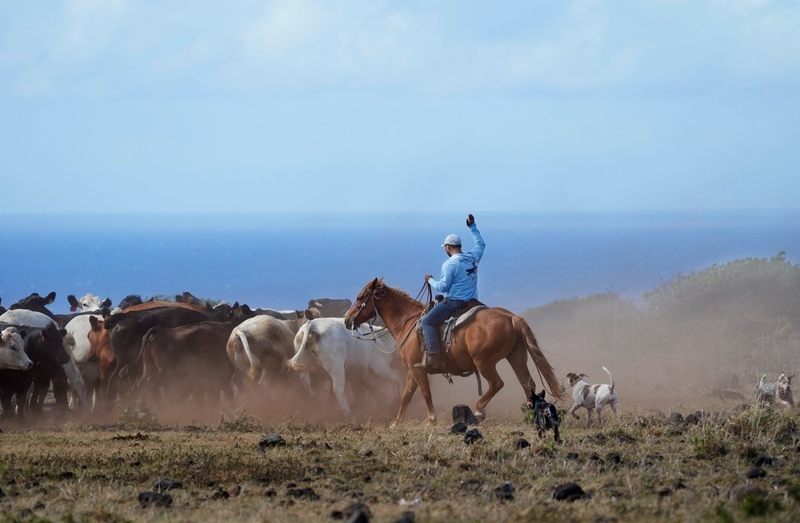
Many ranchers in Hawaiʻi say they’re grass farmers first, having to adapt to their surroundings. But ranchers must also be equal parts veterinarian, carpenter, heavy machine operator, ecologist, cowboy, forester and economist. They must be versatile and resilient.
Guy Galimba, Keālia’s father and head of the ranch, has been orchestrating his ranchhands’ and cowboys’ response to Lala from Kuahiwi headquarters. He makes and takes call after call, advising contractors and cowboys where and how to pull fences, restore roadways and waterlines, and deliver water to his herds south of Nāʻālehu.
“You’ve got to be able to roll with things,” Guy Galimba said. “It’s about how you adjust and how you adapt and keep moving forward. “
The Wettest Wets, The Driest Dries
Many of Ka‘ū’s residents were in their cars by the time Hurricane Lala’s inner eye wall glanced the Big Island’s southern tip, leaving the region to face the storm's most intense rain and wind in the Hawaiian Islands.
It was the closest a hurricane has ever gotten to the Big Island, at least by modern historical record, said Daniel Swain, a climate scientist at the University of California, Los Angeles. That is partly due to the warming ocean surrounding the islands, which is creating a more hurricane-friendly environment.
Climate change, paired with several meteorological factors such as the El Niño Southern Oscillation, could be partly to blame for the wild weather. But climate modeling shows several other correlated factors could continue to swing weather patterns from wet to dry in a more violent manner. Swain and his colleagues call it “hydroclimate whiplash.”
“In general, we do expect the wettest wets will become wetter, and also the driest dries become drier,” Swain said.
Indeed, while Lala may have hit the island’s districts differently, most have been experiencing various levels of drought in recent years yet didn't have nearly the amount of debris build-up that Ka‘ū did.
Sen. Tim Richards, who runs Kahua Ranch north of Waimea, has received 50 inches of rain – a year's worth – in just six months. On the Hamakua Coast, some weather stations counted 40 inches of rain associated with Lala alone.
This summer was expected to bring an especially strong El Niño season. The phenomenon, driven by winds and ocean surface temperatures, generally indicates an increased risk of tropical cyclones but less rainfall on the whole.
Richards said the beneficial rains from March’s Kona low storms that hit Kohala were lost to drought by May, and things weren’t looking good heading into the summer.
“But it’s been raining ever since, which is paradoxical because we’re supposed to be in El Niño,” he said.
That is in part due to topography, trade winds and myriad other factors. But El Niño summers tend to be wetter, followed by dry winters, a concern for wildfire as grasses grow long then quickly dry out.
For University of Hawaiʻi associate climatologist Ryan Longman, this year’s El Niño puts it on track to compete with the 1997-1998 El Niño season, considered the worst Hawaiʻi has encountered in modern history. That season triggered coral bleaching, severe drought, declines in agricultural production and several other events causing trillions of dollars in damage worldwide.
That was followed by the hottest year on record, as often happens during the year following the onset of an El Niño. This happened again in 2024, and experts are warning 2027 could be the hottest year on record.
Not A Drop
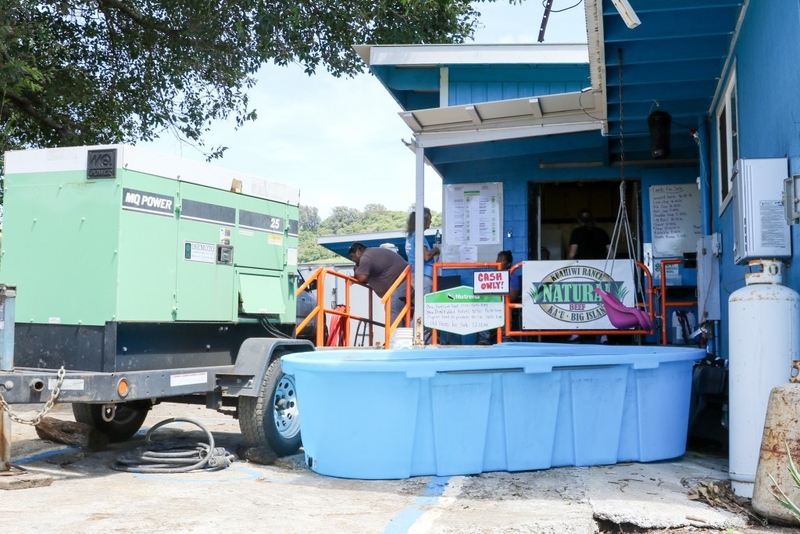
Last Wednesday morning, the first water tanker arrived in Nāʻālehu to quench the thirst of approximately 1,000 cattle on the Kuahiwi Ranch pasture south of town, about four days after the storm passed through the area. That’s just the beginning of the hurricane’s true price.
Kuahiwi Ranch is divided in two, with its hilly and inland pastures watered by their own reservoirs. The coastal pastures rely on county waterlines, which were both broken and lost power during Lala. Guy Galimba has no idea when they’re going to be rehabilitated.
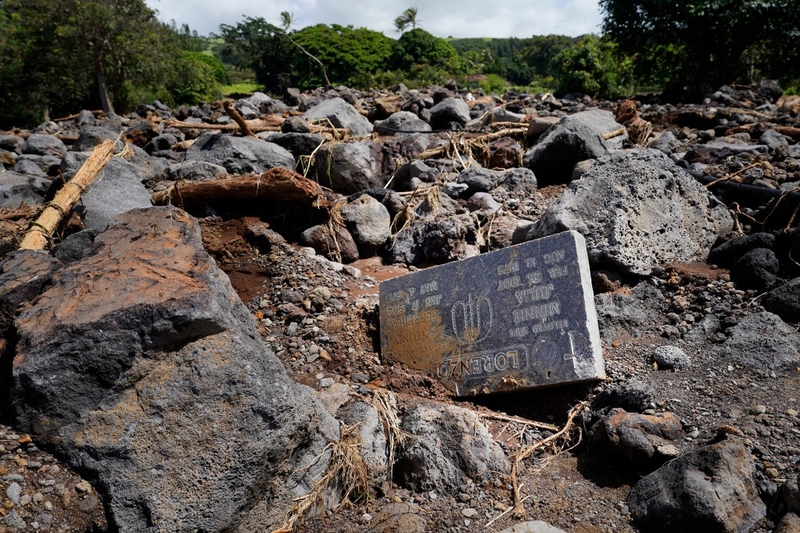
Galimba’s son Grant had spent most waking hours driving around the ranch since the previous Saturday morning, tracing waterlines and repairing fences. He also spent time with local authorities on Wednesday, trying to rehome two human corpses found on their land after floodwaters washed them coastward from the Nāʻālehu Cemetery. One was found in a tree.
But the issue is the source for water on the ranch’s coastal pastures. By Guy Galimba’s best estimate, he’ll need two 4,000-gallon tankers a day to save his animals from dehydration. He’s not the only rancher who needs water either, in addition to the district’s town almost 3,000 residents. He estimates keeping his animals watered would cost up to $1,000 per tanker load, driven from Hilo, if Civil Defense weren’t supplying it.
The ranch is also burning through about 40 gallons of gasoline and diesel fuel daily to run utility vehicles and some machinery. Those costs will probably rise once they gain access to their harder-hit areas, cut off by destroyed roads.
Galimba estimates it will cost $300,000 to replace fencing, either broken or undercut by floodwater-formed gullies, and restore his pasture. But how much everything will cost altogether, “that’s a big question mark,” he said.
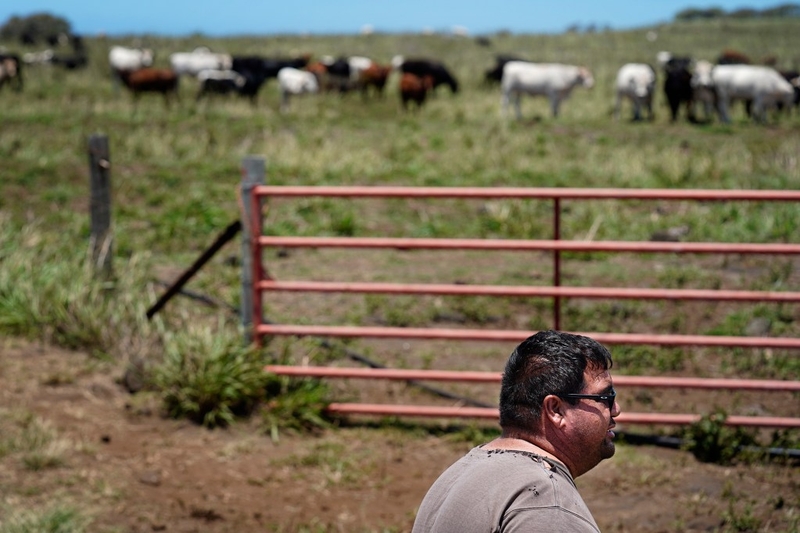
Forty Lala-related reports have been made about agricultural damage to date, according to Agriculture Stewardship Hawaiʻi’s disaster impact tracker. They account for about $2 million in damage so far, half from battered machinery and infrastructure.
It’s likely there will be more to come, as Kaʻū regains its connections to power and the internet. If Kaʻū residents' estimations are anything to go by, the damage they sustained in the Kona lows already pales in comparison to the cost of Lala’s destruction.
From The Margins To A Hot Spot
Hawaiʻi has been mostly cloistered from the Pacific's most tempestuous weather thanks to seasonal water temperatures, which have lingered just below what is needed for hurricanes to form near its islands. But between this year’s especially powerful El Niño and generally warming oceans, it’s not the safe haven it once was. In fact, it’s becoming the country’s prime candidate for more hurricanes.
In colder months, the typically 79-degree waters have been too cold for hurricanes to make landfall. In summer, they’ve lingered around 81 degrees.
“Being right on that margin means that even just a couple of degrees of warming, which we've now achieved in the Pacific Ocean, is enough to substantially move the needle on risk because Hawai‘i was often right on the cusp,” UCLA climatologist Swain said.
El Niño can be blamed for the warmer temperatures this year, he said, but so can long-term warming associated with climate change.
Ranchers like Guy Galimba are skeptical of blaming climate change for their current woes. The Nāʻālehu native has seen plenty of stormy weather in his years ranching, though most have been weakened by the mountains overlooking Kaʻū. Lala, by the time it grazed the Big Island, was a category 1 storm and “made the Kona low look like a baby.”
“We were going to get hit sooner or later,” he said. “We’re just lucky it wasn’t a category 2 or 3. It’s bad, but can you imagine?”
He may not need to imagine, as climate change continues to be an amplifying factor for preexisting natural phenomena like hurricanes. Research shows that for every degree global temperatures rise in Fahrenheit, there is a 4% increase in the chance of extreme precipitation.
“It's not as if the Hawaiian Islands have never experienced hurricanes before, or floods, or droughts,” Swain said, “but the magnitude and the severity does matter.”
Reading Waters
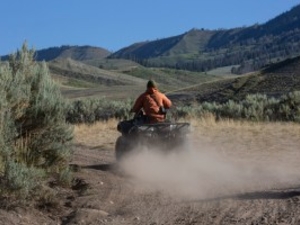
Siblings Kealia and Grant Galimba rumble up Kuahiwi’s two-track roads by UTV, past the waters’ destruction. They’ve already worked to clear much of the debris, including the carcass of a drowned calf whose roadside stench persists.
They occasionally pass small piles of gravel, placed alongside the track before the storm hit, in anticipation of damage. Most of the gravel was swept away.
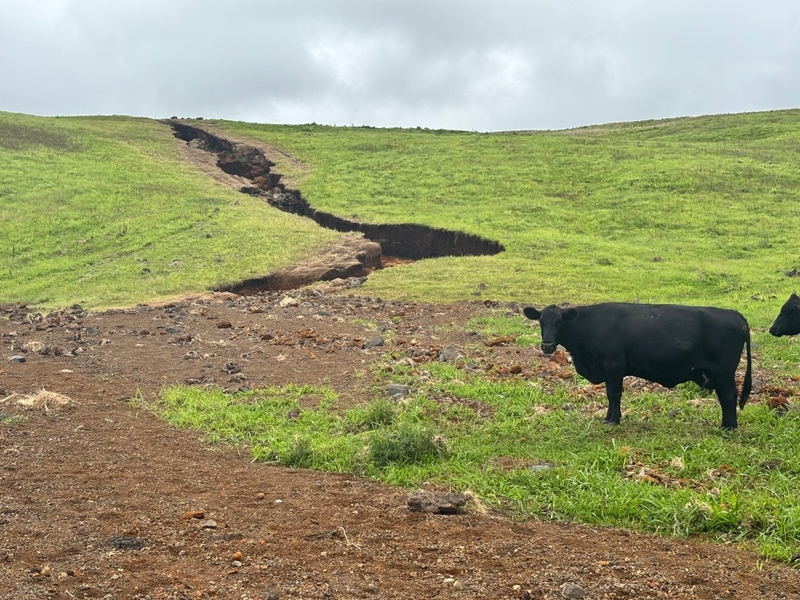
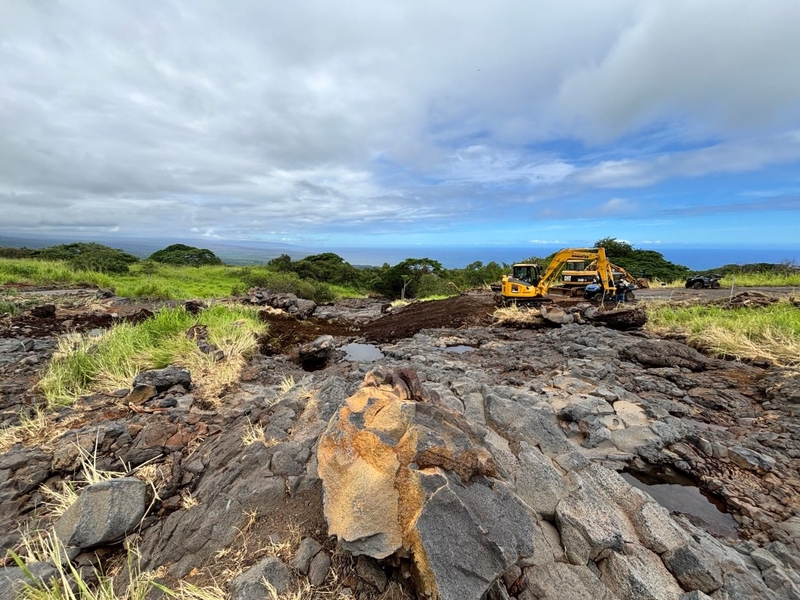
It would do little to address much of the damage, including the fresh gullies, gulches and ravines that now stripe the land. Some small ditches were already there, widened by the floodwaters as they ran downhill, while Lala cut new ones overnight – one is 20 feet deep and a half-mile long.


The Galimba siblings know there are more damaged gulches to count and address. But the only paved road intersecting their pastures has been ruined by the rockflow so they’re focusing on problem areas they can get to now. Ranchhands have already started rebuilding what they can, redrawing the pasture’s shape to predict and accommodate future waterflows.
It’s a gamble that doesn’t always pay off. They built a concrete ford in a dry streambed on their inland pastures, amid some trees, in anticipation of future downpours. Lala sent the water a different direction, across the track 100 yards northeast.
“It’s kind of scary, the divergence of water,” Kealia Galimba said. “It’s not really sticking to one area.”
For the siblings and their father, they’re still deciding what they should do, especially as new and potentially violent storm systems follow Lala toward Hawaiʻi.
It’s a lot of work to do, potentially in vain. If they fill gulches in, water may return and wash it away, or they could try to divert the streams of floodwaters.
“If this is just a one-time deal, we can push it back in and make it into pasture again,” Galimba said. “Or do we just leave it as a gulch? Because it might flow in the next round.”
The Galimbas consider themselves lucky: They flew out 120 cattle to the mainland on the Thursday before the storm, which saved them considerable stress, given the animals’ pasture is now inaccessible. Kuahiwi Ranch staff also managed to save about two tons of meat at the Kuahiwi Ranch store, which is being used to help feed the community.
Despite fears over Tropical Storm Moke, which passed by the Big Island on Sunday, they are continuing their work while wondering what’s in store for the future. Tropical storms Iselle and Julio are developing east of the islands, and after the severe drought, heavy rain and strong winds, Grant Galimba is hoping a wildfire isn’t next.
Honolulu, HI