Columbia water pipeline project gains key state financial approval amid ongoing opposition
Aug 26, 2026 | 6:00 am ET
Description
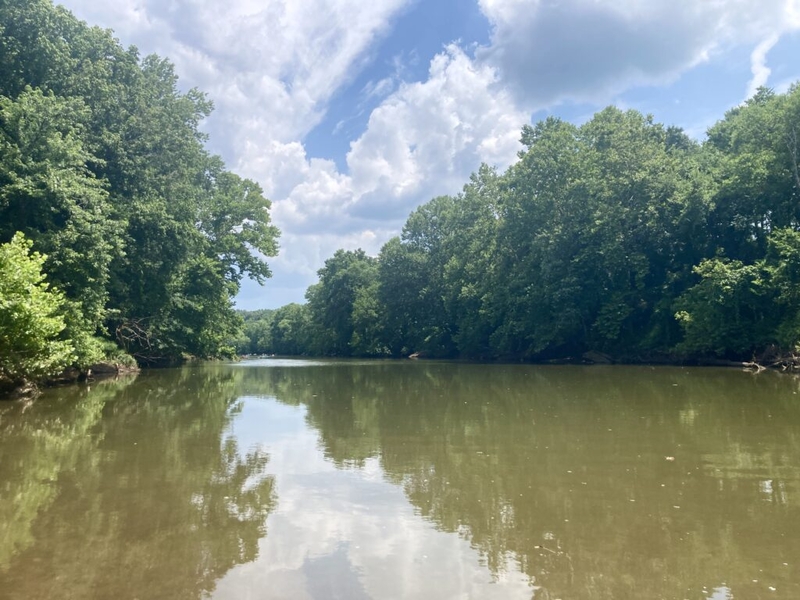
Land along the Duck River is among thousands of acres conserved in Tennessee in 2025 by private landowners and conservation organizations. Kayakers paddle in the river on July 6, 2025. (Photo: Cassandra Stephenson)
A project to expand water utility capacity in fast-growing Southern Middle Tennessee by building a new $520 million intake on the Duck River and a new water treatment plant advanced Monday after obtaining key financing approval from the state’s local development authority.
The controversial undertaking — which will be funded in part by rate hikes of up to 20% per year over the next five years — was first approved in January after weeks of intense debate.
The Tennessee Local Development Authority previously approved the project’s State Revolving Fund loan, and on Monday unanimously approved Columbia’s request to issue $315 million in WIFIA debt on parity — or equal priority — with the state loan. If the city’s request had been denied, the project would have been unable to use the lower-interest State Revolving Fund loan, which would raise the cost of the project by around $50 million in additional interest over the project’s life.
“We at the TLDA cannot stop this project, as some have asked,” Comptroller Jason Mumpower said Monday before the vote. “In fact, the local government in Columbia has made it very clear, regardless of what we do, they plan to move forward … even if it’s going to cost the citizens $50 million more in interest.”
Mumpower said he favored saving that money.
The rate increase will affect Columbia Power and Water Systems’ 27,000 customers in addition to 35,000 customers who are served by other water systems that purchase water from Columbia Power and Water. Customers who rely on the utility’s water but live outside of Columbia city limits have said they felt disenfranchised by the decision-making process. Because Columbia Power and Water Systems is a city utility, rate changes are approved solely by the Columbia City Council.
“The way that they have elected to pay for this is by raising rates by 20% across the board … The county ratepayers are already paying a higher rate (than city ratepayers),” said Dustin Kittle, a Maury County resident and an agricultural and environmental attorney who represents multiple property owners along the pipeline route. “It’s logical the county ratepayers will be paying more for this pipeline than what people inside the city will, and the ironic part of that is the county ratepayers won’t have any stake in that at all. This will be an asset that will belong to the city.”
The council also approved an increase to the water impact fee, a fee paid by developers to help cover costs associated with higher demand. The increased rate and impact fee are being used to secure federal and state long-term, low-interest loans to finance the project. That includes loans from the State Revolving Fund program and the federal Water Infrastructure Finance and Innovation Act, WIFIA.
Columbia Power and Water Systems’ WIFIA loan has not yet closed, according to the U.S. Environmental Protection Agency’s loan tracker.
Columbia Council approves water rate hike of up to 150% over next 5 years for new infrastructure
“I think we, in delaying this, gave an opportunity for more local dialogue, and I hope that has been constructive to some degree, but … what this board is faced with is a situation where we know there’s a need for more water resources in this community, and a path has been chosen by locally elected leaders,” Mumpower said. “That’s where the credit and the blame lie. And it’s for this board, really, to just look at the financing options available.”
State Treasurer David Lillard, Jr., who sits on the Tennessee Local Development Authority, said Tennessee should expect to see this issue arise more and more as the state’s population grows.
“This is a good example of a situation where further input and the opportunity of gathering views from the ratepayers that are outside the city would have been very, very helpful here,” Lillard said. “I hope that in the future the General Assembly will take some action to look at this issue across the state.”
The Duck River Watershed Planning Partnership, an advisory group created by Gov. Bill Lee in February 2025 to identify ways to balance preservation, drought management and utility uses on the Duck River, also recently affirmed the plan for the new intake, pipeline and water treatment plant. The partnership ultimately approved the project 12-2, with three members abstaining.
A pending regionalization study did not consider alternatives to this water intake, so the outcome of the study would not affect the project, Tennessee Department of Environment and Conservation Director of Water Resources April Grippo said Monday.
Nashville, TN