Gov. Sherrill signs bill starting nuclear power procurement
Jul 13, 2026 | 3:31 pm ET
Description
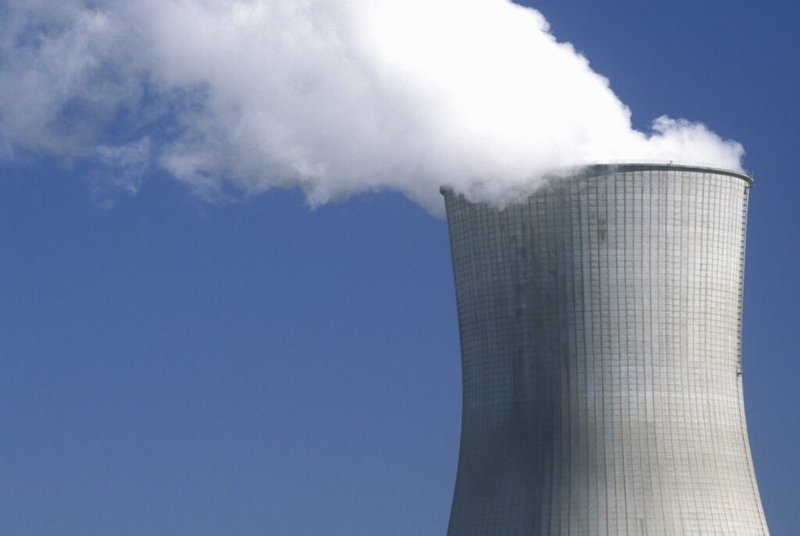
New Jersey's energy regulators will seek to procure about 1,100 megawatts of new nuclear power to meet growing energy needs. (Stock photo by Joe Sohm/Getty Images)
Gov. Mikie Sherrill signed legislation Monday ordering the state’s energy regulators to begin procuring at least one new nuclear power plant to meet rising energy demand over the next decade.
The bill, which cleared both legislative chambers in unanimous votes last month, directs the Board of Public Utilities to begin soliciting expressions of interest to construct nuclear generation with the aim of bringing 1,100 megawatts of new power to New Jersey. The measure has faced criticism some quarters over nuclear subsidies that could increase residents’ electricity bills.
“This is how we build the future for our kids here in the state,” Sherrill said in Trenton. “This is how we don’t kick the can down the road and we make sure in 10 years we’re not still facing a power generation problem or an affordability crisis.”
The bill’s backers hailed it as a needed step to prepare New Jersey, over the long term, for electricity demands that are expected to soar beyond the current capacity of the 13-state grid run by PJM Interconnection.
Nuclear power plants can take a decade and billions of dollars to build, and though they produce large amounts of reliable, low-emission electricity once complete, recent projects have faced significant delays and cost overruns.
The legislation requires the state’s other electricity generators to subsidize nuclear plants approved under the bill by purchasing reliable capacity certificates from them once those plants begin generating power and transmitting it to the grid.
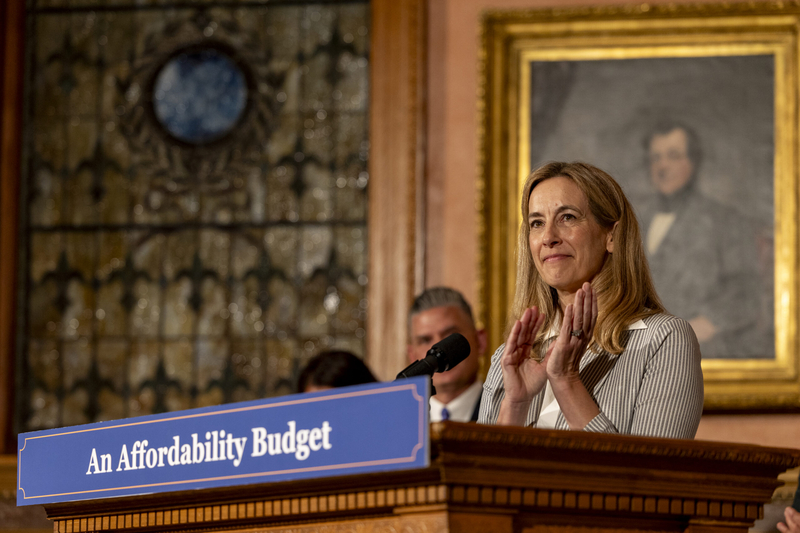
“Ratepayers won’t pay a dime until the project is built, and they’ll never be on the hook for construction cost overruns,” Sherrill said.
New Jersey had taken lessons from recent nuclear construction in other states, the governor said, including from the Vogtle Electric Generating Plant in Georgia. That project saw two new nuclear generating units complete construction seven years behind schedule and more than $18 billion over budget.
In New Jersey, electric distribution companies like PSE&G and Jersey Central Power & Light sell electricity at cost to their customers. They profit from infrastructure investments whose costs are recouped at a markup, which is negotiated with regulators, on monthly utility bills.
“New Jersey needs more nuclear. Our three reactors down in the state in South Jersey generate enough power for almost 3 million homes,” said Assemblyman Wayne DeAngelo (D-Mercer), the bill’s prime sponsor and chair of the Assembly Telecommunications and Utilities Committee.
Sherrill in April signed a separate bill that ended a de facto moratorium on new nuclear plants.
Though the bill signed Monday enjoyed broad support among the state’s lawmakers, some critics questioned the impact its subsidies for nuclear plants will have on ratepayers already facing a spike in utility bills driven by data centers’ tremendous power needs.
Critics have warned generators will pass the cost of reliable capacity certificates onto ratepayers when they bid into the state’s grid, ultimately raising the cost of energy.
“The legislation authorizes a process that would place ratepayers on the hook for costs extending up to 40 years, yet there is still no clear estimate of what those costs could be or sufficient guardrails to ensure consumers will ultimately come out ahead,” said Chris Widelo, state director for AARP New Jersey.
The bill requires reliable capacity certificates to be sold at fixed negotiated prices, and though language bars certain agreements to sell electricity for less than the price of a certificate, falling energy prices years in the future could push costs to below subsidy levels.
That worry was top of mind for Rate Counsel Brian Lipman, whose office advocates on ratepayers’ behalf before the Board of Public Utilities.
“One of my biggest concerns is that the data center demand is a blip or a bubble, that somebody smarter than me is going to invent a chip that’s going to allow the data centers to use significantly less electricity and they won’t need all this electricity,” Lipman said. “We’re signing on for 40 years whether it’s needed or not.”
Uncertainty around subsidy levels contributed to Lipman’s caution. His office has previously warned the bill’s subsidies could add between $7.80 and $22.43 to the average customer’s monthly electricity bill, with larger increases if the price of energy falls.
Still, the bill improved from an earlier version, Lipman said, after it was amended to guard New Jerseyans from shouldering nuclear plants’ construction costs.
Environmental groups opposed the bill over concerns about nuclear waste and said the state should instead focus on battery storage and solar and wind projects.
“The dangers of nuclear waste and on-site storage are very real and essentially a forever cost that must be forever managed long after the facility is closed,” said Amy Goldsmith, state director for Food and Water Watch.
Business leaders praised the legislation. Michele Siekerka, president of the New Jersey Business and Industry Association, said it balances ratepayer protections and ratepayers’ power needs.
Monday’s bill signing is the latest in a series of actions meant to defray the impact rising electricity prices have on New Jerseyans. It follows signings last week that created a new rate-setting process specific to data centers, nudged down utilities’ profit margins, and improved state oversight of some utility infrastructure investments.
Separately, the Board of Public Utilities in late June approved a single $25 utility credit for all residential electric customers, with an additional $150 credit available to individuals enrolled in certain state and federal assistance programs.
Trenton, NJ