Gov. Armstrong to vote against school meals ballot measure in November
Jul 16, 2026 | 5:48 pm ET
Description
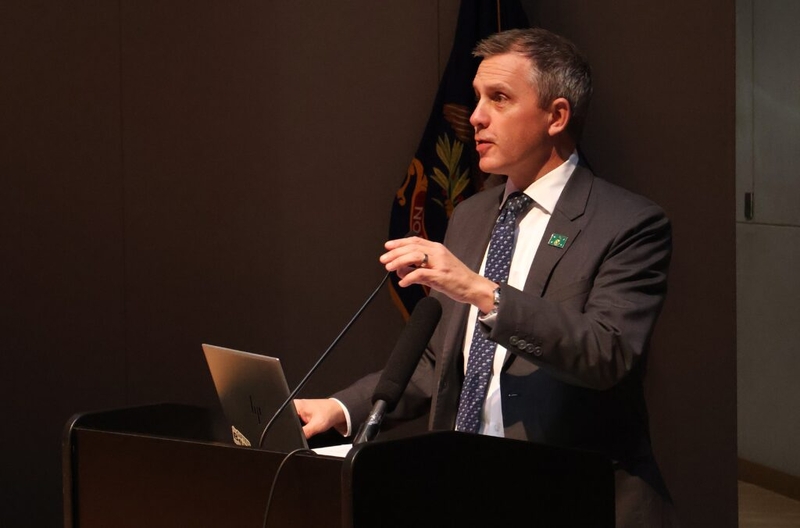
Gov. Kelly Armstrong speaks during the North Dakota Election Officials Conference in Bismarck on March 5, 2026. (Photo by Michael Achterling/North Dakota Monitor)
North Dakota Gov. Kelly Armstrong will vote against Measure 2 this November, a constitutional ballot measure that would provide free school meals to K-12 students.
Armstrong said he decided to oppose the measure because it would constitutionally mandate nearly $140 million in biennial spending before lawmakers set foot in Bismarck for the 2027 legislative session. The Department of Public Instruction fiscal note attached to the measure puts the biennial cost of providing the meals between $124.3 million to $134.3 million.
“No matter what happens in the future of North Dakota’s budget, you could have $7 soybeans, you could have $12 oil, and this money comes off before anything else is spent,” Armstrong said in an interview Thursday. “I don’t like constitutional mandated spending at all. Because by its nature, you are saying this is the single most important thing that exists.”
He also said polling conducted prior to a special session of the Legislature on providing free school meals to North Dakota students was favorable, but he doesn’t know if that opinion has changed since lawmakers voted down a free school meals bill as part of the special session.
“I think school lunches is a very important debate. I think there is a reason people have brought it and I think it’s a worthy conversation to have,” Armstrong said. “I do not think it is the most important $140 million under any circumstance that North Dakota would spend.”
He added he has only one vote this November and ultimately the voters will decide the issue.
Lawmakers adopt cost estimate for North Dakota school meal ballot measure
Amy Jacobson, a member of the Together for School Meals Coalition, a nonprofit organization advocating for the passage of Measure 2, said Armstrong’s statement has no effect on the push to approve the measure.
“The state has had several opportunities to pass school meals for all kids at no cost and it’s been defeated every time and that’s why we have the ballot measure process,” Jacobson said.
She added the initiated measure process is designed for North Dakotans to put issues before the voters when elected leaders are falling short. The measure allows state lawmakers to decide how to fund the program, but also includes mandated funding for the program from the state’s Legacy Earnings Fund, if lawmakers decide not to allocate funds.
“We know there is great momentum behind this effort and we are feeling confident that people will turn out and vote, ‘Yes,’ on Measure 2 in November,” Jacobson said. “I don’t think (the governor’s vote) will change that.”
Armstrong also said he doesn’t anticipate any changes from his preliminary budget forecast in April that emphasized state agencies should hold or reduce their budgets by 3% or 10%, depending on the size of the agency.
Financial data from the 2026 fiscal year, which ended June 30, won’t be available until the end of July, said Joe Morrissette, director of the Office of Management and Budget, in an interview Thursday.
During a meeting of the Legislature’s Budget Section in June, Morrissette reported, as of May 31, general fund revenue had fallen behind the department’s 2025 forecast by about $76 million, a decrease of about 3% from the original estimate. The decline was due in part to a decrease in individual income tax revenue and mineral leasing fees.
However, Morrissette said he is hopeful that budget updates in August and November will realign with the department’s initial forecasts.
“Hopefully some time in there, we’ve got a little more stability where we feel confident in the numbers that we’re choosing for the outlook going out for the next two years,” he said. “It changes so much. It’s really unprecedented volatility to have oil prices swing by 10%, 15% in a single day.”
North Dakota Monitor reporter Michael Achterling can be reached at [email protected].
Bismarck, ND