Got Medicaid? You’ll soon have access to doula services under a new Louisiana law
Aug 07, 2025 | 6:00 am ET
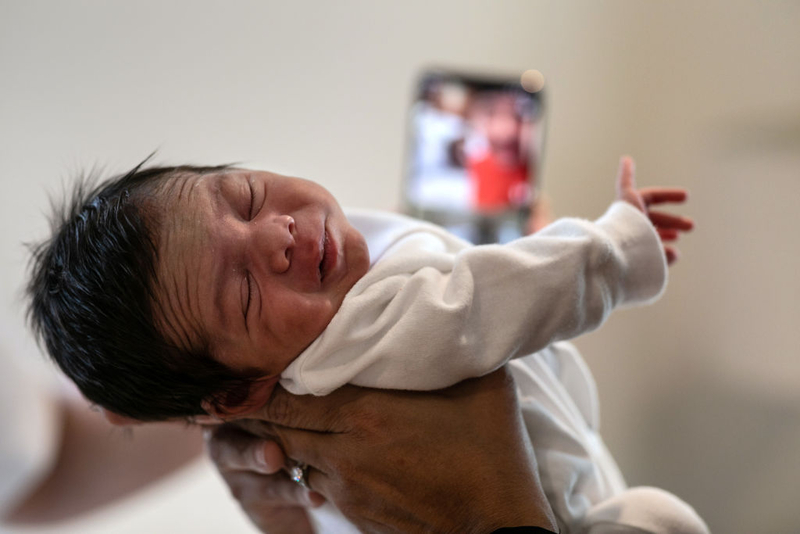
Description
John Moore/Getty Images
Louisianians insured through Medicaid will now have access to doula services through a new state law aimed at improving the state’s maternal health outcomes.
Doulas are trained professionals in childbirth who provide emotional, physical and spiritual support throughout and after pregnancy, relieving stress and anxiety that can be detrimental to a woman’s health. A growing body of research has shown doula care is tied to fewer pre-term births, shorter labors and a lower rate of cesarean sections, or C-sections.
A law passed in the 2025 legislative session requires doula services before, during and after birth to be reimbursed with public money. The law went into effect Aug. 1, but existing state Medicaid plans have until 2026 to integrate doula support into their coverage. The legislation builds on a 2023 law that first required private insurers to cover doulas.
From 2018 to 2022, Louisiana had the fifth-highest rate of maternal mortality nationwide, according to KFF, a nonpartisan, nonprofit health policy organization. In 2022, Louisiana also recorded the second-highest rate of pre-term births.
Maternal and child health advocates like Frankie Robertson hope that increased funding for doulas will help make the state a safer place to give birth and reduce the financial burden on the health care system.
Seven years ago, Robertson’s daughter was born three months early and spent the first two months of her life in the neonatal intensive care unit. The neonatal care alone cost between $60,000 to $70,000, and her baby was less expensive than others, she said. Studies have found that these births often cost hundreds of thousands of dollars.
“They are million-dollar babies,” she said. “It’s a no-brainer that you want to invest on the front end, not just because it’s the right thing to do and because it can save the life of the mom and the baby, but the math is pretty clear cut.”
With more than 60% of Louisiana births covered by a Medicaid plan, advocates and doula providers believe the law has the opportunity to reach a wide range of people and raise awareness about the service. Women in lower income tax brackets face riskier births and tend to have worse maternal health outcomes.
“Doula support should not be a luxury. It should be available to any person who wants it and needs it,” Robertson said.
Louisiana offers six plans under the state’s Medicaid program, known as Healthy Louisiana. Each plan will set its own rate for reimbursement. This year’s law didn’t set a minimum requirement. Under the 2023 law, private insurers are required to cover doula services up to $1,500.

Victoria Williams, the advocacy director for Birthmark Doula Collective in New Orleans, said the law could also help more people have a career in doula services. For many doulas like Williams, the job is a part-time passion project. Sometimes they provide care for free or on a sliding scale without guarantee that they’ll be paid for their services.
“Doulas will actually be getting paid for the work that they’re doing through insurance,” Williams said. “This really created a path for workforce development because you’re bringing trained doulas into a system to help build the infrastructure of birthing.”
Ashaki Tobias is a doula in the Baton Rouge area and one half of the team Maternal Love, which offers childbirth, doula and lactation services. Tobias said she and her business partner will need to add another staff member to handle billing. So far, she and her business partner have worked both the patient-facing and paperwork parts of their jobs.
“It’s going to be beautiful,” Tobias said. “We can reach more moms. But from a business standpoint, we’re going to have to stay on top of claims and restructure as a doula provider.”
Maternal health advocates are still keeping an eye on how doula coverage under Medicaid could be vulnerable in the face of federal cuts under the Trump administration.
Doula support is considered an optional service under the state Medicaid program, and optional services may be on the chopping block if the state receives less federal funding. Louisiana is projected to lose up to $34 billion in federal Medicaid funding over the next decade.
“Any Medicaid-funded program has the risk of being cut. It’s a sad reality that we’re in because all of the program that exist are providing a critical function and filling a critical need,” Robertson said. “There is a real concern that there could be cuts that could result in moms not having the right support by doulas. It could be the difference between life or death for a mom who could really use that support or a baby who could be born pre-term and not survive.”
The largest federal funding cuts aren’t expected to take place until 2029, and state lawmakers aren’t taking any immediate action to address the potential for future funding shortfalls.
Under the new Louisiana law, all state Medicaid plans will cover doula care by Jan. 1, 2026.
This article first appeared on Verite News New Orleans and is republished here under a Creative Commons Attribution-NoDerivatives 4.0 International License.

Baton Rouge, LA