GOP candidates in Wyoming’s US House race self-fund campaigns to the tune of nearly $6 million
Jul 17, 2026 | 6:25 am ET

Description
Photo courtesy of WyoFile
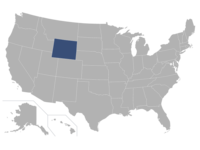
With about a month to go before Wyoming’s primary election, record-breaking sums of personal money are being invested into the crowded GOP race for the state’s opening U.S. House of Representatives seat.
Most of the overall money that’s gone into the campaigns — nearly 85% of the $7.133 million reported so far — is coming from the candidates themselves. Four men hoping to call themselves a congressman have each loaned their own campaigns more than $1 million: Steve Friess, Reid Rasner, Chuck Gray and Frank Chapman, according to Federal Election Commission data.
Candidates making huge investments in themselves is largely a change from previous competitive Republican primary races in Wyoming.
In 2016, for example, nearly three-quarters of former U.S. Rep. Liz Cheney’s $2.2 million winning campaign war chest came from individual contributions, versus $70,000 in personal loans to the campaign. In 2022, Cheney was easily ousted by U.S. Rep. Harriet Hageman, who raised $5.7 million, which included over 90% individual contributions and zero dollars in personal loans to her campaign.
This year, Hageman’s seat is up for grabs. In December, she announced her run for retiring Sen. Cynthia Lummis’ open seat in the U.S. Senate. The Republican primary race is especially competitive, with 10 candidates. Where their money is coming from is not a particularly meaningful distinguishing factor in campaigns nowadays, said Jim King, a retired University of Wyoming political science professor.
“A candidate with lots of money has advantages over the candidate who doesn’t have money,” King told WyoFile. “But where that money comes from is not usually a campaign issue.”
“President Trump, as a candidate, argued he was going to self-fund, and that way he wouldn’t owe his election to anybody,” King said. “When a self-funded candidate gets challenged, that’s kind of the standard response that you see.”
Nevertheless, data on who spent what on their campaigns through June 30 is now posted online because of campaign finance reports due to the Federal Election Commission this week.
Those filings show that Jackson resident Steve Friess, son of late GOP donor and philanthropist Foster Friess, has amassed the largest overall pot of campaign funds so far, with $2.17 million. Friess has brought in a relatively paltry $87,000 in individual contributions — just 4% of his overall funding — but has made up for it with loans to his campaign that total $2 million.
Friess’ campaign mailers are mailbox regulars, and he’s spent $1.49 million. He also leads the field with cash on hand, at $687,000.
Financial advisor Reid Rasner, who made headlines for attempting to purchase TikTok, slots in at the second place in the race for largest personal investments among his competitors. Personal loans have accounted for $1.71 million, or some 84%, of the Rasner campaign’s $2.04 million kitty. Rasner’s campaign has spent $1.98 million and has $81,000 cash on hand.
Former state representative and current Secretary of State Chuck Gray has also relied largely on a loan to himself for his campaign funding. FEC filing data shows that a $1.15 million loan has accounted for 83% of the $1.38 million he amassed through June 30. Gray’s campaign has expended $852,000 and has retained $526,000 in cash on hand.
Notably, Gray’s campaign also has received significant super PAC spending, a campaign-finance category which has been on the upswing in Wyoming elections. The Protecting Wyoming Values PAC reports spending some $519,000 on Gray’s candidacy. It was formed in April and is singlehandedly funded by Jan Gray, Chuck Gray’s father, who has given the PAC $657,000.
Jackson Hole businessman Frank Chapman has invested the fourth-largest sum into his congressional bid, with a $1.06 million loan accounting for 97% of his campaign funds, according to FEC data. Chapman’s campaign reports $596,000 in expenses, and $495,000 in cash on hand.
Chapman’s also been a major recipient of super PAC spending. A July filing from the Fighting for Wyoming PAC, which is funded by GOP megadonor and hedge fund manager Kenneth Griffin, reports that it spent a whopping $2.42 million supporting Chapman’s candidacy, mostly on TV advertisements.
Personal investments in congressional campaigns fall off significantly for candidates who make up the rest of the field.
Casper resident and former Army Ranger David Giralt loaned his campaign $65,000, a sum that was outsized by the $96,000 he received in individual contributions.
Congressional candidate Jillian Balow, a former Wyoming superintendent of public instruction, did not report any loans to a campaign that’s accumulated $166,000 in total funds. And Bo Biteman, president of the Wyoming Senate, likewise reports no personal loans to his campaign, which has collected $94,000 overall.
The FEC database did not include any 2026 campaign finance information for U.S. House candidates Richard Dodson, Kevin Christensen and Keith Goodenough, all Republicans.
Democratic Party candidate Lisa Kinney reports $13,000 in campaign funds, none of which came from loans she’s made. The campaign for her challenger in the primary, Elena Del Real, had not submitted a finance report with the FEC.
Wyoming’s primary election is Aug. 18.
For more information about candidates in Wyoming’s federal, state and legislative races, check out WyoFile’s 2026 Election Guide.
Cheyenne, WY