Florida professors fear being targeted or cancelled, faculty review shows
Sep 14, 2026 | 1:39 pm ET
Description
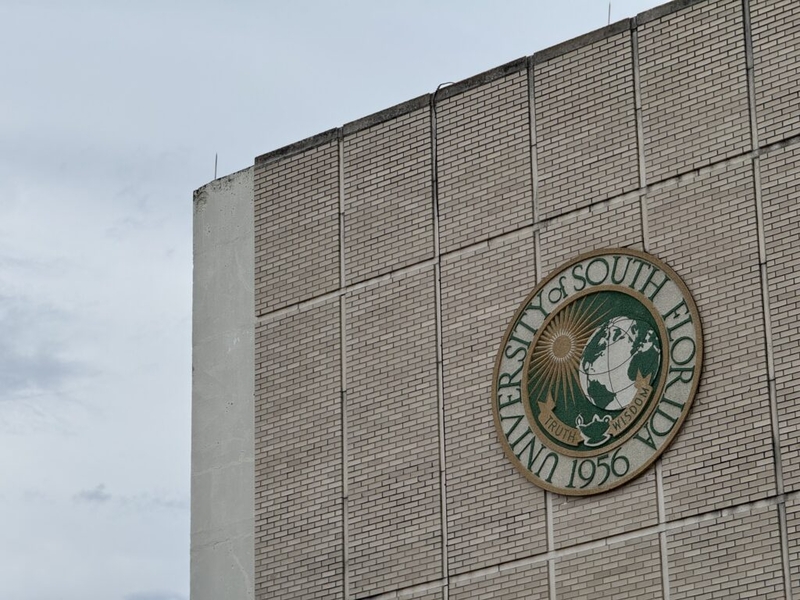
The University of South Florida campus in Tampa. (Photo by Jay Waagmeester/Florida Phoenix)
Florida university professors fear their students are spying on them and lament elimination of DEI from general education courses and canceled research grants.
Such were concerns expressed among more than 250 Florida faculty members surveyed about higher education policy in Florida.
The 258 Florida responses were among nearly 2,800 faculty responses from 13 states across the South. The survey is annual, conducted by the state conferences of the American Association of University Professors (AAUP).
(Grammatical inconsistencies are in the original answers.)
“I live in a constant state of waiting for political activist students associated with groups like Turning Point to try and get me in trouble based on my choice of course materials, but not on my use of them,” a tenured associate professor who has worked in Florida for more than 10 years wrote.
Turning Point is the organization founded by Charlie Kirk, the conservative influencer killed during a speaking event in Utah last year.
The question that prompted these answers asked for an example of how “attacks on higher education are directly impacting your work as a faculty member.”
“I am always worried that I am being recorded or that my lectures, course materials, will be challenged by students or administrators. (I teach literature and composition). I haven’t changed what I teach, but I worry about it. To me, each student is a potential spy,” that state college professor wrote.
The faculty members frequently referenced recent higher education policies such as post-tenure review; allowing students to record lectures; and elimination of diversity, equity, and inclusion from general education course offerings. Some described a culture of fear derived from state leaders looking to punish professors for what they do and say in the classroom.
11th Circuit crushes Florida’s ‘Stop WOKE Act’ at state universities
“Probably the worst has been the level of mistrust I have toward my students. I fear them, I am increasingly paranoid, and I find myself wondering if they will accuse me or retaliate if exposed to course material they deem offensive or inappropriate. I find myself second-guessing every single choice I make in the classroom to a point it has become paralyzing and detrimental to my mental health,” one assistant teaching professor wrote.
One Florida professor seeking work in California, Colorado, and New York wrote, “Students in Florida have become emboldened to offer hate speech and harmful rhetoric as academic work. They have also become increasingly fragile and prone to insult if asked to support ideas with scholarly texts rather than the christian bible.”
Another professor wrote: “I’m nervous about giving examples that refer to controversial real-world situations, for fear of being reported. I’m also concerned about trying to make some students feel comfortable, for fear of setting others off.”
Creeping politicization of college campuses has this professor fearing for their safety: “I have stopped being comfortable teaching classes in the area that I was trained in for concern about being targeted by people with political agendas. Since public employees are subject to open records laws including our addresses, I have installed surveillance cameras given that I research and publish in the area of diversity,” one tenured professor wrote.
‘Bureaucracy’
Other academics complained about burdensome requirements under new higher education laws.
One tenured professor wrote that the higher education policies had not hurt recruiting efforts, but did have one gripe: “Bureaucracy is causing me to do busy work instead of actual work.”
Florida officials last year required professors to post syllabi posted online. It faced criticism and a legal challenge from the faculty union.
“We are forced to put our reading lists and syllabi online so that the fascists can check them to see if we are using any forbidden words, such as ‘transportation’ because it has the word ‘trans’ in it, black, queer, discrimination, etc. I am not able to go to conferences because they have forbidden words. I cannot do the research I was hired to do because it has forbidden words,” one assistant professor wrote.
Professors who identified as LGBTQ expressed fears specific to their identities.
“As a queer person, I feel like I am the constant target of moral panic in all discourse from the state government. Like, just leave me alone and let me teach please!” one tenured associate professor wrote — adding that that institution has been “hemorrhaging faculty” and “had zero stable leadership.”
A visiting professor wrote, “Personal safety is my biggest concern as a CLEARLY gay man in higher education in Florida.“
A majority of the Florida respondents identified problems they feel are impeding their jobs, although some survey respondents did not feel infringed upon.
“TBH, I find many of the administrative actions justified; we (academicians) sort of went off the deep end for a while…”
“Its not,” one professor wrote in response to the prompt seeking examples of “attacks on higher education directing impacting your work.”
“And the AAUP often exaggerates accountability with ‘attacks’. As a [tenure-track] humanities professor, we have let a few academics speak for all of us, and poorly.”
Research and AI
Regarding social science research dollars, one faculty member offered, “Funding was already tight, now it is scarce.” Regarding the humanities, another said, “I can no longer apply for NEH funding for my current research, due to its politicization.”
From the perspective of another researcher, “Funding rates at NIH are brutally low now.“
Across the southern states surveyed, 85% of faculty believed their discipline would survive in the artificial intelligence era. In Florida, of the 255 who answered the question, 214 believed their discipline would survive AI, or 84%.
“I will end by noting that whatever the (terrible) effects of politics attacks on higher education, they absolutely pale in comparison to the negative effects of AI on higher education work and culture,” a public university associate professor wrote. “I would sadly trade for an environment twice as politicized if it were to mean ending the encroachment of AI into University spaces.“
The state is proposing rules to regulate AI from pre-K to Ph.D., the Phoenix reported last month.
Tallahassee, FL