The fine print: NC’s $34B budget includes DEI cuts, ferry tolls, AI, prison funds and more
Jun 30, 2026 | 6:37 pm ET
Description
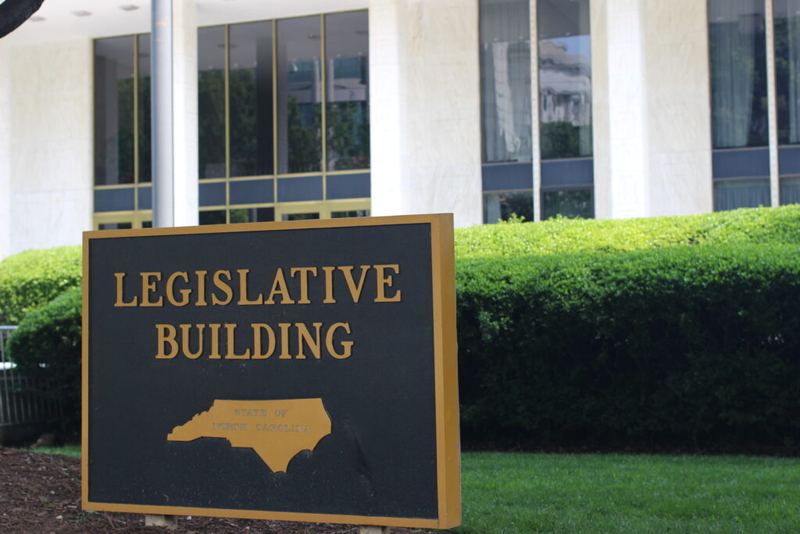
The North Carolina Legislative Building (Photo: Galen Bacharier/NC Newsline)
Republican budget writers in the North Carolina General Assembly rolled out a 634-page spending plan Tuesday chock-full of special provisions and policy changes with limited time for review before the first planned vote on the $34 billion package.
The measure includes raises for state employees and teachers first announced by Senate Leader Phil Berger (R-Rockingham) and House Speaker Destin Hall (R-Caldwell) in May, along with an agreed-upon cut in the state’s personal income tax rate from 3.99% this year to 3.49% next year. It also includes hundreds of millions for Helene relief.
NC legislature releases $34B budget deal, expects votes this week
Republican leaders put the proposal into a format that cannot be amended in any way. There will be no committee hearings on the measure, only the opportunity to speak on the bill on the chamber floors and vote yes or no. Legislators say that speeds up the process of completing the budget, but critics say it leaves minority lawmakers and taxpayers shut out of the conversation.
“North Carolinians waited a full year for a state budget, only to see the final decisions made behind closed doors with little opportunity for public input,” said Alexandra Sirota, director of the NC Budget and Tax Center.
As is always the case, the fine print of the massive bill is littered with policy provisions sought by leaders and majority-party lawmakers. This year, that includes eliminating state programs that address racial disparity after lawmakers enacted three new laws last week banning diversity, equity and inclusion programs in state government and public education over the governor’s vetoes.
NC House Republicans override Gov. Stein’s vetoes on anti-DEI and pro-ICE bills
The budget eliminates the Office of Health Equity at DHHS. The office will be absorbed into the Division of Public Health. It also abolishes the Office for Historically Underutilized Businesses in the Department of Administration, eliminating 12 jobs. For more than 25 years, the office has promoted opportunities for minority businesses from across North Carolina to compete for state and local government contracts. And it shutters a mentoring program for minority male students in the N.C. Community Colleges System office.
One of the largest expenses in the budget is a $1 billion allocation towards funding Medicaid, including $847 million for Medicaid rebase. There’s $1.5 million for investigating fraud, waste, and abuse within the program, heeding requests from Attorney General Jeff Jackson and DHHS Secretary Dev Sangvai.
Sangvai said Tuesday morning that he had not seen the budget.
“We’re going to take a look at the entire budget and then understand what’s in there,” he said. “We’re optimistic that a lot of what the department had been hoping for, that would be included in the budget, will be in there.”
The budget provides $9 million for the Healthy Opportunities Pilot, a program the DHHS had been fighting to revive. The Healthy Opportunities Pilot provides services in rural areas such as food, housing, and transportation to help participants improve their health. DHHS paused the program last July because the state did not have a budget and Healthy Opportunities did not have money.
Other noteworthy items in the spending plan include:
- $650,000 for six full-time positions to staff a new Child Welfare Case Escalation Team in the Department of Health and Human Services. This was a top priority for Rep. Carla Cunningham (U-Mecklenburg) after the horrific abuse death of six-year-old Dominique Moody.
- $5 million in recurring funds for the School of Civic Life and Leadership to operate as a separate academic unit at the University of North Carolina at Chapel Hill. Courses will focus on the “development of democratic competencies informed by American history” and the study of the great texts of Western civilization that “form the foundation of the American republic.” UNC faculty have broadly criticized SCiLL since it was established for its lack of rigor and transparency.
- Nearly $49 million for Farmland Preservation, including a $2 million increase in recurring funds. It also requires the Department of Environmental Quality to participate in federal FAST-41 permitting for nuclear power plants, natural gas plants and pipeline projects.
- An additional $28.7 million to the General Maintenance Fund for improving statewide road maintenance. NCDOT has warned that growth is outpacing state funding for transportation needs.
- $25 million in federal rural healthcare stabilization funds to Martin County to reopen its shuttered Martin General hospital as a rural emergency hospital.
- $97 million to increase child care subsidy rates, setting a rate floor based on the 2021 Child Care Market Rate Study.
- Allows the Board of Transportation to establish tolls on all ferry routes. The North Carolina Ferry System serves an estimated 700,000 vehicles and over 1.5 million passengers annually. Most of North Carolina’s ferries have been in service for 25 years or more, and it’s estimated that in the next 20 years most of the fleet will reach the end of its useful life.
- Moves the N.C. Department of Public Safety out of its longtime downtown offices in the Archdale Building to the N.C. Education Lottery’s building near Capital Blvd.
- Instructs the Department of Motor Vehicles to develop a system that would eliminate physical vehicle registration cards and stickers in order to cut down on administrative costs and streamline the registration process. There’s funding for 30 more positions at the DMV, and to support new driver license offices in Wake Forest or Rolesville and Tabor City.
- Requires the city of Charlotte to repay NCDOT for the money the agency spent to plan the expansion of I-77 through the city – a project city leaders recently decided to abandon.
- Repeals the sales tax exemption on electricity for data centers, an idea that Gov. Josh Stein has endorsed, and closes a loophole for sales tax relief for hospitals that some hospitals had begun using to get around the cap on the benefit.
Statewide AI rules for public schools
The budget would create a statewide framework for the use of artificial intelligence in public schools.
The proposal requires the Department of Public Instruction to develop a model AI policy for schools. School districts, charter schools and laboratory schools would be required to adopt AI policies. DPI also would maintain a list of reviewed AI tools and provide guidance on AI procurement. The budget directs N.C. State University’s Friday Institute to develop AI training for educators, and teachers would be required to complete the training by June 30, 2028.
The proposal goes beyond funding AI tools by establishing statewide standards for how schools use artificial intelligence.
New statewide process for challenging instructional materials
The budget would require every local school board to establish a community media advisory committee to review challenges to instructional and supplementary materials.
The bill specifies the committee’s membership, including principals, teachers, parents and school library media coordinators. It requires the committee to hold a hearing within two weeks of a challenge and make a recommendation to the school board within two weeks after the hearing. Local school boards would have final authority over whether materials are removed, and their decisions could not be appealed. Challenges would be limited to claims that materials are obscene, inappropriate for students’ age or maturity, or, in the case of instructional materials, not aligned with the standard course of study.
The proposal establishes a uniform statewide process for reviewing challenges to instructional materials amid ongoing debates over books and classroom content in North Carolina schools.
State prison system kept afloat
For years, the Department of Adult Correction has been short on staff and cash, even delaying payments to vendors from one fiscal year to the next just to balance its books. In the meantime, some facilities have fallen deep into disrepair.
Prison officials told the General Assembly last year that the department faces a 40% vacancy rate for correctional officers and has recorded more than $1 billion in deferred maintenance for prison infrastructure.
Underscoring the danger that lack of funding poses, North Carolina saw inmates overpower staff and take over Bertie-Martin Regional Detention Center for hours on Monday. Though that facility is not overseen by the Department of Adult Correction, like many North Carolina correctional facilities, it too has suffered from under staff shortages and overcrowding.
Tuesday’s budget gives the state prison system relief, but it is unclear whether it will be enough to address the longstanding financial woes the department has faced.
The correctional system is receiving by far the largest sum of appropriations of any public safety agency in the state, receiving $2.2 billion under the budget proposal, more than half of all criminal justice spending in the state.
Much of that funding is aimed at bringing correctional officer salaries in North Carolina up from bottom three in the U.S. In addition to the 3% salary increase received by most government employees, correctional officers are getting a 13% raise and probation and parole officers are getting a 6.5% raise.
Factoring in all raises and benefits, an additional $155 million will be going toward staffing the Department of Adult Correction under the new budget.
Millions will also go toward modernizing the state’s digital offender management system, installing security cameras in roughly 600 offender transport vehicles, and purchasing 15 body scanners for the state’s prison facilities.
The budget cuts $40 million in vacant positions from the department’s budget and reappropriates it elsewhere in the program. About $13 million each will go toward addressing shortfalls in food and nutrition, pharmacy services, and general health.
Another $80 million will go toward the department’s other deficits — the state prison system was forced to push roughly that sum in invoices owed last year into the current fiscal year.
The budget eliminates state support for the Second Chance Initiative at Campbell University, cutting $1 million in funding for a program that seeks to educate incarcerated North Carolinians and help them reintegrate into society by equipping them for a career after prison. This comes as Republican lawmakers have hardened on programs aimed at rehabilitation over punishment, slamming them as “soft-on-crime.”
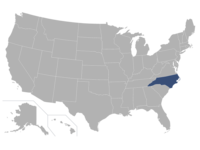
Raleigh, NC