Ferry union says it didn’t coordinate WA worker sickout leading to mass cancellations
Oct 05, 2026 | 1:46 pm ET
Description
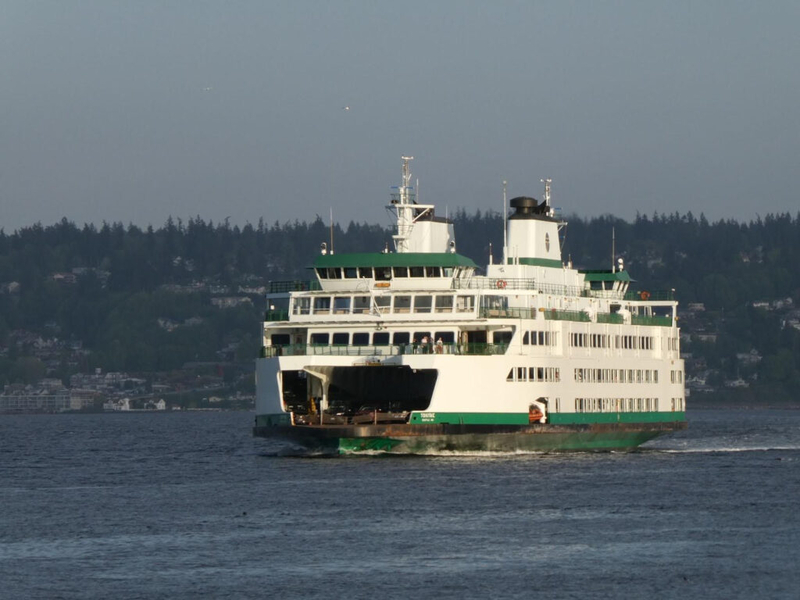
The state ferry Tokitae, seen here approaching Whidbey Island. (Photo by Tom Banse)
Numerous Washington state ferry sailings were canceled Monday as many workers called in sick and their replacements declined to fill in for them, according to state officials.
Thirteen of the ferry system’s 18 vessels transporting travelers and commuters across Puget Sound were out of commission at some point Monday, according to the Washington State Department of Transportation.
The workers’ union said it didn’t coordinate the sickout, instead describing it as a “frantic cry for help from an abused and frustrated group of highly-skilled and committed workers.” It did not say if the staffing crisis could continue beyond Monday.
The Seattle-Bainbridge Island, Edmonds-Kingston, Fauntleroy-Vashon Island-Southworth triangle and Port Townsend-Coupeville routes were all out of service for at least some of Monday. The Port Townsend-Coupeville run returned in the afternoon, as an open position was filled.
Others remained afloat with reduced service. At the Clinton terminal, drivers were waiting an estimated three hours to cross the water to Mukilteo. And the Point Defiance-Tahlequah route threatened to go out of service in the afternoon due to the crew shortage, but kept running.
This came after 23 engine room employees called in sick, and the workers qualified to replace them declined to fill in, according to the transportation department. Without them, the boats can’t sail.
The engine room workers are represented by the Marine Engineers’ Beneficial Association union. Work stoppages or strikes among ferry workers are prohibited under state law.
Like other state worker unions, members aren’t set to get a wage hike in their new collective bargaining agreement, but it does open up the possibility of bargaining over pay next year for the second year of the contract, which runs from July 1, 2027, to June 30, 2029. The terms were decided via interest arbitration.
“The MEBA is always looking to be a partner to keep vessels running safely and on time,” the union said. “We welcome cooperation with WSF management to achieve that same goal.”
Members have long complained of uncompetitive wages and a reliance on overtime that drives burnout. A survey of 80-plus members in June found more than 60% were either somewhat or very likely to retire or leave the ferry system for another job. Over half reported poor morale among their colleagues.
“Using overtime volunteers to meet minimum safety requirements is irresponsible; indeed, it courts disaster,” the union said in a statement Monday afternoon. “Engineers, all of whom are already scheduled to work 84 hours per (seven-day) workweek, must inevitably confront exhaustion when asked to work the numbers of overtime hours required by the current stopgap system.”
The ferry agency countered that chief engineers have a base salary of $157,000 that can rise to $350,000 with overtime, retirement accrual and paid time off.
“We expect our employees to return to work as soon as possible,” the ferry system said on social media.
Gov. Bob Ferguson, who has pushed heavily for more reliable ferry service in his first term, said he’s been meeting with Washington State Ferries leadership.
“I understand thousands of Washingtonians are deeply impacted by what’s happening with our ferries,” he said in a Monday morning statement. “More details to come on how we’re going to resolve this situation.”
Kitsap Transit added two additional fast ferry passenger-only sailings between Bremerton and Seattle due to the service disruptions.
This story was updated with comments from the union representing engineers.
Olympia, WA