Autism-treatment task force inches closer to finalizing recommendations
Oct 05, 2026 | 5:58 pm ET
Description
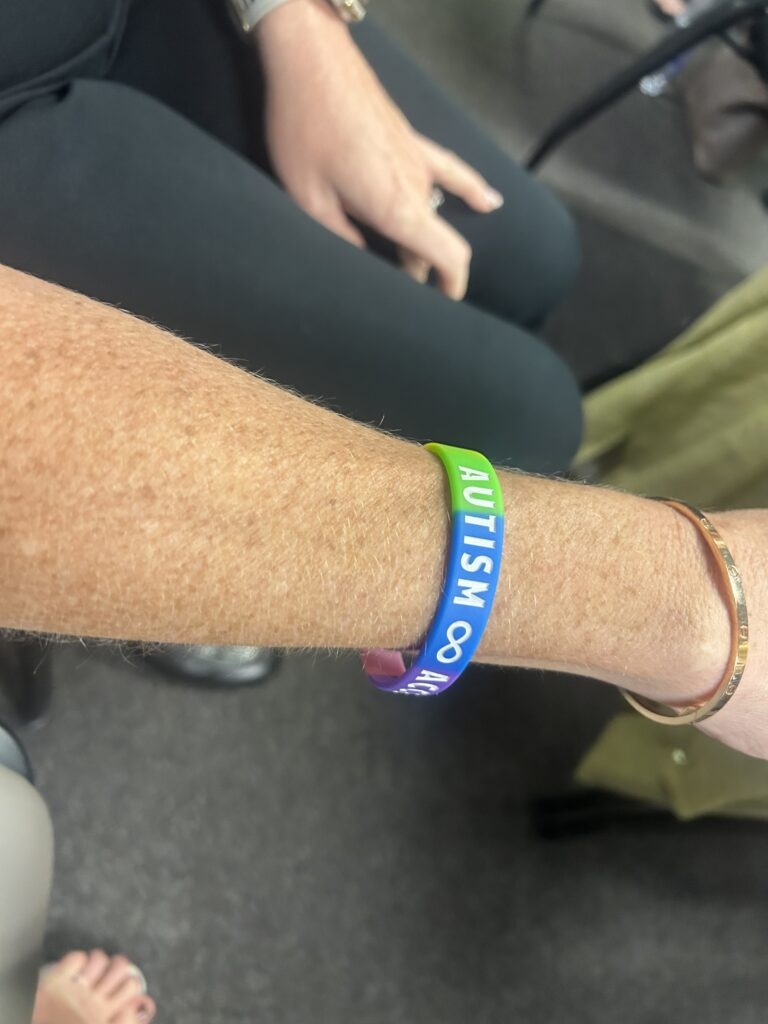
Autism awareness bracelet worn by an audience member at the Aug. 31, 2026, ABA Task Force meeting in Tallahassee. (Photo by Christine Sexton/Florida Phoenix)
A blue-ribbon panel will hold two more meetings before it adopts the final list of recommendations to the Legislature on how best to use state dollars to treat children with autism.
Those recommendations could include requiring businesses that provide applied behavior analysis (ABA) services to be licensed, not just the providers working for those companies; tying Medicaid reimbursements to annual licensed provider surveys; and offering parents access to more than just applied behavior analysis.
Those were some ideas members of the ABA Task Force heard Monday and discussed during a near all-day meeting.
Centria Autism is not an ABA provider in Florida but purports to provide more Medicaid ABA services than any other provider nationwide and operates in 11 states.
Its CEO, David Harbour, told ABA task force members that Centria thinks some of the concerns about the high costs of providing ABA services and the effectiveness of the services could be resolved in part through licensure. He recommended the state consider regulating ABA providers similarly to how it licenses home healthcare providers, which requires licensure and ongoing surveys for re-licensure.
The licensure requirement, he said, could help to “create standardization around the services,” whether provided in facilities or in people’s homes.
The surveys could be used to determine whether the ABA providers are following treatment plans.
Results of the surveys, he said, could be tied to an ABA provider’s reimbursement rates.
“Failed surveys should carry a Medicaid reimbursement penalty,” Harbour said, acknowledging that “no state has done this yet.”
“Think of the carrot and the stick. Do the right thing, pass the surveys, and you get to keep your rate. If you don’t, then you have to take the 10% reduction for the rectification time period.”
‘Interesting’
Agency for Health Care Administration Secretary and task force member Shevaun Harris said she found it “interesting” an ABA provider was advocating for facility licensure.
“I just want to note our agency has been very intrigued by that concept,” she said, noting that AHCA is in charge of licensing most of the health care facilities in the state, from abortion providers to nursing homes to hospitals to home healthcare agencies.
“We’ve had the same conversation here at the agency, around you have individuals going into people’s homes of very vulnerable kids,” she said. Although AHCA conducts on-site inspection as part of the Medicaid application process, it’s “not the same as a licensure process, and so we, I found it interesting that that was included in your presentation,” she said.
Harbour said Centria also would like to see states require Medicaid patients to attend ABA appointments to continue to receive the services.
“There’s a lot of them who do not show up to their clinically recommended hours,” he said. He acknowledged “this is a really hard thing to do,” but said “some states” require it and specifically named Texas.
Texas, he said, has a “minimum attendance that the family has to attend, or they could lose their services.”
During public testimony, Mariel Fernandez, a Dallas resident and vice president for government affairs for the Council on Autism Service Providers, clarified the policy, telling board members Texas Medicaid requires 85% utilization of scheduled parent training sessions but doesn’t require minimum participation per month.
She said lack of parent or caregiver involvement doesn’t mean ABA services will be denied.
“However, parent or caregiver involvement may affect the effectiveness, durability, and generalization to natural settings of the treatment and may be considered when making determinations regarding effectiveness of the treatment requested,” she said, reading directly from the Texas Medicaid Provider Procedures Manual.
ABA isn’t the only option
Applied behavior analysis uses structured interventions to decrease maladaptive behaviors and reinforce appropriate ones.
ABA is common in the treatment of children diagnosed with autism spectrum disorder and people with attention deficit hyperactivity disorder (ADHD), traumatic brain injuries, and intellectual and developmental disabilities.
The ABA Task Force kicked off the meeting with a presentation from certified speech pathologist Sheryl Rosin, who said the task force could consider alternative therapies to ABA.
“So, there is evidence across this continuum of care, no single approach has definitely settled that this is the right treatment for autism. We have lots of different treatments out there, not even autism-specific but like speech language pathology and occupational therapy. So, the research filed as a whole is still accumulating the evidence across all these models, including ABA.
She said New Jersey has started using what’s called DIR FloorTime, which, according to its website, was developed in the 1980s and emphasizes social-emotional development through meaningful relationships and nurturing interactions.
“It’s already being done in multiple states,” she said, noting that DIR FloorTime is an option families in North Carolina can tap into in addition to ABA.
Similar to ABA, she said, a child needs a physician referral and confirmed diagnosis to receive care and must undergo progress reviews.
“This is just another way of thinking about alternative models,” she said.
Meeting dates not finalized
The Legislature established the 10-member task force as part of fiscal year 2026-27 budget negotiations.
Harris, who chairs the task force but cannot vote on any of the recommendations, said during the first meeting she’d like the panel to finalize its recommendation during October. But the group was unable to firm up when to meet again.
AHCA is required to post meeting dates at least seven days in advance.
The review comes after the Centers for Medicare and Medicaid Services (CMS) released the State Medicaid and CHIP Applied Behavior Analysis Toolkit, a 173-page document meant to “support state Medicaid and Children’s Health Insurance Program (CHIP) agencies in making decisions regarding ABA service provision for Medicaid and CHIP.”
The DeSantis administration announced in June that it was cracking down on fraud, waste, and abuse in Florida’s $38 billion healthcare safety net program. That initiative was launched after CMS sent a letter to Florida, as well as California, Maine, and New York, seeking information about Medicaid integrity and oversight and after CMS Director Mehmet Oz said on social media that “Florida has been a hotspot for health care fraud for years.”
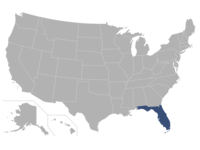
Tallahassee, FL