Female biologists in Wyoming responsible for groundbreaking research
Aug 05, 2026 | 6:22 am ET
Description
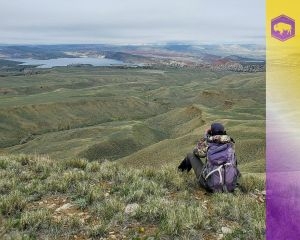
Photo courtesy of WyoFile
Rhiannon Jakopak sat in her sweltering office at the University of Wyoming and stared at lines connecting thousands of dots on maps taped to her wall. It felt like a scene from the early 2000s movie “A Beautiful Mind,” where someone begins to lose their grip on sanity and keeps making connections where there aren’t any.
But her problem was the reverse. She wanted to see patterns but couldn’t, at least not everywhere.
The UW research scientist and former graduate student had been studying Wyoming’s deer for years. She knew what she was supposed to find. The fawns that she and others had placed collars on at birth and then tracked for the first couple of years of their lives should have migrated following their mothers. It’s what everyone always says.
Female mule deer are often considered a monolith, a single group full of individuals utterly indistinguishable from the others. They all do the same thing, the thought goes. Fawns migrate from one place to another just like their moms, who took the same route as their moms. And as Jakopak stared at lines on the wall, about 60% of the fawns followed their moms. The other 40%, well, they did something entirely different. They paved their own way. They found their own routes.
What Jakopak began to discover that day in her office added to a growing compilation of research coming largely out of a partnership between UW and the Wyoming Game and Fish Department showing that many female ungulates don’t, in fact, all do the same thing. Like their male counterparts, which everyone can distinguish by their flamboyant racks or massive horns, does are, in fact, individuals on their own journeys.
So it was fitting, said UW professor Kevin Monteith, who advised on Jakopak’s research, that a group of talented and ambitious women would be the ones to do the work, make the connections, and help the broader scientific community and public better understand the critical roles that female ungulates play in the populations Wyomingites hold so dear.
“The work these women did contributed immensely to our understanding of these populations,” Monteith said. “It advances knowledge so we can make smarter decisions and should inspire us to appreciate wildlife in different ways than we have before.”
Jakopak certainly isn’t Wyoming’s first female wildlife ecologist. She walks in the footsteps of famed biologists like Beth Williams — who first identified chronic wasting disease — and all of the regional wildlife managers who shepherd the state’s herds, and leaders like Angi Bruce, the Wyoming Fish and Game Department’s first female director. But spanning the history of wildlife biology, Jakopak and the others who worked their way through UW’s wildlife programs are still a minority, a fact Bruce and others are trying to remedy.
“If we always bring the best minds to the table, then we can come up with the best answer. And the best minds need to be a diverse set of folks in order to understand all perspectives,” she said. “I believe Wyoming is right about 50% female, so that means having females at the table as well.”
Finding their way
As a little girl growing up in Cody on the North Fork of the Shoshone River, Brittany Wagler asked her parents and friends to call her Bill. She wasn’t a boy, and didn’t particularly want to be a boy, but she wanted to have a job outside working with wildlife, and the only people she saw with those jobs were men.
So she figured she would have to be a man to do that work.
By the time she reached UW, though, she realized women could study wildlife and spend their lives working in the landscapes she loved.
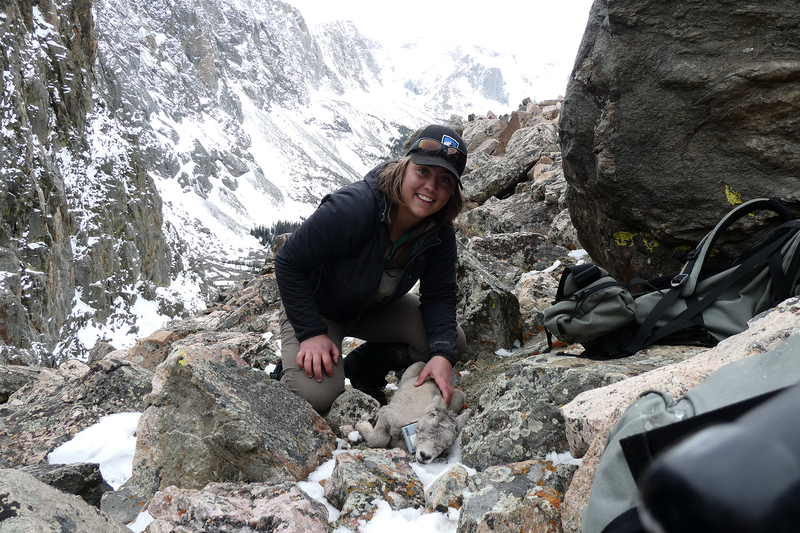
She devoured her undergraduate biology classes and accepted a project studying bighorn sheep, where she spent her summers tracking ewes and newborn lambs across some of Wyoming’s highest, harshest terrain.
Jakopak’s career started differently. She was studying religion at UW when she went for a hike at Vedauwoo outside Laramie. There she saw moose, spent time outside, and, as wild as it sounds, reconsidered her life. Soon after, she changed her degree track and registered for wildlife classes.
“I took mammalogy, and I knew this was the thing,” she said.
She met a mentor, Game and Fish’s science unit supervisor Embere Hall, studied the tiny, high-elevation pica, and decided, “this is exactly what I want to do.”
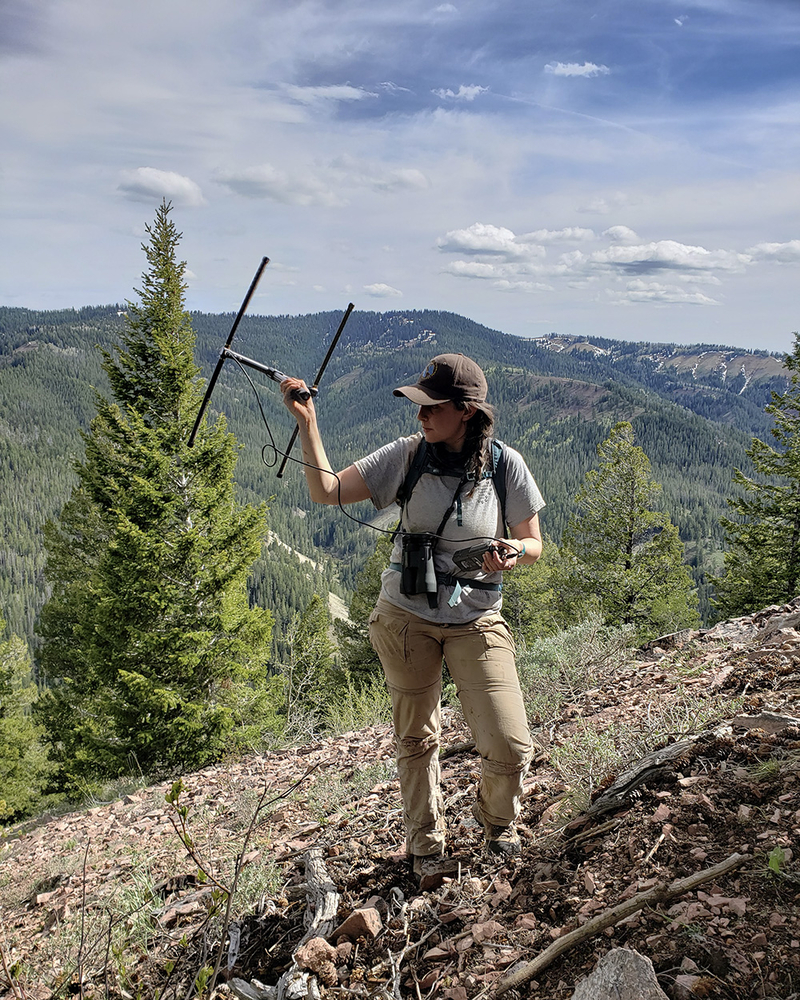
At the same time, an Arizona undergraduate named Tayler LaSharr agreed to move to the Wyoming Range to study mule deer as a technician. Ten years later, she graduated with her master’s and then Ph.D. as part of one of the world’s longest-running, continuous studies on mule deer.
Each woman worked her way through degrees at UW at the same time as another recent graduate, Anna Ortega, who published her research about the importance of mule deer migrations in prestigious journals like Science and Nature.
They weren’t the only ones. Many other women graduated from UW’s wildlife programs in the past decade, each making waves in their own way, establishing themselves as scientists at the top of their game contributing to a deeper understanding of female and family dynamics in big game herds.
A doe’s role
A little more than a century ago, an expanding U.S. began to realize the endless big game herds Europeans encountered were not, in fact, endless. Populations of dozens of species, including bison, bighorn sheep, elk and deer plummeted.
State wildlife agencies, backed by hunters, created laws regulating harvest based on the premise that females are a herd’s reproductive engine. Keep females alive, they have more babies, and the population grows. Simple. And largely accurate. Populations boomed and species like elk, deer and bighorn sheep thrived, rebuilding after decades of overhunting.
But as their numbers rebounded, our landscape grew more complicated. Open spaces diminished. Wildlife competed for smaller and smaller slices. The climate changed, and diseases proliferated.
Biologists began to wonder if simply preventing female harvest was enough to keep herds stable. Wildlife managers needed to understand more about herd dynamics, about what and how young learned from their mothers, about how disease transmits and about a female’s more nuanced role in her herd.
That was just the information this cohort of women began to offer.
LaSharr discovered that the body condition of a doe at the time the deer gives birth will impact the size of her offspring not just at birth but for that offspring’s entire life.
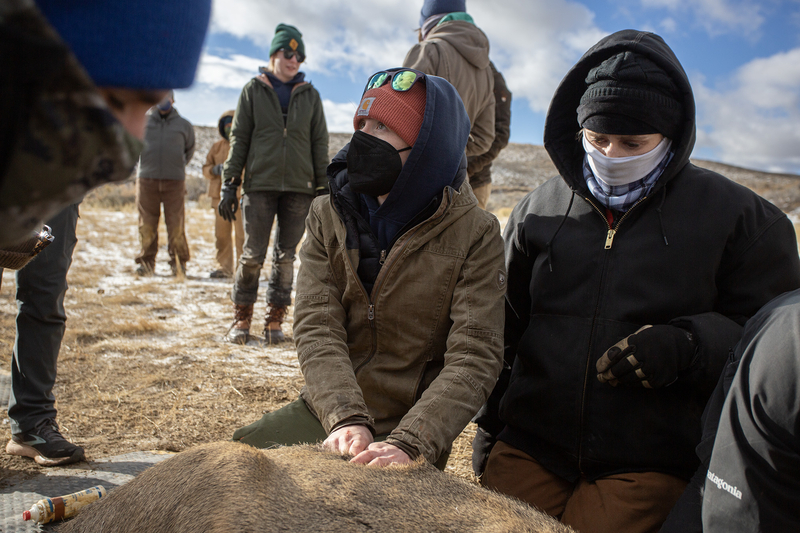
Ortega documented that while short, medium and long-distance migrations are important to wildlife herds because a variety of options help buffer against climate and weather changes, she also documented how the furthest migrating does return to winter range the fattest. Apparently in the deer world, the marathoners are the biggest.
And contrary to all previously held beliefs, Wagler found that maintaining robust female bighorn sheep populations may ultimately result in smaller herds more susceptible to disease. Some ewe hunting, she found, may sustain healthier herds.
A retention problem
Each of the all-star cast of female wildlife professionals from the past handful of years took their own roads after finishing school. Jakopak went to the Wyoming Game and Fish Department, and LaSharr stayed in academia and is a teacher and researcher at Utah State University. Ortega co-founded and is the lead researcher for Western Wildlife Research Collective, which provides data and tools for wildlife biologists and managers. Wagler works for Conservation Science Partners, a nonprofit working on large landscape connectivity. They’re staying in wildlife, but Wagler wonders how many of her fellow female graduates will last.
“I feel like the broader field of ecology is shifting, and there are very cool women doing cool work,” she said. “Now that I’m getting older, and more friends are interested in having families and getting pregnant, I see ways that it’s harder for women to stay in the field.”
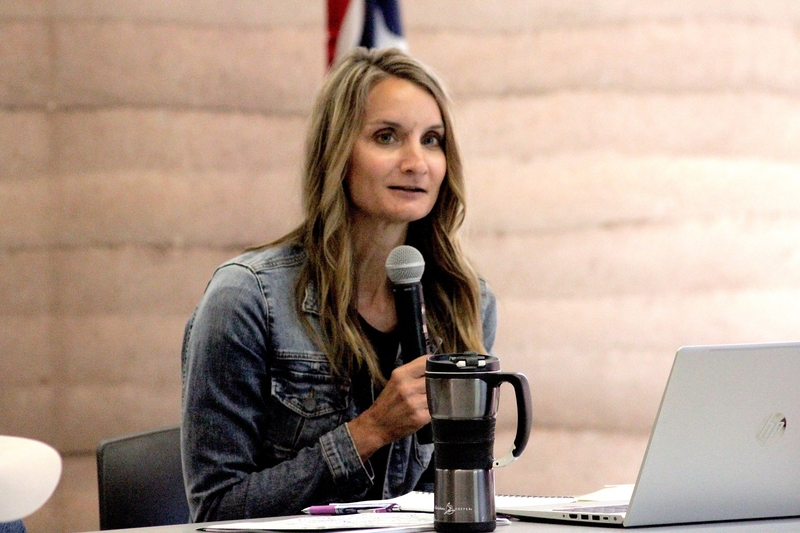
Bruce, the department’s director, told WyoFile recently that while plenty of women graduate with degrees in wildlife biology and work their way through rigorous master’s and Ph.D. programs, the bulk of the applicants for Game and Fish positions are men, and as a result, many department employees are men. She saw that trend even in the ‘90s when she was in school.
Bruce was not only the first woman to direct Game and Fish but also the first female biologist for the state of Iowa, the first regional supervisor and the first female assistant chief of wildlife for Iowa.
“I’m always the first female, and that’s not a good title,” she said. “I don’t want that as my title; that’s not something to be proud of in my mind. It actually reminds me of, why is that an issue?”
And an internal report by Beth Bear, the department’s aquatic assessment crew supervisor, illuminates the struggles of women in the department, like dealing with lewd or harassing comments, being excluded from networking opportunities and a culture that assumes men have more skills than women. Another big issue was a lack of maternity leave, though Gov. Mark Gordon recently approved a policy allowing state employees to take six weeks of paid family medical leave before using up their vacation and sick days.
There’s still a long way to go, Bruce said. Women made up about 49% of the state’s population in 2023, Bear reported, but occupied only 31% of the department’s 382 positions.
The director sees some easy fixes, like providing uniforms in women’s sizes instead of just men’s. Women also need more mentorship and networking opportunities. Recruiting and retaining the best biologists means recruiting and retaining more women, she said. And the state’s wildlife will benefit.
Cheyenne, WY