Federal judge sides with manufacturers, blocks New Mexico’s PFAS labeling rule
Sep 18, 2026 | 2:01 pm ET

Description
U.S. District Judge Margaret Strickland granted a preliminary injunction on Sep. 16, 2026, that blocks implementation of New Mexico’s rule that manufacturers must label consumer products that contain PFAS chemicals. (Photo by Nicole Neri/Minnesota Reformer)
New Mexico’s effort to require manufacturers to label consumer products that contain so-called ‘forever chemicals’ infringes on commercially protected speech, according to a preliminary injunction issued Wednesday by U.S. District Judge Margaret Strickland.
The disputed rule stems from the PFAS Protection Act, which the New Mexico Legislature passed and Gov. Michelle Lujan Grisham enacted last year. It would require manufacturers to label consumer products containing PFAS — aka per and polyfluoroalkyl substances. The New Mexico Environmental Improvement Board sanctioned the rule in March.
Studies show PFAS is linked to kidney and reproductive cancers, decreased fertility, fetal developmental delays, disruption of immune responses and liver function in humans.
The American Chemistry Council, which advocates for chemical manufacturers, and several national manufacturer organizations, sued the New Mexico Environment Department on July 1. The organizations argued that the state requirement violates the First Amendment by enforcing manufacturers to communicate a government-mandated message and asked for the court to stop implementation of the rule set for next year.
In her order, Strickland wrote that New Mexico failed to demonstrate how the label “is a rational vehicle to achieve the goals of protecting consumer and environmental health,” and added that “the state proclaims the regulation exists to raise consumer awareness, but underneath intends the label to operate as a warning in disguise.”
The label itself does not comment on whether PFAS poses a risk to consumer or environmental health and safety, a requirement needed to supersede the plaintiff’s right to commercially protected speech, Strickland wrote.
“I’d be lying if I didn’t say I was disappointed,” New Mexico Environment Department Secretary James Kenney told Source NM.
Kenney said that New Mexico “absolutely” plans to move forward in challenging the injunction, adding that NMED won many of its arguments and that Strickland “made a solid roadmap” for the department to consider.
For example, the plaintiffs argued the PFAS label does not convey factual information due to the broad nature of what constitutes a PFAS chemical and that the label is controversial.
Strickland disagreed with both arguments, saying New Mexico’s labelling rule has the same definition of PFAS as other states that have passed similar regulations — Colorado, California and Connecticut. She added that the plaintiffs provided no evidence that consumers find the image inflammatory or controversial.
New Mexico’s labelling rule has faced backlash from the national manufacturing community since its inception. In addition to the American Chemistry Association, the National Association of Manufacturers and six other manufacturing organizations were parties to the lawsuit, with NAM issuing a statement welcoming the judge’s ruling.
“The NAM is committed to securing permanent relief to ensure manufacturers aren’t forced to redesign products, packaging and manufacturing lines to accommodate an unconstitutional labeling requirement that imposes tremendous costs on both businesses and consumers,” Linda Kelly, NAM chief legal officer, said in a statement.
But for NMED, the issue is about transparency.
“This preliminary injunction shows that the intent of industry is to keep New Mexicans in the dark and not educate them on what types of PFAS might be coming in from their grocery stores or big box retailers,” Kenney told Source NM. “Education shouldn’t scare the American Chemistry Council, but here in New Mexico — apparently it does.”
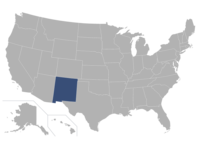
Santa Fe, NM