Federal judge pauses case on mifepristone access until after midterm elections
Aug 31, 2026 | 3:16 pm ET
Description
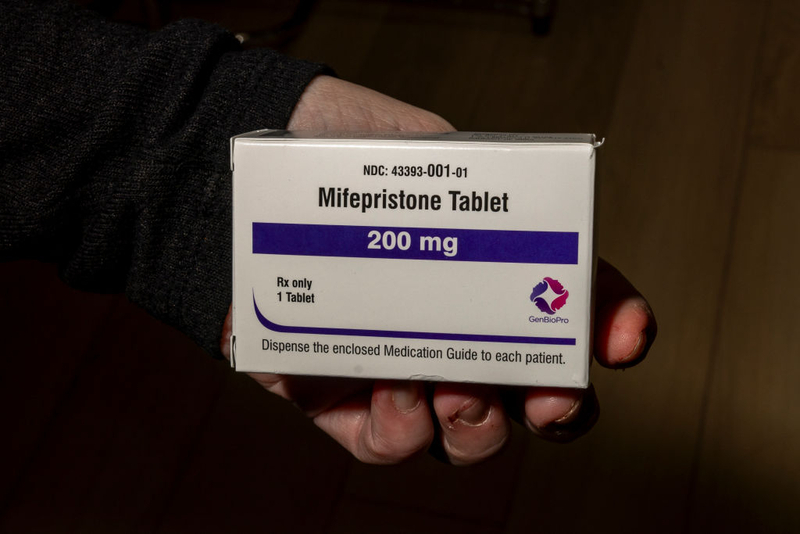
Three cases are pending in federal courts that could change access to one of two drugs commonly used to terminate a pregnancy and treat miscarriages. If the lawsuit out of Texas is successful, it would revoke access to the drug entirely in all states. A federal judge in Texas paused the case until at least Dec. 1, while the U.S. Food and Drug Administration continues its safety review. (Photo by Natalie Behring/Getty Images)
A federal judge in Texas on Sunday paused a lawsuit seeking to revoke nationwide approval of the abortion drug mifepristone, saying the case won’t be heard until at least Dec. 1 and granting the U.S. Food and Drug Administration’s request for a stay to continue its safety review of the drug.
The Republican attorneys general of Florida and Texas filed a lawsuit against the FDA last December seeking to permanently revoke the agency’s initial approval of mifepristone from 2000, along with subsequent decisions over the years that eased access for patients. Florida and Texas had agreed to the FDA’s request for a stay.
If a judge were to rule in favor of Florida and Texas, the medication would become unavailable in all states, regardless of abortion laws.
Anti-abortion groups urge attorney general to halt mailing of abortion pills
In the same ruling, U.S. Chief District Judge Reed O’Connor, an appointee of former President George W. Bush, denied a motion to dismiss the case from distributor Danco Laboratories and GenBioPro, one of the drug’s main manufacturers. The company’s attorneys intervened as defendants in April. O’Connor’s ruling will delay any action in the case until after the midterm elections.
“We expect the FDA’s review of mifepristone to not contradict the decision they made in 2023 that reaffirmed our product is safe and effective,” GenBioPro CEO Evan Masingill said in a statement Monday. “GenBioPro will continue to use all legal and regulatory tools available to ensure Americans’ access to reproductive care.”
The lawsuit by Florida and Texas is one of three suits pending in federal courts that would change nationwide access to mifepristone, and it’s the most sweeping in its goals.
Florida and Texas’s lawsuit cites in part the federal Comstock Act, a 150-year-old anti-obscenity law that made it illegal to send any materials that could induce an abortion through the mail. That law has not been enforced for many decades. Anti-abortion groups recently called for new U.S. Attorney General Todd Blanche to revisit the Comstock Act’s prohibition.
Mifepristone, one of two drugs most commonly used to terminate a pregnancy before 10 weeks’ gestation and to treat miscarriages, has repeatedly shown in scientific studies to be safe and effective, but the FDA began another safety study in June and announced it would take about six months to complete.
The 5th U.S. Circuit Court of Appeals will hear oral arguments Sept. 9 in a case from Louisiana seeking to remove a rule allowing the medication to be dispensed without an in-person visit to a provider, and the attorneys general in Missouri, Idaho and Kansas have asked a federal judge in Missouri to roll back the rules to what they were before 2016. Prior to that year, the drug was only approved for use before seven weeks’ gestation and required three in-person office visits.
Stateline reporter Kelcie Moseley-Morris can be reached at [email protected].