Kansas pharmacist awaits data, expects state to save millions from transparency under new law
Aug 31, 2026 | 2:13 pm ET
Description
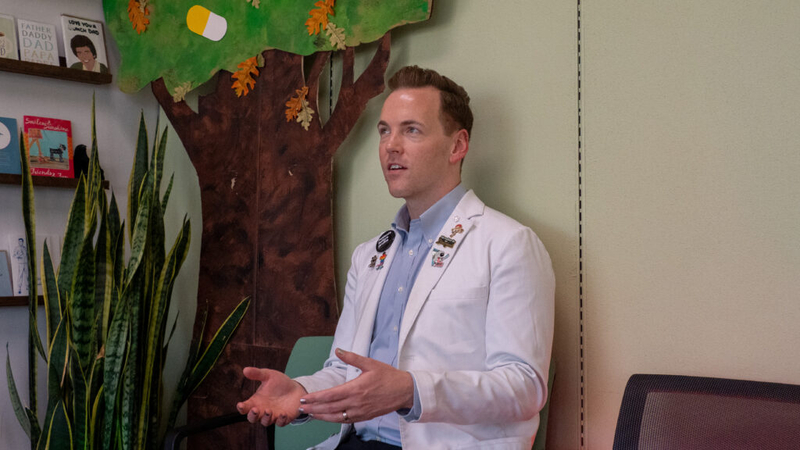
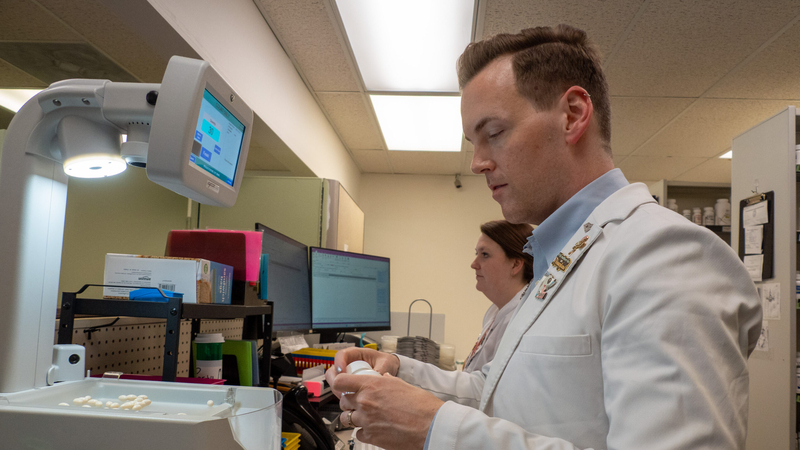
Pharmacist Will Anderson, owner of Orchards Drug in Lawrence, advocated for more transparency in the pharmaceutical system regarding payments made by all entities. The result lowered his business revenue but he hopes that will change as the effects are fully understood. (Photo by Anna Kaminski/Kansas Reflector)
TOPEKA — A Lawrence pharmacy is losing revenue under a bipartisan law that holds the pharmacy industry to new standards of transparency.
That is what Will Anderson, owner of Orchards Pharmacy, expected when he fought for the passage of Senate Bill 20, which changes the way that pharmacy benefit managers operate. He said on the Kansas Reflector podcast that he expected payments to decrease while the industry adapts to the changes.
“A pharmacy benefit manager is one piece of the giant insurance companies, the conglomerates, the vertical monopolies, that control our healthcare system,” Anderson said. “The problem truly is that their power has consolidated, and therefore they have taken advantage of certain business practices by operating in the dark. They have taken advantage of their position to extract money from every player in the healthcare industry.”
Three major PBMs control about 80% of all prescriptions in the United States, and they are all integrated into healthcare monopolies, Anderson said. The big three are CVS Caremark, Express Scripts and Optum Rx, and many major healthcare companies also operate PBMs.
Kansas’ SB 20, which the Legislature passed in March and the governor signed in April, created transparency and accountability for PBM practices, such as banning spread pricing. The federal government took a similar action in February to increase PBM transparency in the Medicare and private insurance system.
Spread pricing
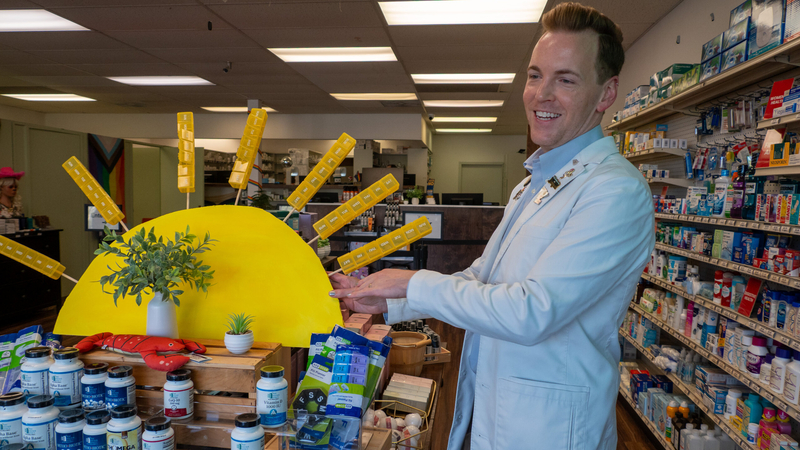
Spread pricing, an example of one practice criticized nationwide, is when the PBM charges the insurance company more than it paid the pharmacy for dispensing the medication, pocketing the difference, Anderson said.
He gave an example of a PBM paying a pharmacy $10 for a medication and then charging the insurance company $50 or $100 for dispensing costs.
“The difference between the $10 they paid the pharmacy and the $100 that they charged the insurance company, that’s called spread, and they can keep that as profit,” Anderson said.
A 2025 Federal Trade Commission report found the country’s three largest PBMs made an estimated $1.4 billion of income through spread pricing, along with more than $7.3 billion in revenue from 2017 through 2022 by charging more than the estimated acquisition cost of the drugs.
PBMs also were retaining rebates they received from the pharmaceutical companies that were intended to lower prices for patients, Anderson said.
While PBM profits were increasing, Anderson said, his pharmacy and other small local pharmacies that don’t have any power in the marketplace are filling prescriptions below cost. That led him to actively work on the passage of SB 20, and similar bills in previous years that failed.
SB 20 sets a floor for pharmacy reimbursement, he said. In the past, PBMs could underpay a local independent pharmacy like Orchards and overpay their own pharmacies, Anderson said.
“What the bill says now is that your reimbursement formula has to be transparent,” he said. “It has to be based on the actual cost of acquiring the medication, plus a dispensing fee to help cover the cost of everything else that goes into filling a prescription. And importantly, the PBM is no longer allowed to pay their own pharmacy more than they pay non-affiliated pharmacies.”
Ending those “key, huge abuses” gives the Kansas Insurance Department, employers, and health plans detailed reporting of what the prescriptions cost, Anderson said.
States that made similar changes to SB 20 found large cost savings in their Medicaid program, he said, pointing to Ohio saving more than $224 million in one year by eliminating spread pricing.
“That’s the gift that keeps giving — it’s every year they’re saving that money that they would have just blindly paid out to these massive corporations,” he said.
SB 20 effects
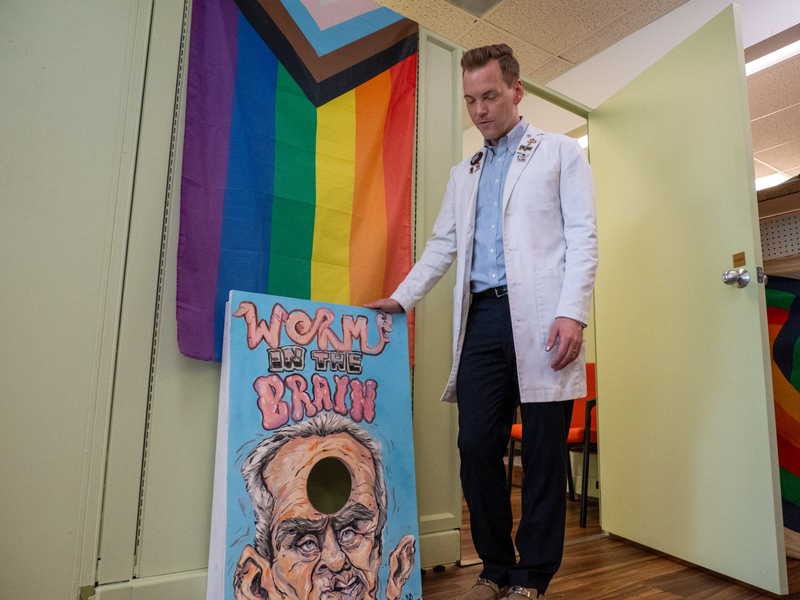
Anderson said it will take at least a year of data to understand changes generated by the new law and for employers to see data that can help them make better decisions about insurance.
“I obviously don’t want to wait a year, so I’m doing what I can do to try to analyze and understand what’s going on with my own claims, and that’s definitely still in process,” he said. “But what I’ve seen so far is that actually reimbursement on the affected claims has actually decreased at pharmacies.”
Anderson said his pharmacy is measuring an 11% decrease in revenue from the plans that have been impacted by this law.
“On average, pharmacies were making a little bit more than the cost plus $10.50 baseline that’s now established in law,” he said. “Because the PBM is no longer allowed to pay their own pharmacies exorbitant markups and underpay local pharmacies, we’re seeing an evening out where all the claims are coming down to the transparent reimbursement formula.”
While that’s not a result that helps local pharmacies stay open — Kansas lost 20% of its retail pharmacies in the past 10 years — Anderson said it helps with predictability, which is important for business planning.
“In the past, we had some prescriptions that would be very profitable, and we had some prescriptions that we would lose tons of money on,” Anderson said. “I filled a prescription that was affected by this plan, where I was going to lose $400 every single month filling the prescription, and that’s with the patient paying a very high cost. Now that claim would go up to the normal transparent reimbursement formula, so at least that gives us a little bit of peace of mind.”
$10.50 controversy
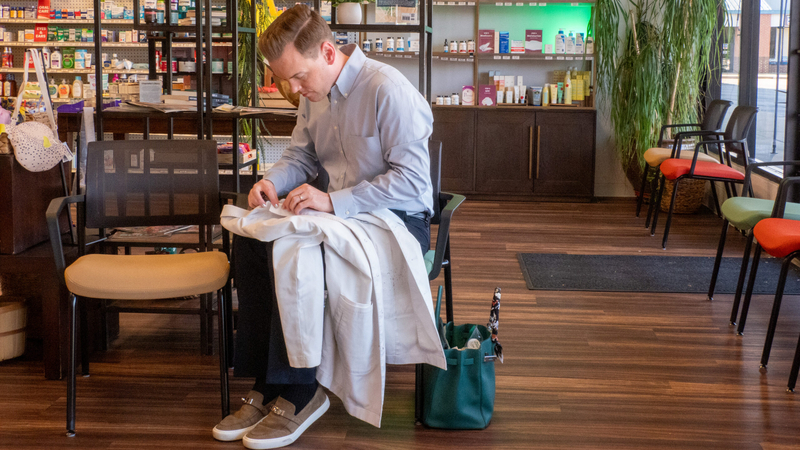
The $10.50 base price for filling a prescription was debated by the Legislature. Campaign ads against gubernatorial candidate Sen. Cindy Holscher, D-Overland Park, mention that she was in favor of adding on that amount to every prescription.
That isn’t how it works, Anderson said. A study of the base cost, including salaries and overhead, required at a Kansas pharmacy was $15.86 per prescription, he said.
“The reality is that medications were never free. Medications already have a cost associated with them, and in my pharmacy, we were actually getting paid on average more than $10.50 of a dispensing fee,” Anderson said. “That cost was never going to be tacked onto people’s prescriptions. It was simply setting a reimbursement floor that stops two key abuses that were going on, which is the intentional underpayment of local pharmacies and the intentional overpayment of their own PBM-affiliated pharmacies.”
Obviously, he said, pharmacies don’t want their revenues to go down, but the system must change to become more fair and transparent.
“My hope is that reimbursement models will continue to evolve so that healthcare provieers can get reimbursed for a fair price,” Anderson said. “They’ve been raising costs behind the scenes for decades, and that’s a big part of the reason why our health care is so expensive in this country. This bill stops some of the worst abuses that they’re doing on the prescription side.”
The new law also stops losses from filling prescriptions, some of which the pharmacy would absorb as much as $100 to $400 for the cost of the medicine, he said. It led some pharmacies to stop carrying those types of medications, which harms access, Anderson said.
Moving forward
Anderson said as more data comes in from PBM reform, he hopes the state will continue to make data-driven solutions for industry challenges.
“Now, for the first time in Kansas, we’re going to have access, and we’re going to have transparency, and we’re going to see exactly what’s going on,” he said. “What we need to do now is we need to look at the data, and we need to keep making good decisions for Kansans.”
Transparency is important and is never a bad thing, Anderson said.
“The free market operates in the light. It operates with transparency, so that people can make good informed decisions,” he said. “Don’t be distracted by the little fearmongering things when they say, ‘Oh, your costs are going to go up on your prescriptions,’ because in reality, it’s a tiny but effective little distraction tactic. We’re now going to have the data.”
Topeka, KS