Putting death row in the rear view mirror: Debra Milke finds her purpose as a ‘survivor’
Aug 31, 2026 | 3:47 pm ET
Description
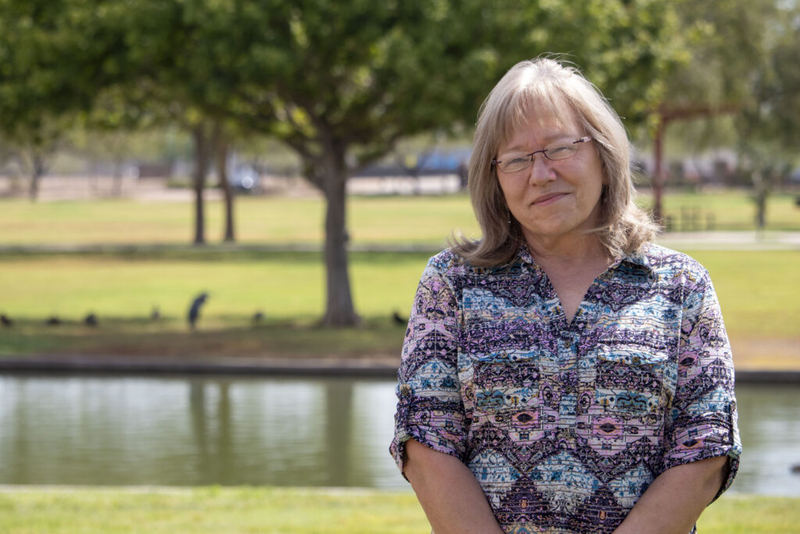
Debra Milke in August 2026. (Photo by Jerod MacDonald-Evoy/Arizona Mirror)
Thirteen years after she was released from Death Row, Debra Milke was in Phoenix to comfort a friend who is ill.
Milke, 62, had been gone for a long while, trying to escape what her therapist called the source of her pain: Arizona. And though she still feels that drag of depression every day when she wakes up, she forces herself to look to the future, not the past.
“Why do you think the windshield is bigger than the rearview mirror?” her husband asks her. “You’ve got to start looking out the windshield instead of the rearview mirror.”
In December 1989, Milke was arrested and charged with arranging the murder of her four-year old son, Christopher. It was that year’s crime of the century, a pre-internet, pre-social media Jodi-Arias-OJ-Simpson-kind of case. She was the demon with an angel’s face, the cold and calculating beauty whose small son was in the way of a vixen’s agenda, the woman who had confessed to inducing two men to take the boy out to the desert and shoot him in the head when he thought he was going to the mall to see Santa Claus.
Except the only evidence against her was the word of a crooked cop.
She denied having anything to do with the crime. And as for the supposed confession, there was no recording of it. There were no witnesses. There was no typed confession statement for her to sign. The cop in question had a reputation for lying in court, violating Miranda rules and extracting confessions from people who were unconscious on hospital gurneys.
Furthermore, the two co-defendants, who were also sent to death row, refused to testify against her.
No matter. She was convicted by a jury anyway and sentenced to death by a judge.
It took 25 years for any court to pay attention to the police and prosecutor misconduct in her case. But when one did, it did so resoundingly. The 9th U.S. District Court of Appeals threw out the sentence and the conviction with scathing orders to either retry Milke or set her free.
Over the protests of then-Maricopa County Attorney Bill Montgomery, a judge let her out on bail. Then the Arizona Court of Appeals ruled that retrying Milke would be tantamount to double jeopardy. Her ankle monitor was cut off. She went free.
But people still claimed she had got away with murder, after spending 25 years behind bars — the legal definition of a life sentence — for a crime she didn’t commit. She was 25 when she was arrested and 50 when she was released. Exactly half of her life had been spent in solitary confinement, locked in a cell the size of a bathroom.
Still, she looked forward.
“She is the strongest, most resilient person I have ever known,” said Lori Voepel, one of the attorneys who orchestrated Milke’s exoneration. They became fast friends. Milke is now her bookkeeper and does paralegal work for her. “She’s my hero to be able to withstand everything she went through.”
“She didn’t get to grieve her son’s death,” Voepel said. “She couldn’t go to her mom’s funeral. She has taken an unimaginable trauma and horrific circumstances that would have debilitated anyone, and she has turned that into a way to educate people on wrongful conviction and the death penalty.”
When Milke met with the Arizona Mirror earlier this month, she had just returned from Paris, where she had addressed the World Coalition Against the Death Penalty. She has spoken to the United Nations International Women’s Conference. She talks to prosecutorial organizations, law students and police cadets. She is on staff for Witness to Innocence, a lobby and support group for death row exonerees, founded by another Arizona exoneree, Ray Krone and Sister Helen Prejean, the Catholic nun and activist who wrote the book “Dead Man Walking.”
“You’d be surprised how many people don’t know that wrongful convictions happen,” Milke said. “They think the state gets it right all the time, and it’s not true.”
Of course, speaking about her past means looking in the rearview mirror instead of through the windshield.
“When I speak, I’m always going back. But it’s a healing thing to share,” she said. “I thought my therapist was crazy when she suggested I speak. She said, ‘No, it’s very therapeutic and healing,’ and it is.”
THE CONFESSION
Milke was born Debra Jean Sadeik in Germany in 1964 to a German mother and a U.S. serviceman. By the time her sister, Sandy, was born two years later, the family had moved to the U.S., and then did the usual military family relocations until settling in Phoenix. She graduated from Cortez High School and attended community college, and then went to work for American Express and later for insurance companies.
While on a girl’s night out at a biker bar, she met Mark Milke and fell in love. They married, against her parents’ wishes. At age 21, she gave birth to Christopher.
But things did not go well. Debra did not succeed in changing the bad boy. Mark Milke succumbed to drug and alcohol abuse, doing at least two stints in prison, and he was abusive to Debra and Christopher. She moved out after two years, eventually divorced him and they battled over custody and visitation, with Debra bouncing from one living situation to another, sometimes living with Sandy and Sandy’s young son, sometimes with Mark Milke’s mother. After a final confrontation with Mark, she turned to a man that she and Sandy thought they knew well from their apartment complex, Jim Styers, and Debra rented a bedroom in his apartment.
Styers was older than Debra and Sandy, a disabled Vietnam vet with a young daughter about Christopher’s age who lived with him. He went to church three times a week and sometimes took Christopher with him. And he was a reliable babysitter. So, on that December day in 1989 when he said he was going to the mall and Christopher asked if he could go along to see Santa Claus, there was no apparent reason for Debra Milke to say no.
Milke’s prospects were looking up. She had a new job at an insurance company where she hoped to train to be an underwriter. She had signed a lease for her own apartment, which she planned to move into after the holidays. And she had lined up daycare for Christopher. There was a pile of Christmas presents for him hidden under her bed.
Then Styers called her from the mall and said that Christopher had disappeared while Styers was in the rest room. Milke went into a panic. Police were called, and Milke sat by the phone, waiting for Christopher to call. She had made him memorize the phone number in case he had to call in an emergency. The day dragged on, and her stepmother came to pick her up so that she could spend the night at her father’s place in Florence to wait out the search.
Styers told his story to the security guards at the mall and to the police. He was with a friend, Roger Scott, a man Milke disliked. The police thought their stories were hinky. One of the cops leaned on Scott, and he confessed they had taken the boy to the desert on the pretext of hunting for snakes and shot him in the head. He took police up to the site off Happy Valley Road, which was open desert then, and they found the body. On the way to the site, Scott intimated that the boy’s mother was in on the plan.
“The day Christopher was reported missing was an emotional day for me,” Milke remembers. “There was a lot going on. The police were at the apartment. I was talking to so many police detectives, and I was anxious and worried and feeling every emotion you can think of. And I was exhausted. My stepmother came down to Phoenix from Florence to be there, but we weren’t getting anywhere. There was no word. Nothing. So my stepmother suggested,’Why don’t you come down to Dad’s and get some rest?’ I didn’t really want to go, but the police told me they’d notify me as soon as they heard something, and that they thought it was a good idea for me to go be with my family. So, we went to Florence.”
When she was summoned to the Pinal County Sheriff’s Office, she thought she was going to get news of Christopher’s whereabouts, possibly even be reunited with him.
Phoenix Police Detective Armando Saldate had flown to Florence in a police helicopter. He walked into the room where Milke was waiting, sat down at a desk, shuffled some papers, and then announced that Christopher was dead and she was under arrest.
Milke became hysterical. Saldate read her the Miranda rights —the right to remain silent, the right to an attorney — and she said she wanted a lawyer. He ignored her and pounded away with questions for the next 30 minutes. When he finished with her, he got her into the backseat of a police car with him and they were driven to jail in downtown Phoenix. Reporters were waiting. Only later did she realize she had supposedly confessed.
Saldate was known as a “closer.” He was quoted at the time as saying he didn’t believe in tape recorders because they got in the way of the truth. There was no recording of the interview. There were no witnesses to the confession, even though there were other Phoenix Police officers present at the Sheriff’s office. There was no typed confession to be signed. Saldate claimed he destroyed his notes after he typed up his report.
According to the “confession,” Debra Milke wanted her son killed to keep him from growing up and being like his father. When she said, “God, I just wanted to take care of him,” Saldate twisted it to “I want God to take care of him.”
Both Styers and Scott refused to testify. And though both were eventually sentenced to death, to this day it is uncertain which of them actually shot the boy.
Saldate on the stand said that Milke had pretended to cry but he thought she was faking it. Milke remained stoic during the trial, partly because she had been sedated, and partly on the advice of her attorneys. It fit two common scenarios: the defendant was hysterical, she was faking it, so she’s guilty, or the defendant remained cold and unfeeling, so she’s guilty.
Prosecutor Noel Levy based his case on Saldate’s word. Levy also allowed the jury to listen to a tape recording Saldate had made while interviewing Debra’s sister, Sandy. In it, Saldate alleged that Debra had exposed herself to him and propositioned him. The tape had not been played in the courtroom. But after hearing it in the jury room, the jury voted unanimously to convict Milke of first-degree murder. The judge sentenced her to death.
DEATH’S WAITING ROOM
Debra Milke was greeted on her arrival at Perryville prison with shouts of “baby killer.” At that time, death row prisoners were kept in solitary confinement, and she was the only woman with that designation in Arizona. A second woman was later sentenced to death for a 1996 murder but had her sentence reduced in 2002.
Milke waited out her appeals. She almost didn’t last.
In January 1998, after an appeal was denied, the Arizona Supreme Court issued a warrant for her execution. Prison employees even took her from her cell to do an execution rehearsal, and she came within 17 days of being put to death before the U.S. District Court for Arizona issued a stay of execution.
A third woman, Wendi Andriano, was sentenced to death for a 2007 murder, and she was housed in a cell next to Debra. To communicate, they had to lay on the floors of their cells and talk through the air vent.
“After we became vent partners, I was able to convince her to go outside with me,” Andriano, who remains on Death Row, told the Mirror in an email. “It was the only time we could actually have a conversation while making eye contact. I found her to be very damaged by her imprisonment. She had bonds with a few people on the outside and did her best to maintain her normalcy and not become ‘prison.’ Some people conform to prison standards. She did not. She didn’t gossip or share war stories, preferring to focus on sharing current events or some scientific discovery from her magazines. We loved reading the Oprah magazine. We learned so much about trauma and healing from the Oprah show and the Dr. Phil show. To this day, she sends me wonderful books about healing the wounded soul.
“After learning she could trust me, she shared with me about her visitor. Officers and inmates alike would whisper about the hauntings from past suicides and murders. While Debbie was asleep, she would sometimes feel a touch on her shoulder. That would have sent me running and banging on the door, but she knew, deep down, it was Christopher. What their unspoken conversations were, I will never know, but he brought her peace. This I know.”
Milke would also have dreams in which Christopher was calling out to her for help and she couldn’t get to him.
“I never got to know what really happened to Christopher,” she said. “I never got to know that. I had to come to terms with that.”
But she persevered.
“Suicide never crossed my mind, for two reasons,” she said. “First, I’m the biggest baby — I wouldn’t want to do something that would hurt. And if you take a bunch of pills, you may be successful, but you may not be successful, and then you’re a vegetable. No. 2, I was determined to see this through, because I knew Saldate lied, and I had nothing to do with this crime. I wasn’t just going to give up, because then that would have meant that they won.”
The appeals process took 23 years. Even though attorneys had amassed at least eight other cases where Saldate had lied or had invented confessions, the Arizona Supreme Court and a U.S. District Court judge ignored them and let the sentence and the conviction stand. They also turned up two instances in which Saldate had demanded sex from women in exchange for leniency.
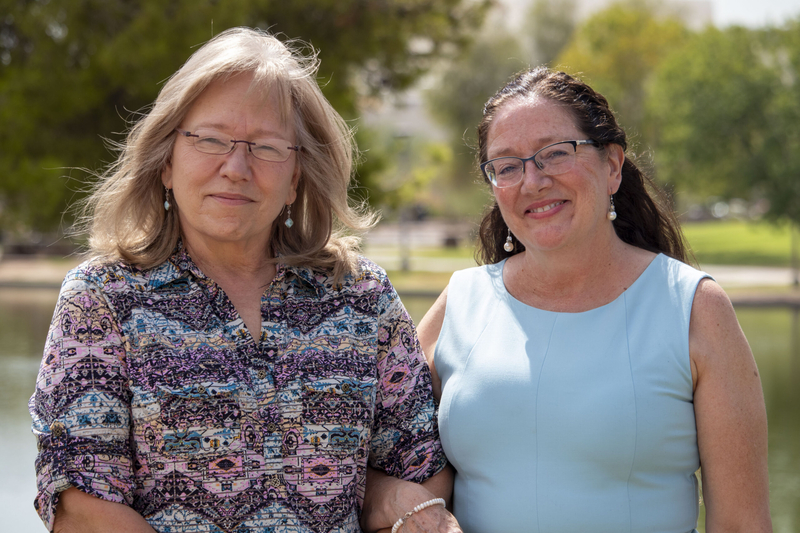
Voepel and her co-counsel, Mike Kimerer, came on board as Debra’s attorneys in 2001. Voepel argued the case before the 9th Circuit, and on March 13, 2013, the court issued its opinion.
Chief Judge Alex Kozinski was irate.
“This is a disturbing case,” he wrote. “There’s no physical evidence linking Debra Milke to the crime, and she has maintained her innocence since the day she was arrested. Neither of the men who actually did the killing testified against Milke. Roger Scott refused to testify because his ‘testimony would not be what he felt was the truth.’ After spending many years on death row, James Styers continued to insist that ‘Debbie had nothing to do with it and thats [sic] the truth.’ The only evidence linking Milke to the murder of her son is the word of Detective Armando Saldate, Jr. — a police officer with a long history of misconduct that includes lying under oath as well as accepting sexual favors in exchange for leniency and lying about it.”
“Could the people of Arizona feel confident in taking Milke’s life when the only thread on which her conviction hangs is the word of a policeman with a record of dishonesty and disrespect for the law?” he continued. “Bad cops, and those who tolerate them, put all of us in an untenable position.”
Milke was released from prison, and a Superior Court judge granted her bond.
Her attorneys spirited her away from the media. Sue Stodola, who was a mitigation specialist in death penalty cases, remembers serving Milke a vegetarian sandwich and Milke bursting into tears at the taste of fresh avocado.
This is what I wrote for The Arizona Republic after Milke showed up for court while out of custody for the first time:
“Debra Milke walked through the hallways of Maricopa County Superior Court with the uncertain step of a sleepwalker. She pressed her back into a corner of the elevator as it filled with people, her eyes big, her expression tentative, looking, in effect, like a person who had spent the last nearly 24 years in a cell and was now walking free.”
Montgomery, the county attorney, was intent on sending her back to prison. He offered a plea deal and a ticket off death row to Roger Scott, who turned down the offer. He tried to get Saldate back on the stand, but he also refused. He appealed to the Arizona Supreme Court and lost.
In March 2015, the Arizona Court of Appeals ruled that double jeopardy would attach, and the charges were dropped completely.
I interviewed Milke that August at a house in the West Valley where she was staying. She was trying hard to acclimate to life outside prison. She had started by going out her back door, a step or two farther from the house each time. And by walking down the street, first with friends, adjusting to crowds in the supermarket, the people on their phones, the kids running around and chattering.
It was not all negative.
“I’ll tell you a story,” Milke said in an interview for this story. “I was grocery shopping right by my house, and I bought all these vegetables and fruit — all the things that you really can’t eat in prison. So, I’m putting it all on the conveyor belt, and the cashier says, ‘Well, this is definitely a lot healthier than prison food.’ And I looked at her, and she smiled and said, ‘I’m so happy for you that you got out.’”
WITNESS TO INNOCENCE
Milke met me for lunch recently at a Central Phoenix restaurant. She waited outside with her back to the building.
“I’m not going to come into a crowded place and sit and wait,” she said.
She told of how she once went to a restaurant with her nephew, a veteran of the Iraq war who was afflicted with PTSD. They both headed for the same seat at the table, she so she could see who came in and he so he could see the way out.
She still has a list of triggers.
“Prison was so disgusting,” she said. “I just can’t be in a dirty place. Some things just remind me of prison.”
“Kids with their parents in a store, begging for this, wanting that, throwing a fit. Those are all things my son used to do.”
Cops give her flashbacks to Saldate’s interrogation, a trigger pulled when she spoke to a roomful of police cadets in uniform.
Official records show that a person has been convicted, not that they have been exonerated. So there have been other problems: Background checks when she was trying to rent an apartment. Fingerprinting when she was applying for a job. When she worked as a paralegal in Florida, her employer ran her name through the system and had a big surprise.
“When people are released from death row, they’re just kind of kicked out,” Milke said. “There you go, fend for yourself. If you committed a crime and got released on parole, you’d have all these resources available. But not from death row. Exonerees? There’s nothing. You’re on your own. They don’t have the resources to help us, so we just have to figure it out.”
Kimmerer, one of her attorneys, hired her to do office work, and that lasted until COVID closed offices in 2020. Help came from elsewhere. (Kimmerer has since passed away.)
When Milke was first released, she was contacted by Ray Krone, who told her about an organization called Witness to Innocence, an organization of death row “survivors,” as they call themselves. She turned him down, thinking it would drag up everything she was trying to forget.
For relief, she would get in her car and drive, trying to be anywhere but Arizona.
A year later, Krone’s wife reached out to her and convinced her to attend a “gathering” of more than 100 exonerees in Cincinnati. It was a pleasant shock to her.
Krone had been falsely convicted of murdering a bartender in 1992. He was branded “the Snaggletooth Killer” because his front teeth were crooked, and Noel Levy, the same prosecutor who tried Milke’s case, based his argument on junk science findings that Krone’s teeth matched bite marks on the victim’s body. He spent 10 years in prison — two on death row — until he was cleared by DNA.
Krone was the 100th death row exoneree in the country, and Sister Helen Prejean asked him to help start Witness to Innocence in 2005.
“We were healing ourselves as a group and needed to get out and share our stories,” Krone told the Mirror.
They weren’t looking for forgiveness.
“Forgiveness is what you do for yourself,” Krone said, quoting Prejean.
The organization lobbies on behalf of death row exonerees, offers emergency help and other services.
Milke met her current husband — also an exoneree — at a Witness to Innocence gathering and moved with him to Florida.
“Oh my God: peace just overcame me,” she said. “For the first time in over 20 years, I felt at peace.”
Witness to Innocence had hired professionals to teach the speakers how to condense and present their stories. So she started giving talks on their behalf.
“Debra is requested a lot,” said Herman Lindsey, the organization’s executive director, who is also an exoneree.
She talks to prosecutor groups and police officers, law students and others.
“I was nervous the first time,” she said. “But I thought, you know what? These prosecutors need to hear this. So, I never go in wanting to lecture. I don’t go in angry, because I’m not like that. I just want them to know what happened to me, and just make them aware of how important it is that they have somebody’s life in their hands when they bring somebody to trial.
“I get it that you want to prosecute criminals,” she continued. “I’m for that. But you’ve got to have your facts. Don’t just try to get a conviction because you get an award or something. That’s not right. You didn’t go to law school to become corrupt. You go to law school because you want to make a difference. At least that’s what a lot of law students tell me. So, never once have I had a bad reception. I was really surprised. In fact, I’ve had prosecutors come up and thank me for sharing my story.”
Witness to Innocence then brought her on staff as administrative assistant, which she calls being a bookkeeper.
And she found family.
When she was arrested, her father gave up on her and decided she must be guilty because the police said she was. He died before events could prove otherwise. Her mother, who stuck by her, died shortly after she was released, but Milke was unable to attend her funeral in Switzerland. Her sister, Sandy, was long estranged, and has since died as well.
But her sister’s son was born five weeks after Milke’s son, Christopher, which made him 41 now.
“He grew up thinking he had this evil aunt,” Milke said, “that I was a spawn of the devil. So, when I got out, he was 28. My friend said, ‘Would you like me to look him up on Facebook?’ And I said ‘yeah.’ I didn’t even know what Facebook was. I wanted to see what he looked like. So, she found him, and then she said, ‘Would you like me to see if he wants to meet you?’ I was a little nervous, but I thought the worst had already happened to me.
“So, my friend reached out and said, ‘I’m very good friends with your aunt, would you like to meet her?’ And he wrote back and said, ‘Hell yeah!’
“I was shocked.
“And when I met him, I just started crying. This tall guy with a hairy face at my door; the last time I’d seen him he was four. It was very emotional. He told me a bunch about how he grew up, and I filled in a lot of holes for him, answered a lot of his questions.
“He called me on Mother’s Day one time. He said, ‘I know you’re my aunt, and I’m really sorry that you lost your son.’ He doesn’t remember Christopher. He said, ‘I wish you were my mother. But at least I love you as my aunt.’”

Phoenix, AZ