Federal Government Abruptly Cut These Hawaiʻi Markets From Food Stamps Program
Jul 31, 2026 | 6:01 am ET
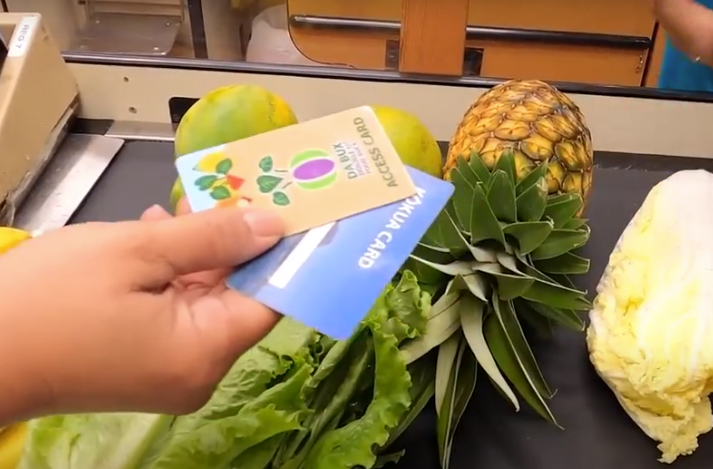
Description
Photo courtesy of Honolulu Civil Beat
The letter from the U.S. Department of Agriculture arrived in April.
It said Mālama Kauaʻi, a food hub that buys products from local farmers to sell to customers around the island, could no longer accept SNAP, the government food assistance program also known as food stamps.
The decision quickly rippled through the community as the nonprofit put on the brakes, hitting SNAP customers and food suppliers alike.
“It's harder to eat healthy now,” said Tina Silva, a customer who relies on SNAP to buy produce and other locally grown products from the food hub.
The reason the USDA gave for its decision: the nonprofit was registered as a farmers market, as it had been for at least six years. The agency said Mālama Kauaʻi was actually a delivery route because it distributes food around the Valley Isle twice a week.
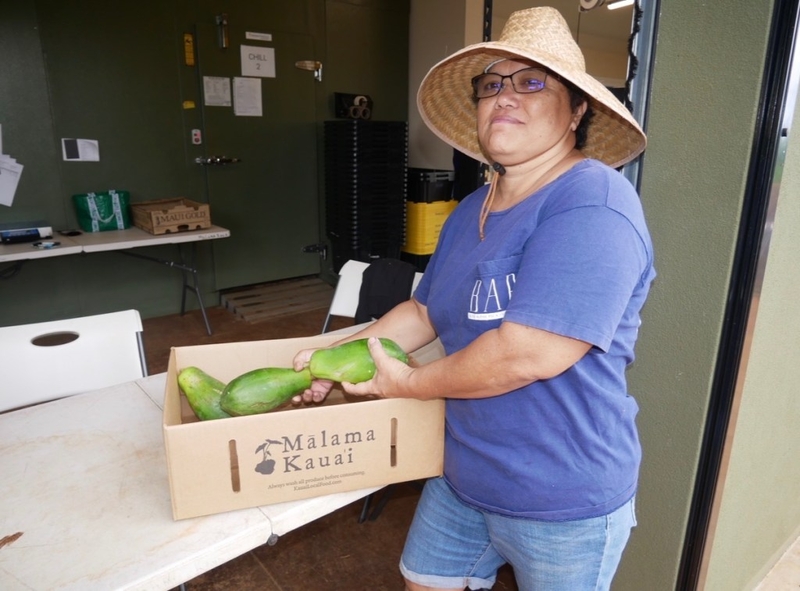
“There was no window for change or anything,” Executive Director Megan Fox said. “It's immediately, ‘We shut down your number. And you have to apply for a new category.’”
The action against Mālama Kauaʻi comes as the federal government scrutinizes organizations that accept SNAP — the Supplemental Nutrition Assistance Program — to uncover fraud that President Donald Trump and other Republican leaders claim is widespread.
At least three businesses on the Big Island — two markets and a convenience store — also were disqualified from the SNAP program in recent months.
Whether the local actions are part of the larger dynamic remains unclear but what’s known is that since Trump launched an anti-fraud task force in March, reports from disqualified retailers have escalated nationwide, particularly in Northeast states, according to the Food Research & Action Center, which advocates for anti-hunger policies.
“They are just looking for any sort of excuse to sort of kick these retailers off the program,” said Gina Plata-Nino, director of SNAP policy and advocacy at the Washington, D.C.-based nonprofit.
Investigations and disqualifications from the SNAP program are up, records show, though a connection to the administration's initiatives isn’t yet clear.
Data for the timeframe since the Trump anti-fraud task force was formed is not yet available.
There are 248,000 participating retailers in the $96 billion program, the USDA said.
Looking back, according to the USDA, there were 14,480 complete investigations of retailers and 1,654 temporary disqualifications in the 2025 fiscal year, which ended in September. That’s a 16% increase in completed investigations over 2024, and an 11% rise in temporary disqualifications.
However, the jump in temporary disqualifications from 2023 to 2024, during the Biden administration, was even bigger, rising from 1,058 to 1,496, a 41% increase.
In a statement, the USDA said it wouldn’t tolerate “fraud, waste or abuse” and “continues to strengthen retailer‑integrity policies and apply more advanced application‑vetting protocols. This has resulted in increased penalties and disqualifications for confirmed violators.”
'Reducing People's Access'
At Mālama Kauaʻi, the impacts of being disqualified were felt right away.
First, 471 people who use SNAP to buy food from Mālama Kauaʻi lost a source of groceries in a smaller community with fewer shopping options.
The food hub also lost financial support it counts on; SNAP purchases account for about 25%, or $100,000, of its annual revenue. As a result, it has had to pull back from buying food products from local farmers. It also is about to lay off one employee.
Within a week of receiving notice that the nonprofit had been disqualified Fox said she submitted a new application to be reinstated.
That application was denied and she appealed to the USDA’s regional office, but has heard nothing for months.
“I called the office millions of times and they just send you on the run around or tell you they'll call you back and don't,” she said.
The USDA said it couldn’t comment on individual cases.
Plata-Nino said the USDA appears to be backlogged because the agency has lost so much personnel since Trump took office due to layoffs and resignations through efforts to shrink the federal government workforce led by Elon Musk.
“Who's picking up the phone?” she said.
In the meantime, Fox said, the change at the hub is “really significantly reducing people's access to being able to utilize those benefits for local food.”
'Harder To Eat Healthy'
Silva, a disabled single mother who has shopped at Mālama Kauaʻi for fruits, vegetables, nuts and grains for the past few years, called it “a big impact.”
One recent night she made lamb curry using leaves from a curry tree she bought last year from the food hub.
“It was really good,” she said.
About 60% to 70% of her $800 monthly SNAP benefit used to go to Mālama Kauaʻi, Silva said. She would shop online, pay with SNAP and receive two or three food deliveries a month.
“We try to do healthy options and if it wasn't for them, I don't know what we would do,” said Silva, who pays extra close attention to her diet because she has a chronic illness that affects her immune system. She is trying to reinforce healthy eating habits for her daughter, too.
To get the products she used to buy from the food hub, she is instead shopping at farmer’s markets where SNAP isn’t accepted and at a farm that does accept SNAP but has a limited selection.
She shops at Safeway, too, but it’s more expensive; for example, she has to pay as much as $2 a bag more for herbs there than at Mālama Kauaʻi.
It’s been a struggle, she said.
“Their program really, really helps a lot of us to have those healthy options in our home that we can actually afford,” Silva said.
'A Small Mistake'
At the Waiholokui Garden grocery store on the Big Island, owner Elizabeth Ward said a minor slip up led to disqualification.
A person performing a USDA inspection and posing as a shopper came into the Pāhoa store three days in a row. On the first day, the inspector tried to buy products that weren’t SNAP-eligible, including a tea infuser, Ward said.
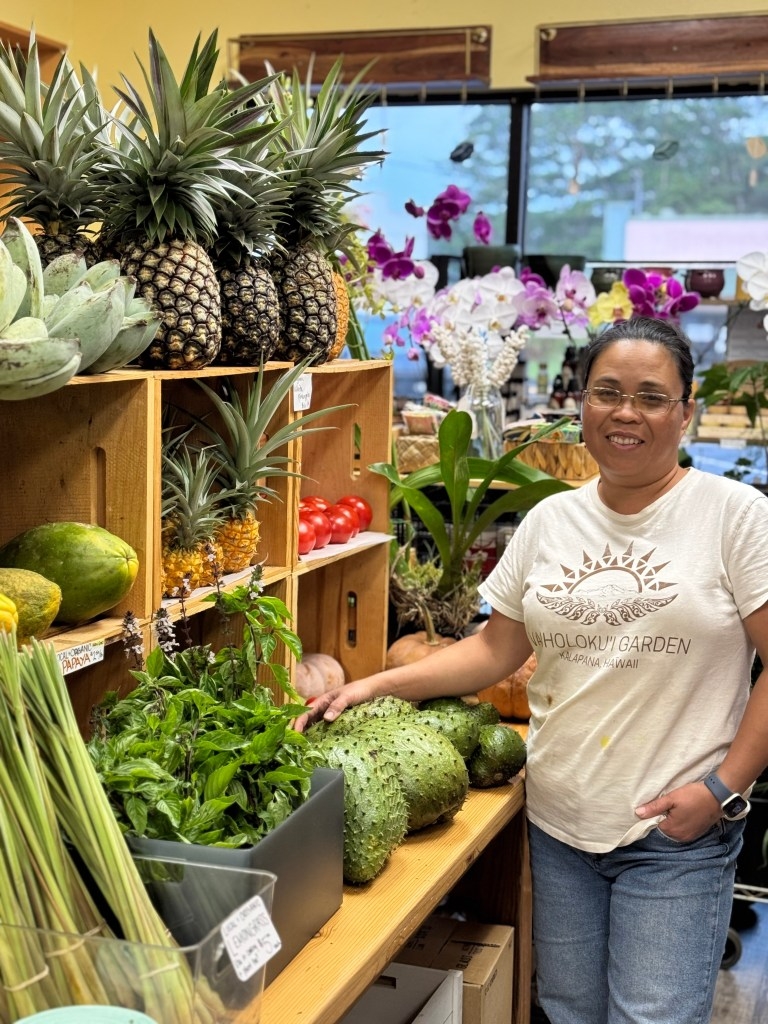
“She's like, ‘Can you just help me out this one time?’ Ward said. “And then one of my cashiers said, ‘No, sorry about that. Can't.”
The next day, the inspector returned, again posing as a customer. She engaged the cashier — Ward’s daughter — in conversation about having a surname in common, and bought an array of products with SNAP including a bottle of coconut oil. However, it was oil for skin, when only coconut cooking oil can be bought with SNAP.
The next day, Ward said, the inspector came in and tried to buy the same coconut oil. “My daughter said, ‘Oh no, you can't buy that one with EBT (the SNAP payment card). Then the inspector said, ‘But you let me buy it yesterday.’ She goes, ‘Oh, I don't know how that happened, but we're not supposed to.’ And that's how they got us.”
That inspection was in January. Ward received a letter from the USDA in June saying she could no longer accept SNAP payments as of July. The disqualification “will not cause hardship to SNAP households,” it said.
Ward appealed but was denied, and was told that she could not reapply for until January.
“I don't really know why this is happening,” Ward said. “It's like they're getting really strict about it. They're finding every way they can to find a way to disqualify small businesses.”
Plata-Nino said SNAP advocates have been concerned about secret shoppers. First because the rules governing what is eligible to purchase with SNAP are complex, including details such as what ingredients a product contains, and can trip up busy or less experienced store clerks.
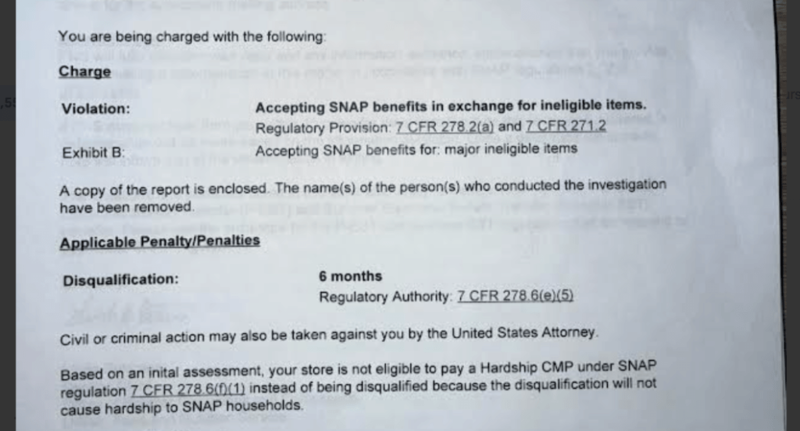
“It’s so in the weeds it needs a handbook to figure out,” Plata-Nino said.
Also, she said, for the most part, the reports of heightened enforcement have come from Democratic-led states.
“We're concerned about how they are doing their targeting,” she said. “And are they specifically following areas that are predominantly high need, low access areas. What is the methodology or how do they decide what state or what region to prioritize?”
The USDA said in a statement that it conducts nearly 50,000 undercover inspections a year, but did not say how many of those result in disqualifications.
In Pāhoa, the disruption already is proving difficult for local residents, Ward said.
“A lot of people here rely on EBT,” Ward said, adding that 20% of her revenue comes from SNAP. “They're mad at us for not taking it, but it's not really our fault. Well, we made that mistake. But it's a small mistake.”
LIke Fox, she has had to tell her vendors that she is cutting back on her purchases from them too.
“I had to explain to them that I can't take that much anymore because we don't have EBT,” Ward said.
For farmers like Monique and Vance Kaetsu that's no small matter.
The couple grow bananas, cacao and plantains on their 30-acre farm outside of Hilo on the Hāmākua Coast, Alae Farm Estates, and used to sell eight to 10 boxes of bananas to Ward a week. Now they're selling her more like three or four boxes, a weekly loss of $240 to $300, Monique Kaetsu said.
That's the equivalent of a quarter of their monthly fertilizer costs, Kaetsu said, or a quarter of their weekly payroll, or their diesel costs for a week.
“Farming in general is already tough," Kaetsu said. "When you add lost revenue in any way, shape or form, it's going to affect us badly."
Food Hubs Unnerved
Small retailers and food hubs are also worrying about an upcoming change that could get them in trouble with the USDA: A rule that has been fought over since it was first proposed 12 years ago — requiring retailers to offer more varieties of certain types of food to be eligible to accept SNAP — is due to kick in later this year.
The rule would require stores to stock seven varieties of four staple food groups: proteins, grains, fruits and vegetables, and dairy. They now must offer three in each group.
The change, SNAP advocates and retail associations have said, will over-burden smaller businesses that have less space to stock products; that cannot buy in enough volume to offer competitive prices; and that are not typical destinations for items such as meat, fruit or vegetables.
A USDA study found the new rule would shutter 5,000 convenience stores, while another found 2,500 would close, Plata-Nino said.
The Food Research & Action Center has supported the mandate since 2014, Plata-Nino said, because it could improve nutrition for SNAP users. But the nonprofit believes the final rule, as it is written, will end up limiting access to food, partly because she said it doesn’t have “a clear plan for implementation.”
The rule, which is supposed to take effect in November, has unnerved food hubs that depend on getting their food from local sources and may struggle to find enough suppliers to meet the requirement.
“What it feels like from our end is that the administration is trying to target gas stations and it's unfortunately affecting the organizations that are boots on the ground and literally trying to feed people the healthiest options,” said Taylor Morrow, general manager of Maui Hub.
While Maui Hub was recertified in May under the old guidelines requiring three varieties of product in each of the staple food groups, it might have been different under the new rule.
“If we had to prove the seven, we would have really struggled,” Morrow said.
In the state’s food hub hui, Morrow said, the change has been top of mind for months.
“People are like, ‘If somebody showed up today, we would fail,’” she said. “And to be totally fair, if somebody showed up today with the new requirements, we would also fail. Which is really scary.”
Honolulu, HI