Federal court rejects state effort to weaken agreement protecting disabled children’s rights
Dec 06, 2025 | 5:31 am ET

Description
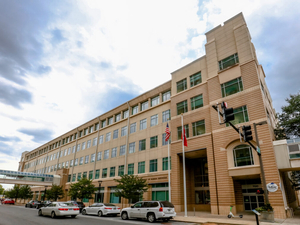
A 2024 lawsuit filed by the Department of Justice alleged Maine was failing to meet the needs of students that require behavioral health services and violating the Americans with Disabilities Act (ADA) by separating them from their homes and communities.
(Photo by Alexander Castro/Rhode Island Current)
A federal court last week rejected a joint attempt by Maine and the U.S. Department of Justice to weaken a previous agreement that required the state to improve services so that children with disabilities no longer had to be separated from their families.
In a statement Friday, a coalition of rights organizations said the ruling “preserves essential protections that ensure children with behavioral-health needs will receive integrated, community-based services rather than face unnecessary institutionalization.”
The settlement agreement stemmed from a September 2024 lawsuit filed by the Department of Justice that alleged the state was failing to meet the needs of students that require behavioral health services and violating the Americans with Disabilities Act (ADA) by separating them from their homes and communities by institutionalizing them or sending them to juvenile detention centers.
Two months later, the lawsuit was dismissed after the state agreed to implement a robust accountability system with reporting requirements, community outreach and the establishment of an independent watchdog, who would oversee data on state services. Under that initial agreement, the state committed to increasing the availability of community-based behavioral health services through the Maine Department of Health and Human Services so that children would no longer have to be separated from their families.
Fast forward to this past September when the state and Justice Department — now under the Trump administration — jointly filed a motion to change the agreement, weakening some of those requirements, including removing the independent reviewer position. The parties argued that the changes were minor and thus acceptable since both the plaintiff and defendant were agreeing to the new terms.
Maine settles with U.S. DOJ over children’s behavioral health services concerns
In response, the American Civil Liberties Union of Maine, GLAD Law and Disability Rights Maine intervened, asking the court through an amicus brief to reject the amended agreement.
Judge Stacey Neumann with the U.S. District Court for the District of Maine ruled on Nov. 24 that the state and federal governments had not justified the proposed changes. The requirements were “intrinsic to the case,” she wrote, and essential to protecting the rights of children with disabilities as required by the ADA.
“Indeed, there is no evidence that reducing the frequency of reporting, trainings, and community outreach and removing the Independent Reviewer will do anything to facilitate the State’s compliance with the agreement,” she wrote. “And may in actuality make it harder to ascertain whether compliance is being achieved.”
As of Friday, the Maine Department of Health and Human Services website displayed the modified agreement — not the approved settlement — that makes no mention of the independent reviewer. The department’s implementation plan, released last month, also makes no mention of the stricter requirements that the court determined the state must meet.
Atlee Reilly, managing attorney at Disability Rights Maine, said it’s clear the department was “operating under the assumption that this was kind of pro forma and that they were just going to push ahead, as if the agreement had already been changed.”
Now that the court declined to approve it, Reilly said he doesn’t know “what that’s going to mean going forward.”
Both DHHS and the Maine Attorney General’s Office declined to comment.
Carol Garvan, legal director at the ACLU of Maine, said that by “denying this motion, the court affirmed that independent, external oversight is essential.”
“The role of an independent reviewer is critical in ensuring that Maine keeps its promises to children with disabilities and follows through on long-overdue reforms,” she said in a press statement. “A child’s right to live and thrive in their community is a fundamental right that must be continuously defended.”
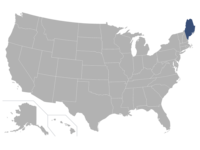
Augusta, ME