Food banks across Pennsylvania are struggling to keep up in the face of SNAP cuts, economic pain
Aug 24, 2026 | 4:00 am ET
Description
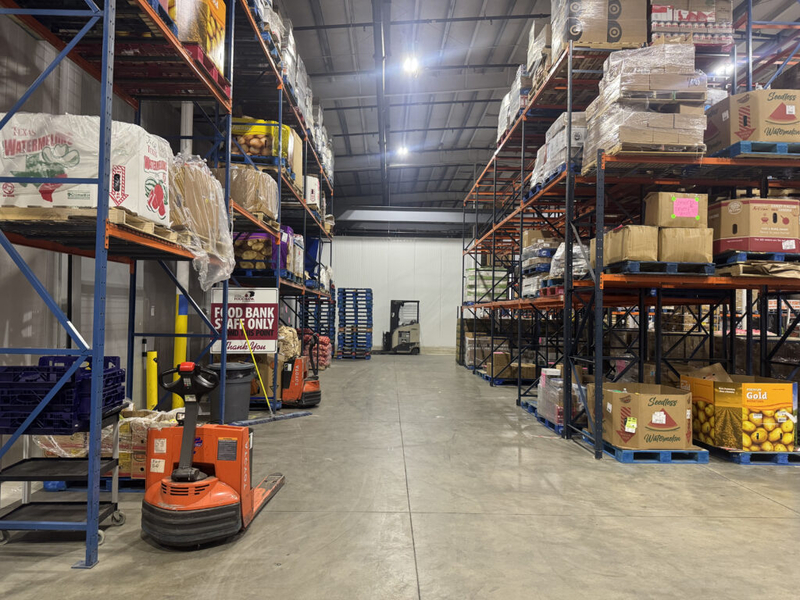
The Central Pennsylvania Food Bank in March, 2025 (Photo by Ian Karbal/Pennsylvania Capital-Star)
The shelves of the Allentown Area Ecumenical Food Bank were cluttered with cans, jars and boxes of all varieties. As Lehigh County’s only daily food bank, it receives around 15,000 pounds of food per week.
But to Executive Director Anne Eagan, it hardly looked like enough.
“When you see all this and you say, ‘Oh, look at all this food we have,’” she told reporters. “Well, actually, we distribute about a million pounds of food a year.”
This year, a series of overlapping economic issues and federal policy changes have affected both the food bank’s client base and its ability to stock its own shelves.
Wages haven’t kept up with inflation. Tariffs have increased the price of foreign goods. The war with Iran has spiked gas prices. Energy costs are rising across Pennsylvania. On top of all of that, a spring freeze hit fruit farmers across the commonwealth, affecting the price of some fruits and growers’ ability to support food banks.
While the summer is usually a relatively slow period, in the last two months, the Allentown food bank facility has seen a 55% increase in new clients.
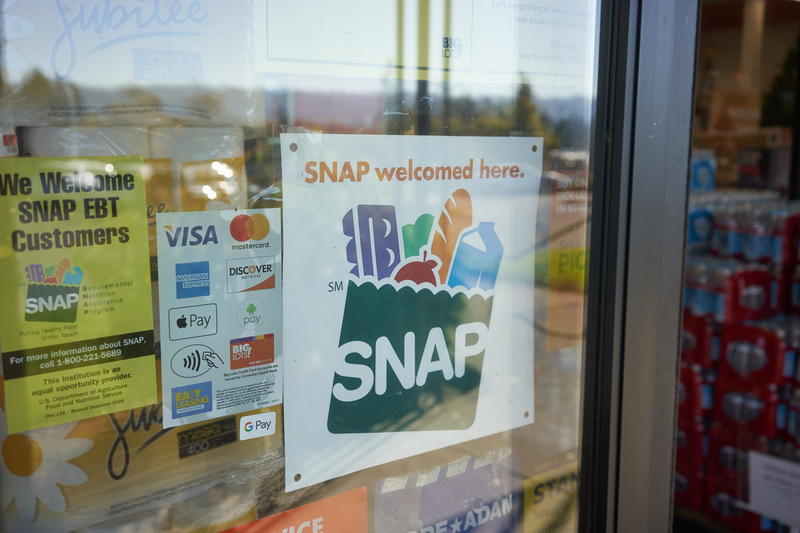
But leaders at food banks across the state point to another factor – perhaps the biggest driver of recent demand for their services. It’s the changes to the federal Supplemental Nutrition Assistance Program (SNAP), also known as food stamps.
Despite rising food insecurity, enrollment in the program fell from 1.96 million to 1.74 million in Pennsylvania in the last year. That’s around an 11% drop.
The state Department of Human Services estimates around 98,000 of those cuts — just under half — can be attributed to new rules for the federally funded program passed in 2025’s One Big Beautiful Bill Act, the Trump administration’s signature spending and domestic policy bill.
The legislation created new work requirements, limited immigrants’ eligibility, and required a lot more paperwork from participants signing up or renewing benefits.
“The majority of [new clients] that we’ve spoken to and asked these questions are people who have had their SNAP either cut or taken away completely,” Eagen said. “Most of them are working, and they just can’t make ends meet between their income and the price of gas.”
A spokesperson for the U.S. Department of Agriculture, which oversees SNAP, said enrollment changes should not be attributed to any one policy change.
“If a household is eligible, they receive the benefit. However, those same households are subject to recertification. Individuals might move to employment, become disinterested in participating, or experience another change in household circumstances,” they wrote. “The number of individuals receiving benefits is constantly changing and is not representative of any one policy; for example, multiple States have seen declines far before the enactment of [The One Big Beautiful Bill Act].”
The state Department of Human Services estimates that 35% of SNAP recipients in Pennsylvania are under 18-years-old, and 25% are over 55.
Out of balance
From Lancaster County on the Maryland border, to Tioga County on the New York side, the Central Pennsylvania Food Bank serves around 270,000 people each month, across 27 counties.
In their service area, around 40,000 fewer people were receiving SNAP in April 2026 than were a year earlier.
“Food insecurity has kind of been a bit of an underlying crisis for the last several years, since the pandemic,” said Zach Zook, the food bank’s Chief Strategy Officer. “Even before the SNAP crisis, we were facing an extremely high level of food insecurity that is typical only of recessionary timeframes. That’s kind of the environment we’ve been facing.”
Zook spends a lot of time going through data collected by the food bank and its partners. That includes responses to surveys, which include questions about whether or not clients receive SNAP.
Between February and April 2026, pantry visits were up 5.2% compared to the same period a year earlier. Zook’s analysis found that visits from non-SNAP recipients were up 6.5%, while visits from SNAP recipients were up only 2.8%
That’s a major shift. Between March 2025 through January 2026, the period Zook’s study looked at, SNAP participants were more likely to account for increased visits.
“We can attribute that to folks losing SNAP benefits,” Zook said. “I kind of see SNAP and the charitable food system working in tandem, right? Because people are trying to access enough food to feed their families.”
But, as it stands, the system is built to rely far more on SNAP. Zook says the federal program provides nine meals for every one provided by the Feeding America network, a network of more than 200 food banks which the Central Pennsylvania Food Bank and its partners belong to.
“A loss in SNAP benefits is really a very big deal,” he said. “That means we have to try to do our best to bring in more food to the network.”
“More with less”
Share Food Program, a food bank that serves five counties in the greater Philadelphia region, has also seen an increase in demand since 2020.
“We feel it in a very real way at our food bank when macro-level economic policies happen. We see it,” said George Matysik, the program’s executive director. “When we’re seeing more people coming to our doorstep because their SNAP benefits have been cut, we live that every day at our food bank.”
According to Jess Bautista, a spokesperson with Share Food Program, around 7,000 new people sought their services in January, just after stricter eligibility requirements for the program kicked in.
“Fast forward a few months later when a lot more people — around 60,0000 people in Philadelphia — lost SNAP benefits, and in July we were looking at 30,000 new individuals come to [Share Food Program] for food assistance,” she said.
While SNAP cuts and inflation may be driving a substantial portion of new clients, other economic and policy changes are affecting their ability to meet demand.
Matysik says the pantry, which aims to provide fresh food and produce, feels the impacts of inflation and tariffs as well.
“We have to do more with less, and we have to get creative about the way that we’re sourcing food ... We have to rely more and more on the charity of the community around us. But that’s merely supplemental. It can’t fill in the gaps that we’re seeing emerging from the SNAP crisis we’re going through.”
The pantry receives a lot of food from South and Central America, imported through ports in Philadelphia and Wilmington.
And last year, the Trump administration cut a COVID-19 pandemic-era program called the Local Food Purchase Assistance Cooperative Agreement (LFPA). It provided funding that could be used to buy fresh food from local farmers to supply food banks.
“We used it for a lot of locally grown lean proteins, dairy products, things of that nature,” Matysik said. “That’s a lot of the items that are most requested, and the first things that leave someone’s diet when they don’t have enough money to spend on food — the nutritious food.”
In its 2025 budget that passed last November, Pennsylvania increased funding for a similar state program, but it wasn’t enough to fill the gap left by the end of the federal farm-to-foodbank program.
For Matysik, all the changes have added up to a major impact on day-to-day operations, and the food bank’s ability to source nutritious food.
“We have to do more with less, and we have to get creative about the way that we’re sourcing food,” he said. “We have to rely more and more on the charity of the community around us. But that’s merely supplemental. It can’t fill in the gaps that we’re seeing emerging from the SNAP crisis we’re going through.”
“Extra burden”
In the 11 counties served by the Greater Pittsburgh Community Food Bank, around 37,000 fewer people have access to SNAP than did last July.
“Just looking at the numbers in cash value, that’s a $5 million loss to our regional economy,” said Colleen Young, the food bank’s director of government affairs. “That’s a huge loss in access to food. We are seeing record high demand across our network.”
While Young says other economic factors squeezing families’ budgets have played a role in the rising demand, the SNAP cuts play an undeniable part.
Last November, when a federal government shutdown led to a delay in SNAP benefit payments, the food bank’s network saw a 22% jump in demand.
While that initial spike leveled out, the number of people seeking assistance remains above where it was before the shutdown.
“It’s been pretty consistent since then seeing more folks coming to us and saying they just can’t keep up,” she said.
That’s a struggle for the food bank as well.
“Last year, we were nearly $2.5 million dollars over budget in the amount of food that we needed to purchase to be able to keep up with demand,” she said.
The food bank’s network serves around 300,000 people per year and distributes around 53 million meals. And many of the organizations in its partner network, which operate on shoestring budgets, rely on it to supply food when demand increases.
“We’ve made a lot of adjustments in terms of how we are able to source food,” she continued. “We’re really trying to find the balance between providing the items that we know are in the highest demand like meat, dairy, eggs and produce. Those are the highest cost items in the grocery store … Our team is constantly shifting the types and amounts of food that are available to try to keep us within budget. They’re very skilled at what they do, but it is a lot of extra burden.”
Looking forward, some are worried that demand is only going to get worse.
So far, the number of people who have lost SNAP benefits as a result of recent policy changes has not reached projections.
Starting later this year, states will have to pay a greater share of the SNAP program’s administrative costs. Beginning in late 2027, Pennsylvania could be penalized if it doesn’t get its error rate below 6%. As it stands, that rate was 9.21% in 2025, a number that dropped from 16.61% in 2023.
It’s unclear how or if that will affect the commonwealth’s budget for its own nutritional programs like the farm-to-food bank initiative , or others aimed at helping struggling families.
Next year, work requirements will also kick in for Medicaid, which provides health insurance for around 750,000 Pennsylvanians.
Research shows when medical costs go up, food budgets go down.
“We continue to have to fill the gaps that could be eliminated tomorrow by the federal government,” said Matysak with Share Food Program in Philadelphia. There should be no reason that food banks like Share Food Program exist in the richest country in the history of the world. We have enough food, we have enough resources to ensure that the working class doesn’t have to starve just because of poor federal policies.”
Harrisburg, PA