Ruston girl, 8, dies from brain-eating amoeba infection
Aug 23, 2026 | 3:52 pm ET

Description
Lillian Smart, 8, of Ruston died Saturday, Aug. 22, 2026, after being infected with Naegleria fowleri, an amoeba that feeds on brain tissue. State health officials believe she was exposed while swimming in Lake Claiborne. (Photo courtesy of Smart family)
Lillian Smart, who health officials believe contracted a brain-eating amoeba from swimming in a North Louisiana lake, died Saturday at a Shreveport-area hospital from an infection linked to the pathogen. She had turned 8 years old a day earlier.
“The injuries to her brain were too severe for her little body to recover from,” the Smart family from Ruston said in a statement posted Sunday morning on Facebook. “Everyone did everything they could to keep her here. We are heartbroken and honestly do not know what to do next. How do we put one foot in front of the other without our girl?”
In a news release Wednesday morning, the Louisiana Department of Health reported a state resident had been hospitalized after becoming infected with Naegleria fowleri, an amoeba that feeds on brain tissue. State officials have yet to confirm Lillian was the infected patient, but the Smart family confirmed on social media she was in a pediatric intensive care unit and encouraged prayers for her recovery.
The health department said the infection was likely acquired when the girl was swimming in Lake Claiborne shortly before her illness.
This is believed to be the fifth death attributed to Naegleria fowleri in Louisiana since 2011.
The most recent fatality occurred in St. Bernard Parish in 2013, when a Drake Smith Jr., 4, contracted the amoeba while playing on a slip-and-slide. Officials confirmed presence of the amoeba in the household’s water, but tests for the pathogen in the water system were negative. However, the parish did detect low levels of chlorine and immediately treated the water system.
Two years earlier, a St. Bernard Parish man died from an infection after using tap water for a sinus rinse, and a DeSoto Parish woman perished after using tap water there for similar treatment.
Naegleria fowleri causes primary amoebic meningoencephalitis, an extremely rare brain infection that can happen when water travels up the nasal canal and reaches the brain. The amoeba cannot cause an infection if it is swallowed.
Naegleria fowleri is not found in saltwater or in properly chlorinated pools. Infection symptoms typically begin with headache, fever, nausea and vomiting before progressing to a stiff neck, seizures and coma before death within about a week or two. Symptoms typically appear within about five days after an infection and are fatal in 97% of cases, according to the U.S. Centers for Disease Control and prevention.
Nationwide, the CDC reported two cases of primary amebic meningoencephalitis last year. The U.S. count has exceeded six cases just twice since 1937, according to the agency.
Of the 173 infections documented in the past 90 years, nearly 91% have occurred during the months of July and August.
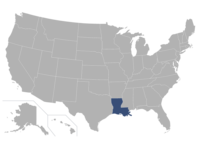
Baton Rouge, LA