Farms and agriculture groups call foul over EGLE permit restricting animal waste uses
May 19, 2026 | 11:39 am ET

Description
A farmer with a large tractor spreading liquid manure on a ploughed field on an overcast spring day. | Simply Creative Photography/Getty Images
Factory farms operators squared off against state environmental regulators in court once more as a coalition of Michigan farmers and agricultural industry groups sought to challenge a number of new environmental permit conditions intended to protect the state’s waterways.
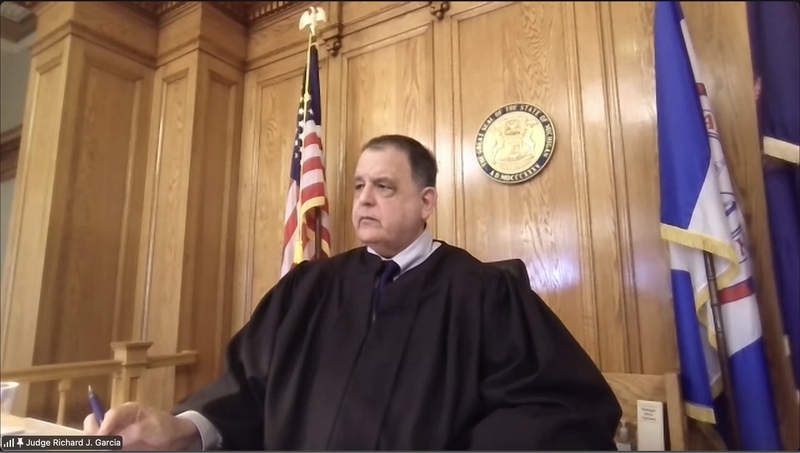
Taking the stand before Judge Richard Garcia in Ingham County’s 30th Circuit Court on Monday, counsel for the agricultural groups argued with attorneys for the Michigan Department of Environment, Great Lakes and Energy, the Environmental Law and Policy Center and Flow Water Advocates on whether EGLE made an impartial decision by including restrictions within the general permit that were previously removed by an administrative law judge.
EGLE Director Phil Roos issued his final opinion in October, laying out new regulations for concentrated animal feeding operations, including a ban on applying animal waste as fertilizer on snow-covered ground, and a blanket ban on applying waste to the land in January, February and most of March. Factory farms are also barred from giving away animal waste during the winter.
Additionally, the 2025 permit allows EGLE to require groundwater monitoring, set notification requirements for animal feeding operations applying waste to tile-drained fields, and decreases the permitted levels of phosphorus found in soil.
The department can also impose site-specific regulations for industrial feeding operations in watersheds that do not meet the state’s water quality standards.
A 2024 report from the Environmental Law and Policy Center notes that concentrated animal feeding operations in Michigan produce 62.7 million pounds of animal waste daily, with many hog and dairy farms storing the liquid waste in lagoons to apply to crop fields.
Excess nutrients from animal waste like phosphorus can cause harmful algal blooms in nearby waterways. This waste can also contribute E. coli to nearby bodies of water, carrying risks of illness for anyone swimming in or drinking the water.
Zachary Larsen, the attorney for the agricultural groups appealing the permitting decision, asked Garcia to strike down several conditions of EGLE’s 2025 general permit, arguing that the agricultural groups had not received an impartial hearing.
EGLE held two meetings as part of the contested case review process for the permit. During one of those meetings, Larsen raised concerns with a 2024 executive order from Gov. Gretchen Whitmer which eliminated the Environmental Permitting Review Committee and gave EGLE’s director the authority to hear permit review appeals and make decisions on permit application review petitions, arguing that EGLE staff was now asking its leadership to restore provisions removed during Administrative Law Judge Daniel Pulter’s review.
“The right to an impartial decision maker is a fundamental guarantee of due process, but here again, EGLE overturned an independent ALJ’s decision after a nearly five-year, cost-intensive and time-intensive administrative process through an appeal to itself,” Larsen said.
Larsen also argued that EGLE failed to provide proper notice on some of the permitting conditions Roos included in the 2025 general permit for discussion at the hearing.
“For a hearing to be meaningful, you can’t simply cram through changes into a permit that were not raised in a manner that would have given appellants the opportunity to provide evidence, to cross-examine witnesses and to address those issues,” Larsen said.
However, Assistant Attorney General Elizabeth Morrisseau, representing EGLE, argued that the Administrative Procedures Act permits the directors of state agencies to review decisions made by administrative law judges in a contested case.
Whether it’s a decision to issue a non-binding general permit under the Natural Resources and Environmental Protection Act, to revoke a license under the public health code, or to subpoena a provider to re-audit a Medicaid decision, all are legal, and standard procedure in Michigan, Morrisseau said.
Additionally, the Administrative Procedures Act provides an opportunity for parties to file an affidavit and move to disqualify the officer presiding over a contested case if they believe the presiding officer is not impartial, Morrisseau said, noting that did not happen in this case.
Katie Garvey, a senior attorney for the Environmental Law and Policy Center, further emphasized that agency directors can adjudicate disputes involving their own agencies and that agencies can fill both investigative and adjudicatory roles. She also noted honesty and integrity are legal presumptions for agency directors like Roos who oversee contested cases.
“The appellants have not cited any evidence of actual bias; rather, they’re asking the court to infer that he must be biased because he’s the so-called boss of EGLE. And that is a radical request, because the law requires the opposite,” Garvey said.

Morrisseau also argued that EGLE satisfied its timely public notice requirements when it issued the initial draft permit in November 2019, with the draft permit including a ban on applying animal waste to field between Jan. 1 and March 19, alongside requirements for factory farms to use a phosphorus reduction assessment tool to minimize the risk of nutrient pollution.
That requirement was satisfied a second time when EGLE issued its final general permit in April 2020, alongside a document explaining the changes it had made to the draft, Morrisseau said.
“Once a contested case is sought and moves forward, any evidence that comes from a contested case can be used to uphold the permit as issued, or to change it, whether that remains removing conditions, adding conditions, or modifying conditions,” Morrisseau said. “The Court of Appeals has concluded that the public notice and comment period only applies to those initial permitting decisions, and once that petition for a contested case is filed, new evidence can be adduced, and it is not limited to matters subject to public notice and comment.”
Garcia took the matter under advisement to rule at a later date.
Lansing, MI