Controversial private jet expansion proposal at Hanscom faces setbacks as developers look to move project ahead
May 27, 2026 | 9:00 am ET
Description
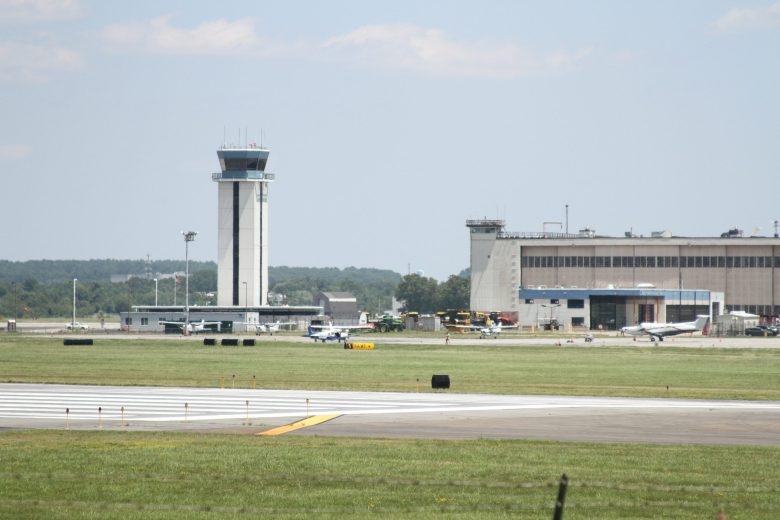
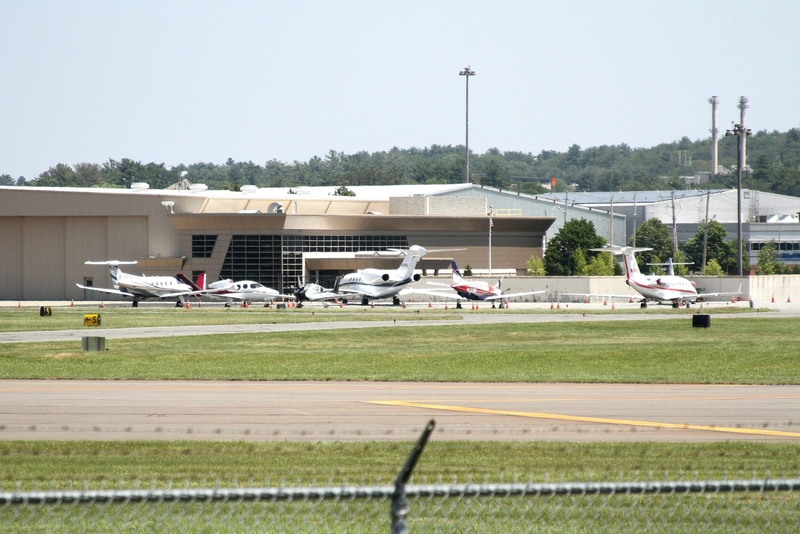
Developers are looking to add private jet space at the Hanscom Field airport.
THE HIGH-PROFILE plan to increase private jet space at a Massachusetts airport has faced months of delays — and those delays may still stretch farther as the timing for a major regulatory filing remains in flux, according to a statement from the developers and public records obtained by CommonWealth Beacon and The Concord Bridge.
Developers had been looking to submit a supplemental environmental impact report in June after state regulators with the Executive Office of Energy and Environmental Affairs sent the project back for further review nearly two years ago. Plans have called for new fuel storage and 17 new aircraft hangars at the Massachusetts Port Authority-owned Hanscom Field airport spanning parts of Bedford, Concord, Lincoln, and Lexington.
Emails obtained from Massport through a public records request over a roughly 18-month period between summer 2024 and early 2026 show that the two developers, North Airfield Ventures LLC and Runway Realty Ventures LLC, have delayed the environmental report for the better part of a year but had been closer to reviving the proposal — and the controversy that comes with it.
Rick Muse, director of operations for the Hanscom development proposal, said in the emails that he planned on submitting the regulatory filing in October 2025. That goal slipped to the end of the year before falling further into the first quarter of this year. As of February, developers expected to file “around June.”
Now Muse, in response to questions about whether that June goal remains intact, said that “we will most likely shift the June date” and that he doesn’t have “an updated target date for the filing yet.”
Muse didn’t elaborate further on the cause of the delays, though the emails obtained through a public records request shed some light. Developers have also been looking to line up companies to lease new hangars and ensure they can actually make money from the project.
“We need to make sure that our responses are accurately reflecting what their potential operations programs would be,” he told CommonWealth Beacon and The Bridge.
Some project opponents say they’ve been heartened by the delay. Municipal officials say they’re in the dark.
“It keeps slipping,” said Wendy Rovelli, Concord Select Board member and Hanscom Area Towns Committee appointee, who added that she’s heard “absolutely nothing” from the developers.
The proposed hangar expansion has roiled activists and officials alike. Critics fear that a spike in air traffic will bring extra noise and emissions, as private flights are widely considered to be the most polluting source of transportation.
One protest in 2024 ended with activists in custody after authorities said they breached Hanscom’s secure perimeter and ventured onto the tarmac. One criminal case went to trial last year and ended with a mixed verdict. Defendants reached deals to resolve the other cases.
Opponents won a victory, of sorts, in June 2024 when Energy and Environmental Affairs Secretary Rebecca Tepper found the developers’ initial draft environmental impact report “inadequate” and required them to submit a supplemental environmental impact report.
The newly-revealed records show some headwinds in the nearly two years since Tepper’s decision.
Developers have run into a state-recognized rare plant, the midland sedge. Their original environmental report filed through the Massachusetts Environmental Policy Act Office (MEPA) acknowledged the presence of the plant. In July 2025, though, a wildlife biologist working with the team warned that the state might want a formal survey to assess the risk that the project would pose to the sedge, according to the emails.
In a September email to consultants and Massport officials, Muse recapped a meeting with Amy Hoenig, a senior endangered species review biologist at MassWildlife, writing that Hoenig expressed concern about the impacts to the rare plant and said the project, as proposed, “would not meet the permitting standards.”
Following MEPA’s decision to request the supplemental environmental filing, the developers sought to reassure state and federal officials that their project remains on course.
In November 2024, after officials at the US Environmental Protection Agency wrote to Muse requesting regular six-week updates, Muse wrote to a wide-ranging list of government stakeholders to check in. The developers, Muse wrote, had met recently with Tori Kim, the MEPA director, Matt Hanson, Bedford’s town manager, a Federal Aviation Administration official, and even Melissa Hoffer, Gov. Maura Healey’s climate chief.
“The Proponents of the development are all in and committed to moving forward with the project,” Muse said in the email.
Yet, when Amber Goodspeed, a manager of airport administration at Hanscom for Massport, asked Muse for an update on the filing schedule this past February, Muse acknowledged in response to Goodspeed that “the filing date keeps shifting for a few reasons.”
The developers have brought on Steven Davis, a former MEPA director, to help with the regulatory process, Muse wrote in a separate 2024 email to Massport officials. Davis did not return a request for comment.
Massport, a quasi-public entity that also oversees Boston Logan Airport, argues the project is essential to relieve pressure on Logan and meet growing demand primarily from businesses for private air travel.
The developers’ original environmental report focused heavily on the ability of the project to reduce the number of “ferry flights” per year, which happen when there’s no room to store a plane at Hanscom and the aircraft needs to fly empty to another airport for parking.
Regulators, in their initial rejection, countered that the number of ferry flights “appears minimal,” which “puts into question the purpose and need for the project, and, again, raises questions about the extent of new demand the project will, or is intended to, induce to support business profitability.”
Critics contend that extra air travel after the hangar expansion could wipe out hard-fought gains in combating climate change in Massachusetts over the past two decades. Nearly all of the 1,500 comment letters on the project opposed it, particularly with respect to the greenhouse gas emissions that could result, according to Tepper’s determination.
When Tepper sent the project back to the drawing board and requested an additional environmental filing, she referenced a study from Industrial Economics, Inc., a Cambridge-based consulting firm, which pushed back on the developers’ claim that the hangar expansions would result in a reduction of greenhouse gas emissions.
Instead, they found that the project would increase emissions by roughly 150,000 metric tons per year, the equivalent of 35,000 cars.
Dakota Antelman of The Concord Bridge contributed reporting.
This story was published as part of a collaboration between CommonWealth Beacon and The Concord Bridge.
Boston