Environmentalists renew challenge to Trump order extending Michigan coal plant’s lifespan
Jul 25, 2025 | 11:59 am ET
Description
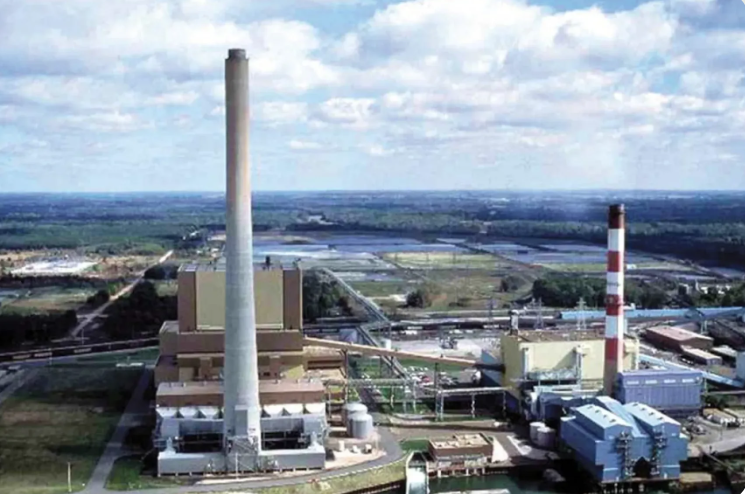
The J.H. Campbell plant plant, operating since 1962, was originally scheduled to close partially in 2030 and wholly in 2040. But the utility announced in 2021 it was moving the plan up by 15 years for an operations end date of May 31, 2025. [Photo/Courtesy]
Nine environmental advocacy groups on Thursday redoubled their opposition to federal efforts extending the life of a West Michigan coal plant originally slated to close earlier this year.
Although the J.H. Campbell coal plant, owned by Consumers Energy, was set to go dark on May 31, the U.S. Department of Energy issued an order on May 23 forcing the plant to remain open past its expiration date.
Despite agreements between Consumers, state energy regulators, the Department of Attorney General and multiple parties representing customer and environmental interests to close the plant down, the Department of Energy justified the move by arguing it was under the authority of the Federal Power Act, and fell in line with President Donald Trump’s executive order declaring a national energy emergency.
On June 18, the environmental law group Earthjustice filed a challenge on behalf of 10 public interest groups requesting a rehearing on the department’s order.
In their request, the groups highlighted the negative environmental impacts of the plant while rejecting the Trump administration’s argument that the plant is needed to prevent disruptions to the state’s energy grid. State energy regulators have also ensured that the plant’s retirement would not impact grid reliability.
However, the order went unanswered, prompting nine of those groups to file a petition for review with the U.S. Court of Appeals for the District of Columbia Circuit, with Earthjustice and the Sierra Club leading the charge.
Derrell Slaughter, Michigan policy director of climate and energy for the Natural Resources Defense Council, said people in Michigan and the Midwest should not be stuck paying the cost of a nonexistent emergency with their health and electric bills.
“The Campbell coal plant is out of date, costs more to operate than other electricity generation options, and is one of the worst polluters in the state,” Slaughter said. “This petition is very much in line with the State of Michigan’s commitment to pursue a clean, affordable, and reliable grid that protects both ratepayers and public health.”
In an interview with CNN, Dan Scripps, chair of the Michigan Public Service Commission, which oversees the state’s energy utilities, estimated that the cost for keeping the plant open could cost tens of millions of dollars on the low end.
The Natural Resources Defense Council also noted that the plant releases several millions of pounds of health-harming pollution and more than 10 billion pounds of climate-harming carbon dioxide into the air each year. That’s in addition to releasing roughly 100,000 pounds of water pollution into Lake Michigan every year, including 10,000 pounds of toxic metals.
Shannon Fisk, an attorney and director of state electric sector advocacy for Earthjustice, emphasized that the utility, alongside state regulators and stakeholders, all agreed the plant should be retired.
“While the administration might not like that fact, a fabricated energy emergency does not give them the authority to saddle Michiganders with the costs and pollution of a coal plant that the utility has already replaced with other resources,” Fisk said. “The only energy emergency is the one being created by this unprecedented power grab by federal authorities.”

Lansing, MI