Utahns should watch out for deer on the roads as nights grow longer, DWR says
Oct 23, 2026 | 2:09 pm ET
Description
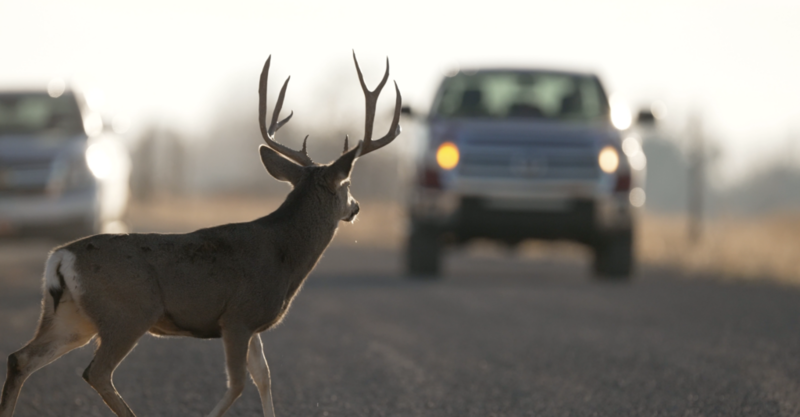
A buck tempts fate in Millard County’s Oak City in 2022. (Courtesy of the Utah Division of Wildlife Resources)
Talk about bad timing.
Starting Nov. 1, Utah roads will get darker earlier when daylight saving time ends. State wildlife managers say deer will also be on the move, migrating to lower elevations in search of food.
They’re urging drivers to keep their eyes peeled, turn on their high beams when possible and look for the faraway shine of an animal’s eye to avoid hitting big game animals. The risk is highest in November, said Makeda Hanson, coordinator for the state’s wildlife migration initiative.
It’s also mating season for deer and the time of their annual migration. So the animals tend to cross more roads, with male deer roving much more to find a mate, Hanson said in a prepared statement.
“It also doesn’t help that the daylight hours are shorter during this time of year, creating lower visibility for drivers,” Hanson said.
Early mornings and evenings are typical commuting hours for deer, too, the division said. Its managers are urging drivers to stay alert, take note of wildlife crossing signs, scan the whole road and put away distractions like phones.
While drivers should slow down if they see a deer or smaller animals, they should not swerve and should not approach an injured animal.
Hanson’s team at the Division of Wildlife Resources tracks and studies migration patterns of fish and wildlife, using GPS trackers and transmitters. They’re also encouraging Utahns to use an app to report roadkill to the state, saying the data helps identify where to place wildlife crossing structures.
As of Oct. 8, more than 3,700 animals were hit by cars this year and removed from Utah roads, the division said. That’s out of roughly 19,400 since 2022. To help limit those collisions, more than 60 wildlife crossings have gone up across the state, in addition to fencing, the agency said in a news release.
Salt Lake City, UT